
US Supreme Court narrows ISP copyright liability, sharpening focus on intent with potential implications for generative AI
A unanimous US Supreme Court ruling narrowed the circumstances under which internet service providers can be held liable for users’ copyright infringement, limiting liability to cases involving intent or active inducement. The decision spared Cox Communications from potential billion-dollar exposure and clarified that knowledge alone is insufficient. It may influence copyright battles over generative AI, in which plaintiffs could argue that such systems are designed to produce infringing content.
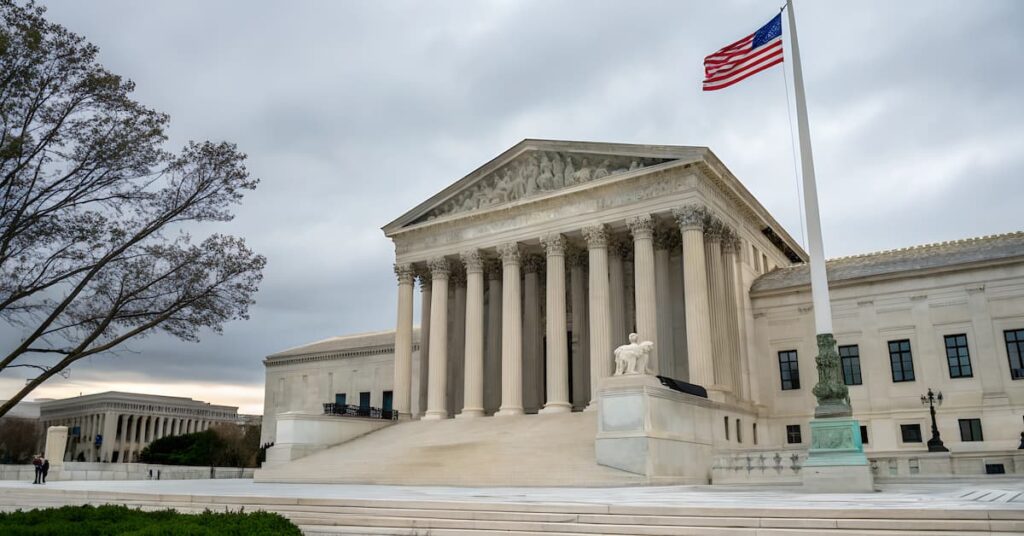
A unanimous 9–0 US Supreme Court ruling this week has narrowed the circumstances under which an internet service provider (ISP) can be held liable for users’ copyright infringement by focusing on a deceptively simple question: intent. Writing for the Court, Justice Clarence Thomas said an ISP is liable only if its service was designed for unlawful activity or if it actively induced infringement; merely providing a service to the public while knowing some users will infringe is not enough.
Applying that standard, the Court found Cox Communications did neither, shielding it from a potential $1bn exposure following a long-running dispute that included a jury verdict later vacated.
The decision is now being read for its possible implications beyond ISPs, particularly in the escalating copyright battle between publishers/authors and generative AI firms. The key distinction raised is that broadband networks function as neutral conduits, whereas large language models are built specifically to produce fluent, human-like writing, including prose, poetry and dialogue, that can resemble the work of human authors.
In the article’s framing, that resemblance is not incidental but central to the product’s purpose: if a subscriber uses broadband to pirate a novel, the ISP did not build its network to enable that outcome, but an AI model prompted to write in a specific author’s style is designed to fulfil that request.
That contrast could open a new line of argument in AI litigation. While major US cases, such as suits brought by the Authors Guild and individual authors against OpenAI, Meta and others, have largely centred on whether training on copyrighted books is itself infringing, the Cox ruling highlights a second front: whether the systems’ purpose and optimisation for author-like output could be characterised as being ‘tailored for’ infringement or as purposeful inducement under an intent-based standard.
Publishers, who are simultaneously watching the lawsuits and negotiating licensing deals with AI companies, have so far been more cautious than the music industry was in its costly fight against Cox, an effort that ultimately produced a Supreme Court ruling that narrowed, rather than expanded, leverage.
Why does it matter?
The broader takeaway is that copyright enforcement may increasingly turn not only on what was copied, but what the copying was for, an approach that could prove consequential for AI companies whose commercial proposition is generating human-quality creative work.
Would you like to learn more about AI, tech and digital diplomacy? If so, ask our Diplo chatbot!