
France’s National Assembly backs under-15 social media ban
French lawmakers advance bill to ban social media use for children under 15 amidst growing concerns.
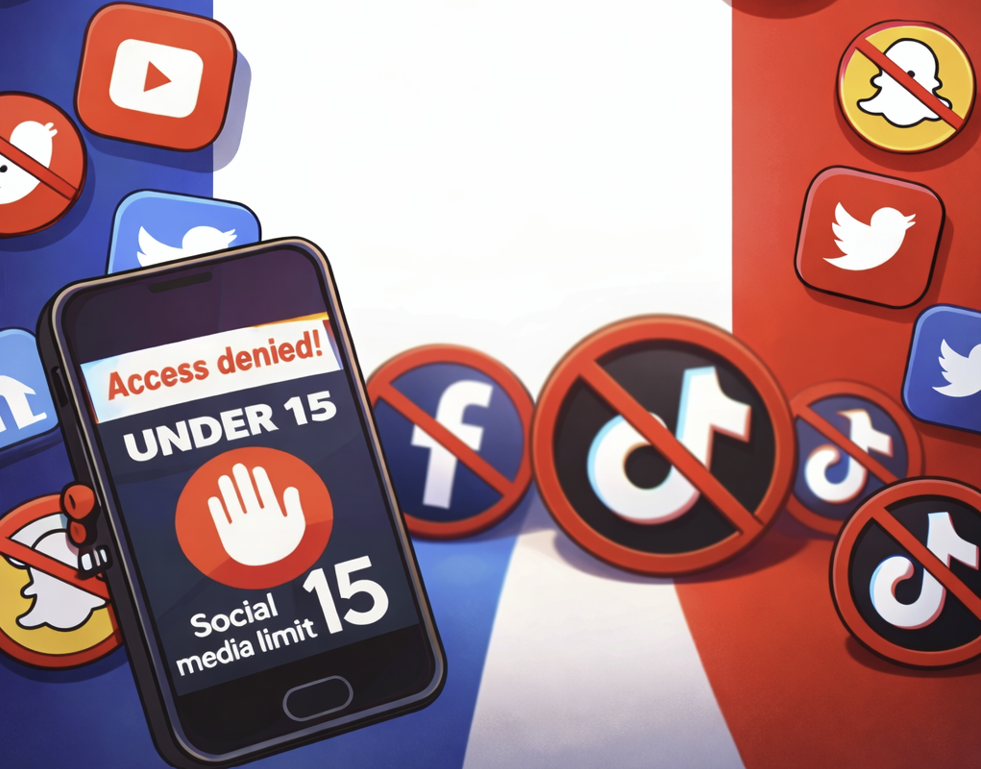
France’s National Assembly has backed a bill that would bar children under 15 from accessing social media, citing rising concern over cyberbullying and mental-health harms. MPs approved the text late Monday by 116 votes to 23, sending it next to the Senate before it returns to the lower house for a final vote.
As drafted, the proposal would cover both standalone social networks and ‘social networking’ features embedded inside wider platforms, and it would rely on age checks that comply with the EU rules. The same package also extends France’s existing smartphone restrictions in schools to include high schools, and lawmakers have discussed additional guardrails, such as limits on practices deemed harmful to minors (including advertising and recommendation systems).
President Emmanuel Macron has urged lawmakers to move quickly, arguing that platforms are not neutral spaces for adolescents and linking social media to broader concerns about youth violence and well-being. Support for stricter limits is broad across parties, and polling has pointed in the same direction, but the bill still faces the practical question of how reliably platforms can keep underage users out.
Australia set the pace in December 2025, when its world-first ban on under-16s holding accounts on major platforms came into force, an approach now closely watched abroad. Early experience there has highlighted the same tension France faces, between political clarity (‘no accounts under the age line’) and the messy reality of age assurance and workarounds.
France’s debate is also unfolding in a broader European push to tighten child online safety rules. The European Parliament has called for an EU-wide ‘digital minimum age’ of 16 (with parental consent options for 13–16), while the European Commission has issued guidance for platforms and developed a prototype age-verification tool designed to preserve privacy, signalling that Brussels is trying to square protection with data-minimisation.
Why does it matter?
Beyond the child-safety rationale, the move reflects a broader push to curb platform power, with youth protection framed as a test case for stronger state oversight of Big Tech. At the same time, critics warn that strict age-verification regimes can expand online identification and surveillance, raising privacy and rights concerns, and may push teens toward smaller or less regulated spaces rather than offline life.
Would you like to learn more about AI, tech and digital diplomacy? If so, ask our Diplo chatbot!