
NVIDIA Isaac powers generalist specialist robots at scale
Robotics development is accelerating as NVIDIA Isaac integrates simulation, data and edge AI deployment.
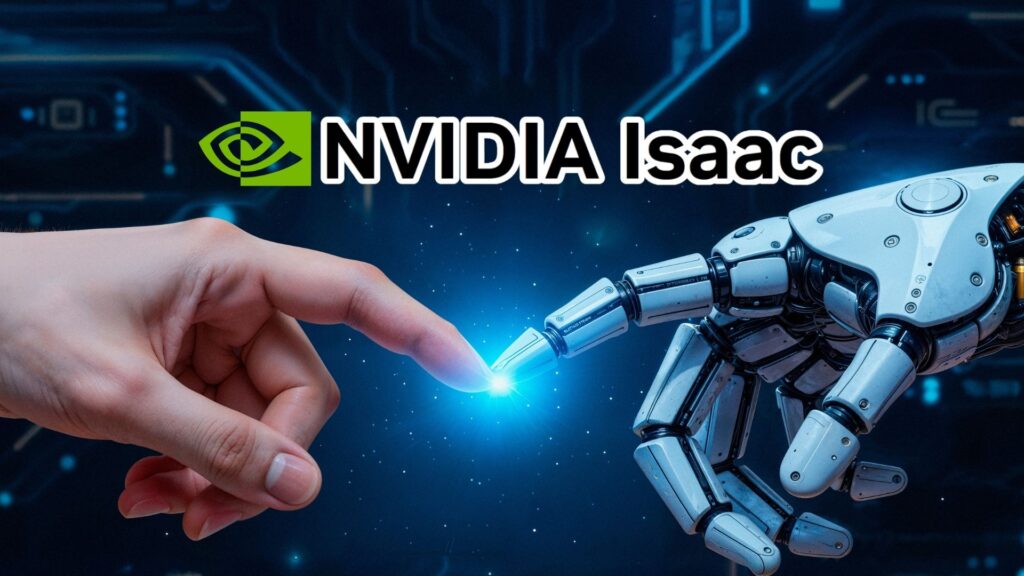
A new class of robots is emerging, combining broad adaptability with task-specific precision as developers move toward generalist specialist systems. Within this shift, NVIDIA Isaac is enabling integrated workflows that connect data generation, simulation, training, and deployment across robotics pipelines.
NVIDIA Isaac unifies robotics development across these stages, integrating cloud-to-robot workflows that allow developers to build, test, and scale systems more efficiently across both real and simulated environments.
A key driver is the growing reliance on synthetic data, which allows developers to simulate rare or hazardous scenarios that are difficult to capture in the real world. NVIDIA Isaac supports this through tools such as Omniverse-based simulation and teleoperation pipelines, helping convert real-world signals into scalable training datasets and accelerating development cycles.
The platform also enables advanced robot training using reasoning vision-language-action models, which allow machines to perceive, interpret, and act across complex environments. With frameworks like Isaac Lab and integrated physics engines, NVIDIA Isaac enables robots to train across thousands of parallel simulations, significantly reducing time, cost, and risk compared to real-world training.
Once trained, NVIDIA Isaac supports deployment across edge AI systems, including the Jetson platform, while maintaining consistency between simulation and real-world performance. Combined with modular workflows and open frameworks, the platform is positioning itself as a core foundation for scalable, next-generation robotics.
Would you like to learn more about AI, tech, and digital diplomacy? If so, ask our Diplo chatbot!