
Los Angeles AI arts museum Dataland opens with Google Cloud support
Google Cloud will power Dataland, described as the world’s first museum dedicated to AI arts.
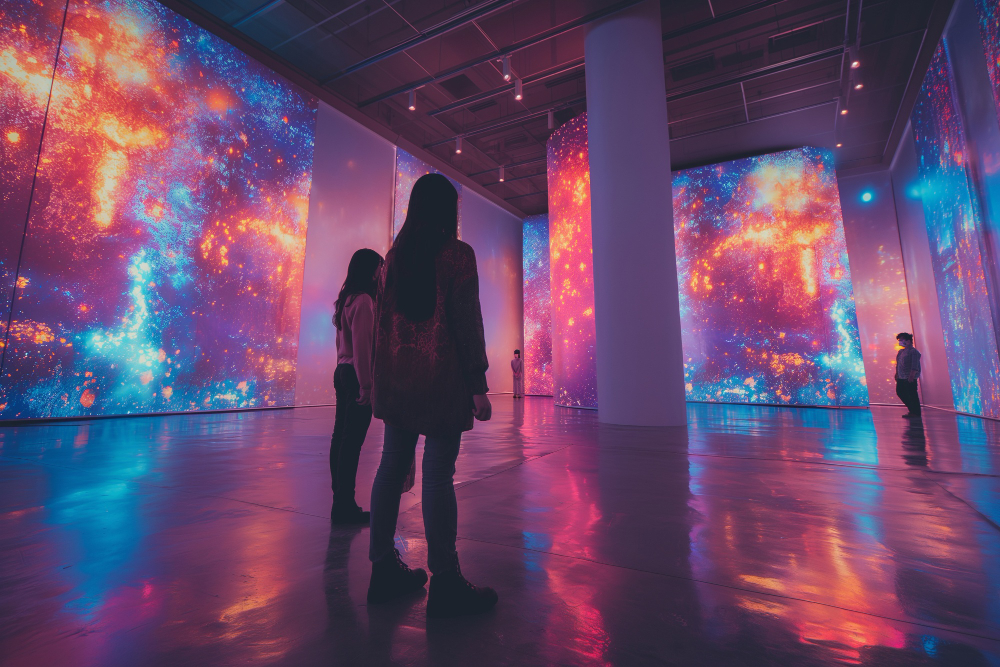
Dataland, a Los Angeles museum dedicated to AI-based art, has opened to the public with Google serving as a technology and creative collaborator.
The museum was co-founded by media artist Refik Anadol and Efsun Erkılıç and is located at The Grand LA in downtown Los Angeles. Google says the 25,000-square-foot space is designed as an interactive environment where data, machine learning and sensory experiences form part of the artwork.
Its inaugural exhibition, ‘Machine Dreams: Rainforest’, uses Anadol’s Large Nature Model, an AI system trained on environmental datasets, to transform natural-world data into large-scale generative visuals.
Google Cloud provides infrastructure for the museum’s real-time image generation, soundscapes, scent augmentation and interactive visitor experiences. Google says the system uses tools including Gemini, diffusion models and generative adversarial networks.
The project builds on a decade of collaboration between Google and Anadol, including work using LA Philharmonic archives, Google Quantum AI data, planetary datasets and the ‘Machine Dreams: Biophilia’ installation at Google’s Mountain View campus.
Google Arts & Culture is also supporting the Dataland AI Artist Residency, a six-month programme for four artists. The residency will provide grants, mentorship from Refik Anadol Studio and access to Google Cloud tools and machine learning models.
Why does it matter?
Dataland shows how AI art is moving from experimental installations into permanent cultural infrastructure. It also highlights the role of cloud providers and large AI platforms in shaping creative production, exhibition design and access to machine-learning tools. For cultural institutions, the project raises broader questions about authorship, data provenance, sustainability, audience interaction and the dependence of new creative formats on private technology infrastructure.
Would you like to learn more about AI, tech and digital diplomacy? If so, ask our Diplo chatbot!