
Global digital sovereignty shaped by infrastructure, services, data and knowledge
Only three countries currently hold near-complete digital sovereignty across infrastructure, services, data and AI knowledge.
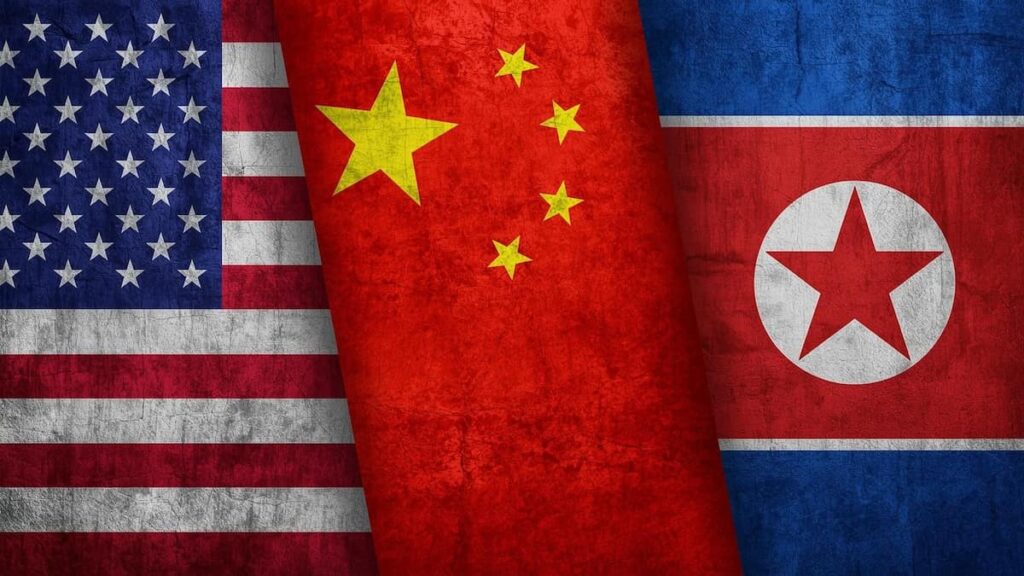
Digital sovereignty is gaining renewed attention as countries navigate an increasingly interconnected technological landscape. The concept refers to a state’s ability to maintain control over the core elements of its digital ecosystem, including infrastructure, services, data governance and AI.
The latest blog from Jovan Kurbalija argues that only a small number of states currently possess near-complete authority across all four layers.
According to Kurbalija, the United States, China and North Korea stand out as the only countries that can claim a high level of sovereignty across infrastructure, digital services, data control and AI knowledge.
Infrastructure includes physical connectivity such as submarine cables, telecommunications networks and semiconductor supply chains. Services cover the dominant platforms that structure online activity, from cloud services to search engines and social media.
Data sovereignty concerns the location of data storage and the legal frameworks that apply, while the knowledge layer focuses on control over AI models and the ability to train and deploy them.
The United States reached its position largely through technological leadership and the global expansion of Silicon Valley companies. Many foundational technologies of the modern internet were developed in the United States, and American companies continue to dominate global cloud computing, social media and digital platforms.
Legal tools such as the CLOUD Act further extend this influence by allowing US authorities to request access to data held by American technology firms even when it is stored abroad.
China developed a different path by building a domestic digital ecosystem supported by industrial policy and regulation. Local technology companies now provide alternatives to many Western services across messaging, payments, search and cloud computing.

Strict data governance rules require much of the data generated within China to remain under national jurisdiction. Kurbalija describes this model as sovereignty engineered through coordinated policy and long-term technological strategy.
North Korea presents another form of digital sovereignty, built largely on isolation. Internal digital networks, services and information flows are tightly controlled, while public access to the global internet is extremely limited.
Although external connectivity still relies on infrastructure routed through neighbouring countries, restricted internet access significantly reduces the country’s dependence on global digital systems.
For the vast majority of countries worldwide, however, achieving full digital sovereignty remains difficult. Most economies depend heavily on global digital platforms, foreign cloud infrastructure and international data flows. At the same time, digital networks underpin cross-border trade, logistics, payments and communication with citizens living abroad.
Attempting to replicate the technological scale of major powers would require enormous financial and industrial capacity. Instead, governments increasingly pursue more limited forms of sovereignty built around several strategic areas.
Connectivity infrastructure remains a key priority, particularly control over domestic networks and internet exchange points. Another focus is the regulation of global digital platforms through competition rules and content governance frameworks.
Data governance policies are also expanding as governments debate how to protect sensitive information such as health records, identity systems and electoral data.
The rise of AI adds a further dimension. Control over AI models, training datasets, and computing infrastructure is emerging as a new strategic asset. Many regions are now attempting to develop local AI capabilities to reduce reliance on a small number of global technology providers.
The analysis concludes that digital sovereignty should not be understood as complete independence from global networks. Rather, Kurbalija argues that the practical objective for most countries is to achieve enough control to protect critical systems and democratic stability while remaining integrated in the global digital economy.
In an era of deep technological interdependence, sovereignty is less about isolation and more about carefully balancing autonomy with cooperation.
Would you like to learn more about AI, tech and digital diplomacy? If so, ask our Diplo chatbot!