
Europol highlights technology-driven organised crime threats
Digital technologies are reshaping organised crime, according to Europol’s latest assessment.
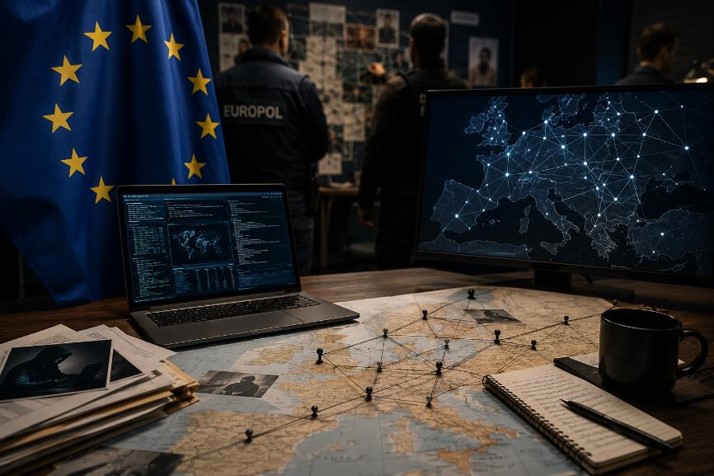
The European Commission, Europol and the Cypriot Presidency of the Council of the EU have presented a new assessment of Europe’s most threatening organised criminal networks, warning that they are becoming increasingly adaptive, technologically advanced and deeply embedded across the region.
The report finds that organised crime is expanding across multiple sectors, including drug trafficking, cybercrime, migrant smuggling, human trafficking, fraud and money laundering.
Criminal organisations are increasingly exploiting digital technologies, global trade routes and legitimate business structures while operating through flexible cross-border networks instead of traditional hierarchical organisations.
The European Commission said stronger cross-border cooperation and an updated Europol mandate are needed to respond to increasingly digital, cross-border and technologically sophisticated forms of organised crime.
Why does it matter?
The assessment highlights how organised crime is evolving alongside digital transformation. Criminal networks are increasingly using digital technologies, legitimate businesses and international supply chains to expand their operations, making traditional law enforcement approaches less effective against increasingly decentralised and cross-border threats.
The report also reinforces the need for stronger European cooperation. As cybercrime, fraud and money laundering become more interconnected with other forms of organised crime, improved intelligence sharing, operational coordination and investigative capabilities will be essential to disrupting criminal networks operating across multiple jurisdictions.
Would you like to learn more about AI, tech and digital diplomacy? If so, ask our Diplo chatbot!