

31 October-10 November 2025
HIGHLIGHT OF THE WEEK
A rare-earth pause in a long geopolitical game
A temporary easing of tensions in the global scramble for critical minerals has emerged from Washington and Beijing – but the underlying contest for supply chain resilience is far from over.
Following high-stakes talks in early November, US President Donald Trump and Chinese President Xi Jinping signed a deal that effectively rolls back Beijing’s recent export controls on rare earth elements and other critical minerals. Under the agreement, China will suspend the global implementation of expansive restrictions announced on 9 October and issue general export licenses for rare earths, gallium, germanium, antimony, and graphite, ensuring continued access for US buyers and their suppliers. The move is a de facto removal of controls China has tightened since 2023 and follows Trump’s declaration that there is now ‘no roadblock at all’ on rare earth flows.
The pause offers breathing room for global industries that rely on the minerals underpinning everything from electric vehicles and smartphones to advanced defence systems and renewable energy technologies. Yet it does little to ease the structural concerns driving diversification efforts.
In Europe, the European Commission is preparing a plan, potentially ready within weeks, to reduce reliance on Chinese critical minerals. Nearly all of Europe’s supply of 17 rare earth minerals currently comes from China, a dependence that Brussels views as unsustainable despite Beijing’s temporary concessions. The emerging EU strategy is expected to mirror the REPowerEU energy diversification blueprint, with a focus on recycling, stockpiling, and developing alternative supply routes.
The EU, however, is signalling frustration at mixed signals from Washington and Beijing on the rare‑earth front. Brussels remains uncertain about how far China’s newly stated concessions will apply to European firms, and observers warn that the bloc lacks near-term leverage to sway Beijing’s policy. This uncertainty underscores Europe’s tricky balancing act: pushing for supplier diversification while remaining dependent on them.
Similar momentum is building among G7 governments. Meeting in Toronto, G7 energy ministers agreed to establish a critical minerals production alliance, backed by more than two dozen new investments and partnerships. The group – which consists of Canada, France, Germany, Italy, Japan, the UK and the USA – also agreed to channel up to C$20.2 million into international collaboration in research and development of the commodities. US Energy Secretary Chris Wright framed the G7 alignment as a commitment to ‘establish our own ability to mine, process, refine and create the products’. These moves ‘send the world a very clear message’, Canadian Energy Minister Tim Hodgson said, adding ‘We are serious about reducing market concentration and dependencies’.
Beyond the US–China–Europe triangle, Moscow has also entered the race. Russian President Vladimir Putin has ordered the government to draw up a roadmap for increasing Russia’s rare-earth mineral production and strengthening transportation links with China and North Korea by 1 December. Russia claims reserves of hundreds of millions of metric tonnes of critical minerals but currently supplies only a small fraction of global demand – a gap it now seeks to close.
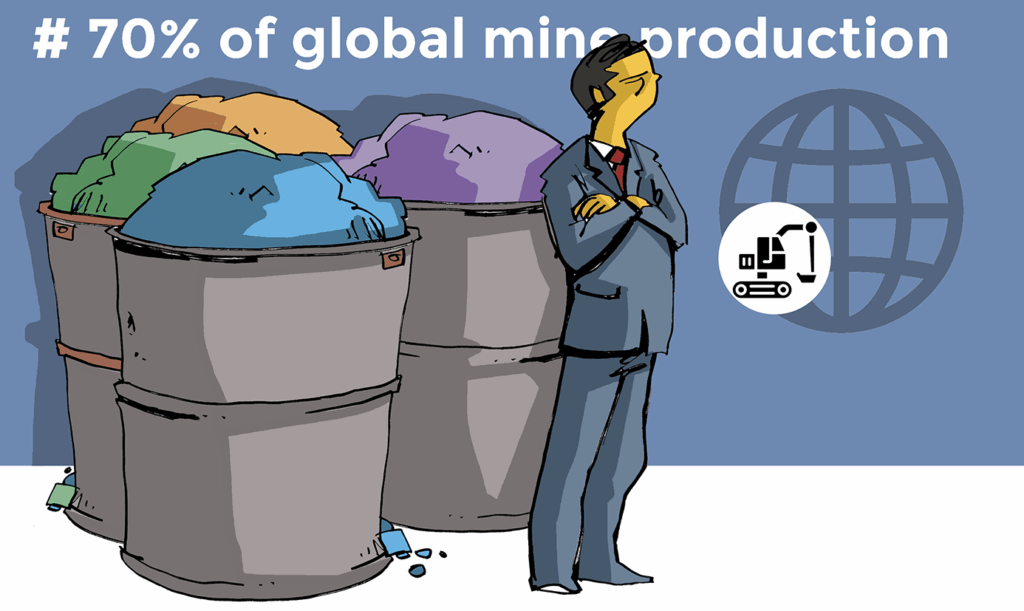
A refresher. China currently controls up to 70% of global mine production, roughly 85% of refining, and about 90% of alloy and magnet production. That position has long served as strategic leverage, which some Chinese analysts argue remains intact despite the current deal.
What’s next? The truce on export controls may calm markets in the short term. However, with the G7 forging new alliances, Europe accelerating its diversification, and Beijing determined to maintain its control over rare earths as a strategic leverage, the global contest over critical minerals is only deepening.
IN OTHER NEWS LAST WEEK
EU steps in as Dutch chip action provokes China
A governance intervention in the Netherlands has spiralled into a global semiconductor standoff – and a race to stabilise automotive supply chains.
After Dutch authorities moved to assert control over chipmaker Nexperia on national-security grounds, Beijing responded by restricting exports from the company’s China operations. Nexperia then halted wafer (thin slices of semiconductor material used to make microchips) shipments to its Chinese assembly plant.
The disruption sent ripples through carmakers and suppliers; several trimmed sales guidance as inventory buffers tightened.
Brussels stepped in to mediate. European Commission officials and the EU trade chief convened talks with Nexperia and China, trying to find a solution that would restore flows without undercutting Europe’s security concerns.
Diplomacy produced an important tactical breakthrough in early November. China’s commerce ministry signalled a softened position and moved to issue case-by-case exemptions to its export curbs on Nexperia products.
By 4 November, the Commission judged that the worst-case disruption had been avoided and that there was ‘time and space’ to seek a longer-term solution – a pragmatic assessment that reflected partial resumption of talks and early signs of coordination. That breathing room allowed negotiators to focus on exemptions, procedural fixes and assurances rather than immediate rationing.
On 7 November, the Netherlands indicated it could suspend its emergency control measures if normal supplies resume.
The big picture. For now, a fragile stabilisation is taking shape: partial export clearances, continued negotiations, and heightened quality checks across supply chains. But the episode has underscored Europe’s reliance on offshore packaging capacity – and the challenge of balancing security scrutiny with industrial continuity.
US–China chip tensions tighten around Nvidia
A fast-moving week in the AI chip race saw Washington and Beijing harden positions – with Nvidia caught squarely in the middle.
Nvidia CEO Jensen Huang initially expressed hope that the company’s new Blackwell chips could still be sold in China. But former President Donald Trump quickly shut that door, saying the top-end processors ‘are not for other people,’ as the White House confirmed the most advanced AI chips remain off-limits to Chinese buyers. US officials also signalled they may block sales of scaled-down models, further tightening export controls.
China responded by banning foreign AI chips in state-funded data centres and offering cheap power to domestic tech giants to accelerate local semiconductor production – part of its push to reduce reliance on US suppliers.
The big picture. The week underscored a sharpening semiconductor stand-off: Washington determined to keep frontier AI technology at home, and Beijing racing to ensure it never needs it.
The global struggle to steer AI
At the Asia-Pacific Economic Cooperation (APEC) 2025 summit, Chinese President Xi Jinping reiterated his proposal to establish a global AI body to coordinate AI development and governance internationally. This body, tentatively titled World Artificial Intelligence Cooperation Organization, is not referenced in the APEC Artificial Intelligence (AI) Initiative (2026-2030).
Meanwhile, Europe is contemplating recalibrating its regulatory approach. Reports indicate that the European Commission is considering pausing or easing certain elements of the EU AI Act, the bloc’s flagship legislation designed to regulate high-risk AI systems. The potential adjustments could include delayed compliance deadlines, softer obligations on high-risk applications, and a phased approach to enforcement – likely in response to lobbying from US authorities and tech companies.
Adding another layer of regulatory complexity, the European Commission is evaluating whether ChatGPT should be classified as Very Large Online Search Engines (VLOSE) under the Digital Services Act (DSA). This designation would bring obligations, including systemic-risk assessments, transparency reporting, independent audits, and researcher access to data, potentially creating overlapping regulatory requirements alongside the AI Act.
Protecting children online
Denmark, which currently holds the presidency of the EU Council, officially abandoned its push within the EU to mandate the scanning of private messages on encrypted platforms – a proposal often referred to as ‘Chat Control.’ Officials cited mounting political and public resistance, particularly concerns over privacy and surveillance, as the catalyst for reversal. The measure had aimed to require tech platforms to automatically detect child sexual abuse material (CSAM) in private, end-to-end encrypted communications. Instead, Denmark informed that it will now support a voluntary regime for CSAM detection, relinquishing the previous insistence on compulsory scanning
Meanwhile, Denmark is going forward with its national plans for child safety online – the government has announced an agreement to ban access to social media for anyone under 15. While it is still unclear how such a ban will be enforced, Denmark’s minister for digital affairs, Caroline Stage, noted that tech giants will be forced to make proper age verification.
Copenhagen is following Australia’s example, where a social media ban for under-16s will take place from 10 December. The eSafety Commissioner has formally notified major social media platforms, including Facebook, Instagram, TikTok, Snapchat, and YouTube, that they must comply with new minimum age restrictions from this date.
States press for extension of digital‑trade tariff moratorium at WTO
A coalition of African, Caribbean and Pacific states led by Barbados has submitted a proposal to the World Trade Organization (WTO) seeking to extend the longstanding moratorium on customs duties applied to electronic transmissions. The moratorium – effectively preventing tariffs on digital goods such as e‑books, video games and transmission of software – was first introduced in 1998 and has been periodically renewed.
Under the current renewal, the moratorium is set to expire in March 2026 or at the next Ministerial Conference, whichever comes first.
The proposal from the African, Caribbean and Pacific states, which is yet to specify a definitive duration, would see the moratorium remain in force ‘until our next session.’
What’s next? The matter will be discussed at the next WTO Ministerial Conference (MC14) in March 2026 in Yaoundé, Cameroon.
The heart of the matter. For these countries, extending the moratorium is about maintaining open, affordable, and predictable digital trade, reducing administrative burdens, and promoting economic development through digital channels. Essentially, it’s a way to support growth in the digital economy while avoiding trade conflicts and tariffs that could disproportionately affect smaller or developing states.
UNESCO adopts first global ethical framework for neurotechnology
UNESCO has approved the world’s first global framework on the ethics of neurotechnology, setting new standards to ensure that advances in brain science respect human rights and dignity.
The Recommendation calls on governments to regulate neurotechnologies, ensure they remain accessible, and protect vulnerable groups, especially children and workers. It urges bans on non-therapeutic use in young people and warns against monitoring employees’ mental activity or productivity without explicit consent.
UNESCO also stresses the need for transparency and better regulation of products that may alter behaviour or foster addiction.
Developed after consultations with over 8,000 contributors from academia, industry, and civil society, the framework was drafted by an international group of experts led by scientists Hervé Chneiweiss and Nita Farahany.
What’s next? The text will enter into force on 12 November, at the conclusion of the UNESCO General Conference in Samarkand, Uzbekistan. UNESCO pledged to support its member states in reviewing their policies, developing roadmaps tailored to their priorities, and strengthening their capacities to address the challenges posed by neurotechnology.
LOOKING AHEAD


The 2025 United Nations Climate Change Conference, known as COP30, will be held from 10 to 21 November 2025 in Belém, Brazil.

The Africa Tech Festival 2025 will be held from 11 to 13 November 2025 at the Cape Town International Convention Centre, South Africa.
READING CORNER

AI can now write, paint, and act. Does this devalue human craft and authenticity? Explore the debate on whether generative AI is a tool that frees creators or one that replaces them.