
Canada signs UN convention against Cybercrime
International digital crime cooperation advances as Canada joins the UN cybercrime convention.
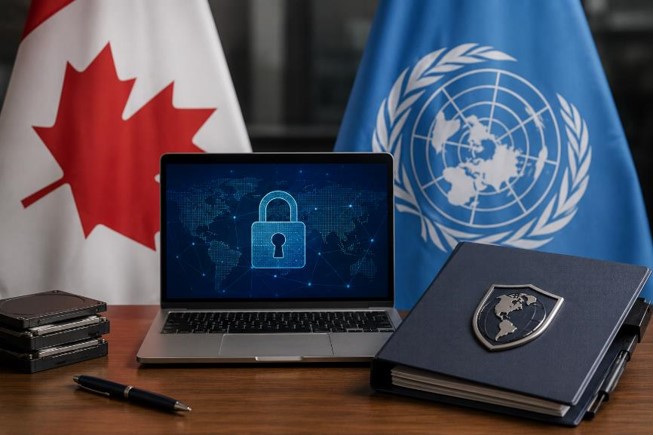
Canada has signed the United Nations Convention against Cybercrime, joining an international framework designed to strengthen cooperation against serious crimes committed through information and communications technologies. The government said the treaty provides a legal basis for cross-border investigations, electronic evidence sharing and coordinated responses to cybercrime.
The government said the convention forms part of Canada’s broader efforts to protect citizens and businesses from increasingly sophisticated transnational cyber threats. It is expected to strengthen international law enforcement cooperation, accelerate investigations and improve support for victims of cybercrime.
Canada also highlighted the convention’s safeguards for human rights, privacy and child protection. It said the treaty includes provisions intended to ensure that international criminal justice cooperation remains grounded in the rule of law while allowing meaningful participation from civil society and other stakeholders.
The convention was adopted by the UN General Assembly in December 2024 and opened for signature in Hanoi in October 2025. Canada became the 79th signatory, while the treaty will enter into force once 40 states have ratified it. At the time of the announcement, three countries had completed ratification.
Why does it matter?
Cybercrime investigations increasingly involve suspects, victims, digital infrastructure and electronic evidence spread across multiple jurisdictions. The convention seeks to provide a common legal framework for international cooperation, helping authorities investigate offences more efficiently and coordinate cross-border enforcement.
Its long-term impact, however, will depend on how widely it is ratified and how consistently countries implement its procedural safeguards. The effectiveness and legitimacy of the framework will be closely linked to maintaining strong protections for human rights, privacy and due process during international cooperation.
Would you like to learn more about AI, tech and digital diplomacy? If so, ask our Diplo chatbot!