
ILO and EU deepen cooperation on AI and jobs
AI governance advances through cooperation between the ILO and European Commission.
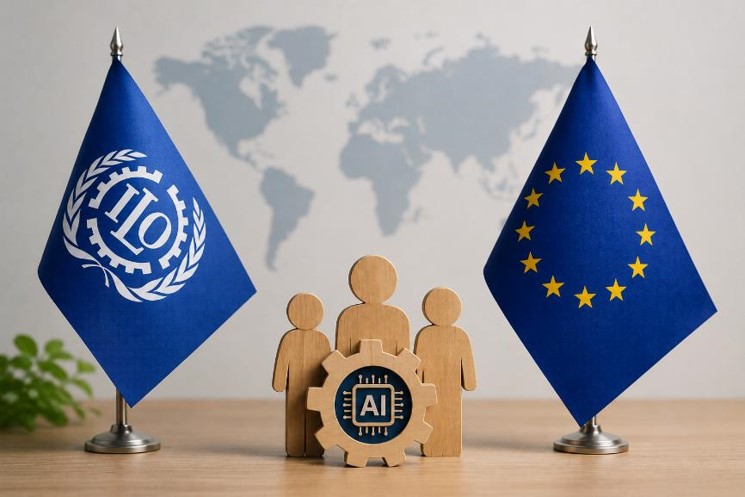
The International Labour Organization (ILO) and the European Commission have reaffirmed their strategic partnership, agreeing to strengthen cooperation on social justice, quality jobs and the human-centred governance of AI and digital transformation.
Against a backdrop of geopolitical uncertainty, climate change, demographic shifts and rapid technological change, the two organisations committed to ensuring that global transitions create inclusive labour markets and resilient economies.
Co-chaired by ILO Director-General Gilbert F. Houngbo and European Commission Executive Vice-President Roxana Mînzatu, the meeting agreed on a renewed cooperation agenda building on the 2021 Exchange of Letters between the two institutions.
Both organisations stressed that multilateral cooperation, international labour standards and social dialogue remain essential for addressing the challenges and opportunities created by AI, digitalisation and broader economic transformation.
AI and its impact on the future of work featured prominently in the discussions. Participants agreed that AI governance should remain human-centred, supporting the creation and preservation of decent jobs while strengthening labour market institutions.
The partners also highlighted the importance of international cooperation on AI governance, workforce skills and policies that help workers adapt to technological change rather than be displaced by it.
The meeting also covered trade, international partnerships and sustainable development. The ILO and the European Commission reaffirmed that trade policies should uphold international labour standards and improve working conditions throughout global supply chains.
They also agreed to deepen cooperation by combining the EU’s financial and policy instruments with the ILO’s expertise on labour standards, social protection, skills development and just transitions, reinforcing their shared objective of building more inclusive, resilient and sustainable economies.
Why does it matter?
The renewed partnership highlights how AI governance is becoming closely linked with employment and social policy. Rather than treating AI solely as a technology issue, the EU and ILO are framing it as a labour market challenge that requires international cooperation, workforce development and strong social protections.
The agreement also reinforces the growing role of international organisations in shaping a human-centred approach to AI. As governments seek to harness AI for economic growth, ensuring that technological change supports decent work, skills development and social inclusion is becoming an increasingly important part of global AI governance.
Would you like to learn more about AI, tech and digital diplomacy? If so, ask our Diplo chatbot!