What Geneva’s history can teach us about governing AI
Geneva’s centuries-old traditions of dialogue, inclusion, and compromise continue to offer valuable guidance for governing AI, as explored in a Diplo interview with Executive Director Jovan Kurbalija.
Based on a Diplo interview with Jovan Kurbalija, Executive Director of Diplo, conducted by Maricela Muñoz.
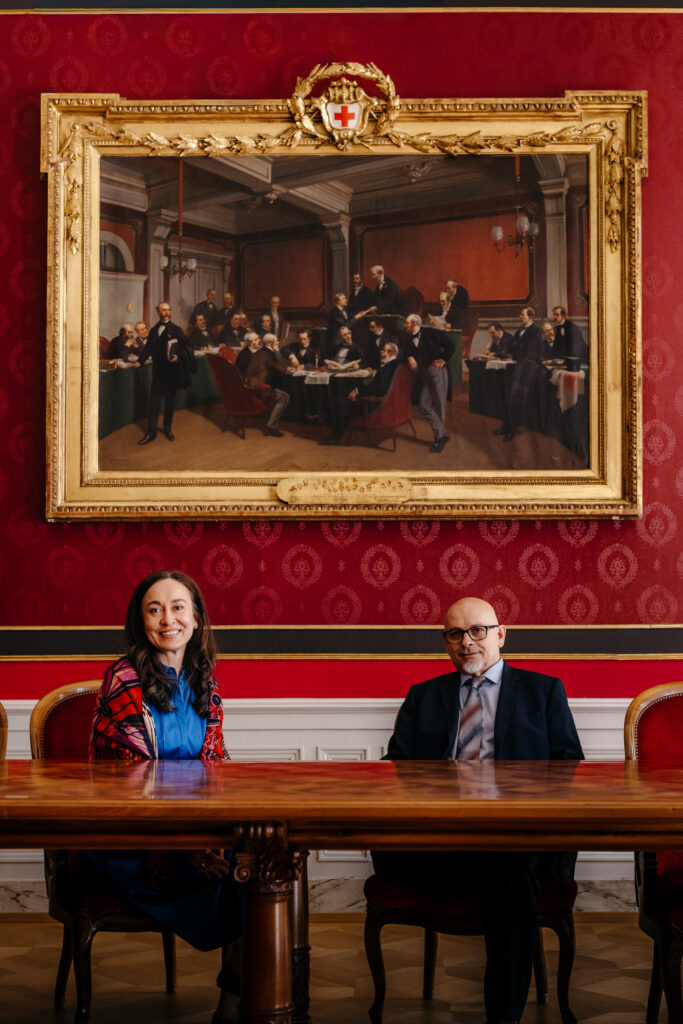
Few places embody the history of international diplomacy as vividly as Geneva’s Alabama Room. It was here, in 1864, that representatives of European states signed the first Geneva Convention, laying the foundations of modern international humanitarian law. The same room also hosted negotiations that resolved the Alabama Claims, an arbitration between the United States and the United Kingdom that became a landmark in the peaceful settlement of international disputes.
More than 160 years later, the room continues to host conversations about another challenge with global implications – AI. While the technologies have changed dramatically, the underlying questions remain remarkably familiar. How can societies govern transformative innovations responsibly? How can competing interests find common ground? And how can international cooperation keep pace with technologies evolving faster than regulation?
These themes formed the basis of a recent Diplo interview with Jovan Kurbalija, Executive Director of Diplo, who reflected on Geneva’s historical legacy and its continuing relevance for AI governance. His central argument is that understanding the future of AI requires more than technical expertise. It also requires revisiting the intellectual traditions, diplomatic culture, and human values that have shaped Geneva for centuries.
History offers principles, not ready-made answers
Kurbalija cautions against treating history as a collection of simple solutions.
‘History does not provide us ready-made lessons. Our moment is unique in many respects.’
Instead, history provides something more enduring, the principles that continue to guide societies confronting new challenges.
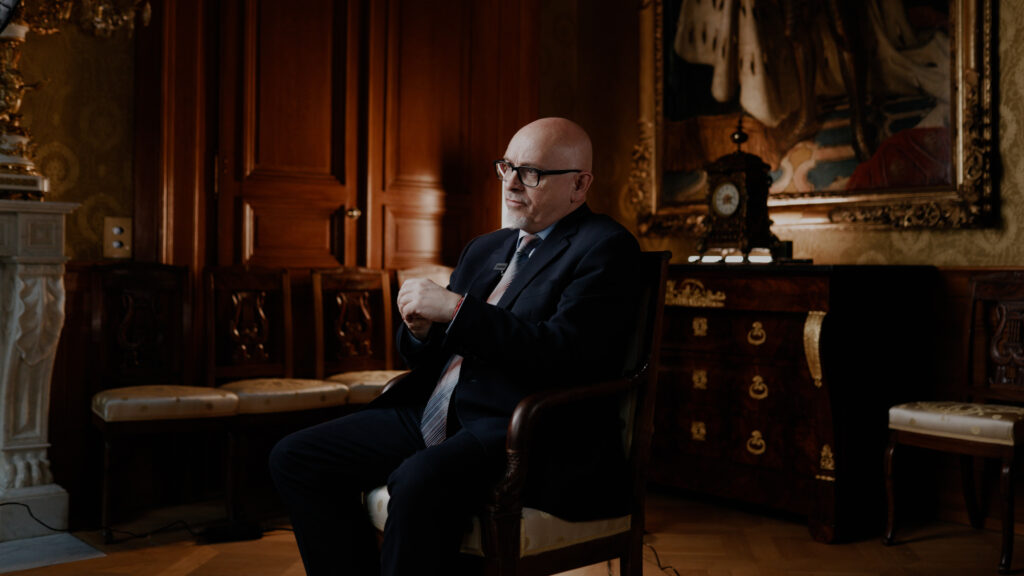
Standing inside the Alabama Room, Kurbalija described history as something that ‘echoes across time.’ Rather than searching for direct historical parallels, he suggested imagining the negotiators who once walked through Geneva’s streets before gathering around the same table to discuss humanitarian protection or peaceful dispute settlement.
The technologies confronting today’s diplomats are different, yet many of the qualities that enabled successful negotiations remain unchanged. Patience, dialogue, respect for opposing views, and the willingness to seek common ground continue to underpin effective diplomacy.
As governments, international organisations, companies, researchers, and civil society grapple with AI governance, these diplomatic traditions may be more relevant than ever.
Geneva’s enduring values: Inclusion and compromise
For Kurbalija, Geneva’s importance extends well beyond the concentration of international organisations located around the city.
Its defining contribution lies in a diplomatic culture built around inclusion and compromise.
Inclusion has long characterised Geneva’s approach to international negotiations. Whether discussing humanitarian law in the nineteenth century or AI governance today, meaningful outcomes depend on ensuring that all those affected have a voice.
That principle has become particularly important for AI governance.
‘We should have AI companies, but we must have governments, communities, citizens, marginal groups all over the world.’
The observation reflects one of the central challenges of AI governance. Decisions about AI increasingly affect education, healthcare, employment, security, trade, and human rights. Consequently, discussions cannot remain confined to governments and technology companies alone.
Kurbalija identifies compromise as the second defining Geneva principle.
‘Compromise is not a very popular word today.’
Yet he argues that compromise represents an ethical strength rather than a weakness. It requires recognising that different actors hold legitimate interests and finding solutions that, while imperfect, remain acceptable to everyone involved.
In an era increasingly shaped by geopolitical competition over AI, these principles may prove as valuable as any technological breakthrough.
EspriTech de Genève: When history speaks to AI
One of the interview’s most distinctive ideas is Kurbalija’s concept of EspriTech de Genève.
Drawing inspiration from the traditional Esprit de Genève, which reflects the city’s humanitarian and diplomatic heritage, EspriTech de Genève explores how thinkers associated with Geneva anticipated many of today’s debates about technology, knowledge, and humanity.
Rather than beginning with computers, Kurbalija traces AI governance back through centuries of philosophy, literature, linguistics, and science.
Mary Shelley’s Frankenstein, written near Geneva more than two centuries ago, provides perhaps the most familiar example. The novel tells the story of a scientist whose creation ultimately escapes his control.
‘It is the eternal reminder of the human drive to push the frontier, to invent, to discover new things—and at the same time the human predicament that the very invention we developed could hurt humanity.’
For Kurbalija, the novel remains strikingly relevant as societies debate increasingly capable AI systems. The question is no longer simply whether humans can build powerful technologies, but how they can ensure those technologies remain aligned with human interests.
Another recurring influence is Argentine writer Jorge Luis Borges, whose works explored uncertainty, knowledge, and the limits of human understanding. Reflecting on Borges’ observation that humanity must continue building ‘as if the sand were stone,’ Kurbalija argues that uncertainty is not a flaw to eliminate but a defining feature of human existence.
Attempts to achieve complete certainty through technology, he suggests, risk repeating an ancient mistake, believing that humans can fully master complexity.
Rousseau, Bonnet and Saussure: forgotten foundations of the AI age
The interview also revisits several Genevan thinkers whose ideas continue to resonate in discussions about AI.
Jean-Jacques Rousseau’s concept of the social contract raises questions about human agency in an increasingly digital society. If knowledge becomes concentrated within a handful of large AI systems, Kurbalija argues, societies may need to reconsider how citizens exercise autonomy, participate in democratic life, and realise their potential.
Charles Bonnet, an eighteenth-century Genevan natural philosopher, appears as an unexpectedly modern figure. Fascinated by recurring patterns in nature, Bonnet studied the mathematical organisation of leaves and explored how seemingly complex biological systems emerge from underlying structures.
According to Kurbalija, Bonnet’s search for patterns anticipated, in remarkably abstract form, today’s machine learning systems, which likewise identify statistical relationships within vast quantities of information.
Language itself forms another bridge between Geneva’s intellectual history and contemporary AI.
Swiss linguist Ferdinand de Saussure transformed linguistics by distinguishing between the structure of language and its meaning. Although writing decades before computers existed, his work laid conceptual foundations that later influenced computational linguistics and, indirectly, today’s large language models.
‘If AI companies ever had to pay royalties for ideas,’ Kurbalija jokes, ‘Saussure’s successors would probably earn quite a bit.’
Behind the humour lies a serious point, that AI did not emerge in an intellectual vacuum. It builds upon centuries of inquiry into language, knowledge, communication, and human cognition.
Human-centred AI begins with human values
Throughout the conversation, Kurbalija repeatedly returns to one theme, that AI governance is ultimately about people rather than machines.
The phrase ‘human-centred AI’ appears frequently in international discussions, yet he argues that its meaning deserves closer examination.
What does it actually mean to place humans at the centre of AI? For Kurbalija, the answer lies in humility.
Drawing once again on Frankenstein, he argues that technological ambition should always be accompanied by recognition of human limitations.
‘We should have humility,’ he says.
Rather than pursuing AI for its own sake, societies should ask how technology can support human dignity, creativity, education, and well-being.
He also highlights the principle of subsidiarity, the idea that decisions should be taken as closely as possible to the people affected by them. Applied to AI, this means involving citizens, educators, local communities, researchers, and smaller organisations alongside governments and major technology companies.
Broad participation, he argues, helps ensure that AI is perceived not as an external force imposed upon society, but as a tool developed with society.
Geneva’s next chapter
Geneva’s role in AI governance continues to evolve.The city already hosts initiatives such as the AI for Good Global Summit, the World Summit on the Information Society (WSIS), and numerous discussions on AI governance involving governments, international organisations, academia, civil society, and the private sector.
It is also expected to host the AI Summit in 2027, further reinforcing its position as one of the world’s principal centres for international dialogue on emerging technologies.
Image via Freepik
Yet Kurbalija believes Geneva’s greatest contribution lies not in the number of meetings it convenes but in the diplomatic culture it represents.Its traditions of inclusion, dialogue, compromise, and respect for human dignity offer an important counterbalance at a time when AI discussions are increasingly shaped by geopolitical competition, technological rivalry, and commercial pressures.
He concludes the interview with three messages for policymakers:
The first is to avoid what he calls ‘chrono-narcissism’, the belief that every challenge is entirely new and disconnected from history.
The second is to approach AI with humility, recognising both its extraordinary potential and its inherent risks.
The third is to ensure that AI governance remains genuinely inclusive by bringing decision-making closer to the people whose lives the technology will affect.
These principles echo far beyond Geneva.
As AI becomes embedded in nearly every aspect of society, debates about governance are becoming less about technology itself and more about the values that should guide its development. In that respect, Geneva’s greatest contribution may not be a particular regulatory model or institutional framework, but a reminder that diplomacy, dialogue, and humanity remain as essential in the AI era as they were when the first Geneva Convention was signed more than a century and a half ago.
Would you like to learn more about AI, tech and digital diplomacy? If so, ask our Diplo chatbot!