
Council of the EU backs interim rules on online child abuse detection
Child protection efforts receive renewed support after the Council of the EU adopted its negotiating position.
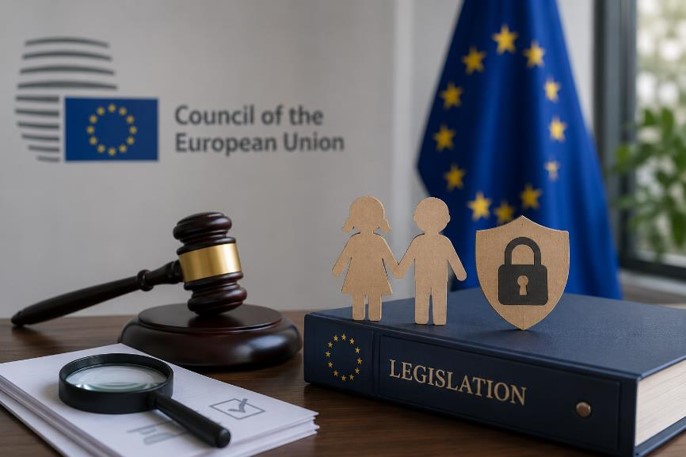
The Council of the European Union has adopted its position on interim legislation that would restore a legal basis for online service providers to voluntarily detect, report and remove child sexual abuse material (CSAM) from their platforms.
The proposal aims to restore legal certainty after the previous temporary framework expired on 3 April 2026, while negotiations continue on a permanent EU regulation to combat online child sexual abuse.
The interim regulation introduces a limited derogation from the EU’s electronic communications privacy rules, allowing online platforms to voluntarily detect child sexual abuse material and report suspected offences to law enforcement authorities.
According to the Council, these voluntary measures are essential for identifying children at risk, supporting criminal investigations, prosecuting offenders and reducing the circulation of child sexual abuse material online.
The Council proposes extending the temporary framework until 3 April 2028 to avoid a prolonged legal gap while negotiations continue on the long-term Child Sexual Abuse Regulation.
Irish Minister for Justice, Home Affairs and Migration Jim O’Callaghan said restoring providers’ ability to detect online child sexual abuse is essential to protecting victims and bringing offenders to justice. The proposal will now move to the European Parliament for a second reading, where MEPs may approve, amend or reject the Council’s position.
If adopted, the measure would restore the legal basis for voluntary detection activities while policymakers continue negotiations on a permanent framework governing the detection of child sexual abuse material across digital services in the European Union.
Why does it matter?
The proposal addresses a legal gap that emerged after the previous temporary framework expired, creating uncertainty for online platforms that voluntarily detect and report child sexual abuse material. Restoring a clear legal basis would allow providers to continue supporting law enforcement while longer-term legislation is negotiated.
The debate also reflects the EU’s continuing effort to balance child protection with privacy and fundamental rights. While the interim proposal focuses on voluntary detection, negotiations on a permanent framework are expected to continue raising questions about the appropriate balance between online safety, privacy and the responsibilities of digital platforms.
Would you like to learn more about AI, tech and digital diplomacy? If so, ask our Diplo chatbot!