
NVIDIA launches robotics safety platform for autonomous AI systems
Physical AI safety takes centre stage with NVIDIA Halo’s launch.
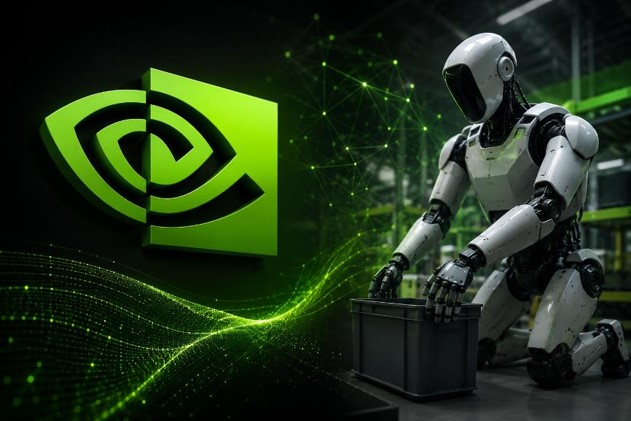
NVIDIA has unveiled Halos for Robotics, a new safety platform designed to support the deployment of autonomous robots and physical AI systems in industrial environments.
The announcement reflects growing industry attention to safety, governance and certification as AI-powered machines increasingly operate alongside human workers in factories, warehouses and logistics facilities.
NVIDIA describes Halos as a full-stack safety architecture that combines AI computing infrastructure, safety software, sensor integration and certification support.
The platform adapts technologies originally developed for autonomous vehicles, providing robotics developers with a common framework for designing, testing and validating safety-critical systems.
NVIDIA argues that standardised safety architectures will become increasingly important as robots gain greater autonomy and decision-making capabilities.
A key element of the launch is the participation of Agility, whose humanoid robot Digit is already being deployed in industrial settings. Agility will integrate components of Halos into its existing safety systems while working with NVIDIA’s newly established AI Systems Inspection Lab to pursue independent certification against international safety standards.
Why does it matter?
The announcement reflects the growing convergence of AI and robotics as autonomous systems move from controlled testing environments into real-world industrial operations. As robots gain greater autonomy and interact more directly with people, safety assurance, certification and risk management are becoming as important as performance and capability.
The launch also highlights a broader governance challenge for physical AI. Unlike generative AI systems that primarily operate in digital environments, autonomous robots can directly affect physical safety, workplace operations and critical infrastructure. Common safety architectures, certification frameworks and industry standards could therefore play an increasingly important role in building trust and supporting the large-scale deployment of AI-powered machines.
Would you like to learn more about AI, tech and digital diplomacy? If so, ask our Diplo chatbot!