


5 June – 12 June 2026
HIGHLIGHT OF THE WEEK
The AI IPO rush
When investors’ demand for a company’s shares far exceeds the number of available shares, they are showing strong confidence that the company could become a major industrial power. At the same time, such intense demand can be a warning sign that expectations are running ahead of proven returns. Surges like this usually come from a mix of real technological potential and market euphoria.
In the past week, SpaceX sought to raise around $75 billion through its IPO (Initial Public Offering), while investor demand approached four times that amount, or more than $250 billion in orders. That means the IPO is, technically speaking, oversubscribed.
OpenAI and Anthropic have also joined the race towards public markets, showing how AI has moved from software promise to financial and geopolitical infrastructure. Governance debates have long focused on ethics, safety, bias, transparency, and regulation, but the IPO wave adds another layer: finance. Once AI companies enter public markets, their development is shaped not only by engineers, founders, researchers, and regulators, but also by quarterly expectations, institutional investors, pension funds, retail shareholders, and market narratives.
What does this mean? Following the logical thread above, AI is becoming an omnipresent metasystem of infrastructure. Developing and making available AI systems requires chips, energy, data centres and data flows, cooling, cloud platforms, secure connectivity, payment systems, and more. In this sense, the race to list OpenAI, Anthropic, and SpaceX is also a race to finance the foundations of the global AI economy. SpaceX is particularly important because strong IPO demand shows that investors see it as more than a rocket company. They are buying into satellites, connectivity, defence relevance, orbital infrastructure, and the role of space-based systems in the wider digital stack. Their listings test whether markets can treat frontier AI as both a technological breakthrough and a sustainable business model. Yet AI systems remain expensive to train and run, and public markets are only one source of funding.
The buildout is also moving into bond markets, with Morgan Stanley expecting global AI-related debt issuance to more than double to nearly $570 billion in 2026 as companies fund chips, data centres, cloud capacity, and related infrastructure. The governance question, therefore, goes beyond IPO valuation, since AI finance is spreading across equity, debt, private credit, and infrastructure investment instruments.

Why is this happening?
First, investors believe that AI is a new general-purpose technology, like electricity, the internet, or mobile telephones, that will not be limited to just one industry sector, but will be a layer across all industries, like healthcare, finance, education, defence, logistics, media, public administration, and more. That is why money is not flowing only into ‘AI applications’, but also into other areas such as chips, data centres, cloud infrastructure, energy, fibre optics, satellites, and network infrastructure.
Second, there is a first-mover advantage effect. Major companies are spending huge sums because they fear that, if they fall behind, they will lose access to infrastructure, data, models, talent, and users. Even if not every investment is individually rational, no major player wants to be the one that ‘saved money’ while others were building the platform of the future.
Third, investors are buying into future monopoly positions, not just current profits. If a company becomes key infrastructure for AI, like Nvidia in chips, cloud platforms in computing, or SpaceX/Starlink in connectivity and orbital infrastructure, markets value it as a potential gateway through which enormous future revenues may flow. That is why demand for certain IPOs can be so high. Investors are not only buying shares, but also early access to a possible dominant layer of the future economy.
Does the AI IPO growth make sense? Partly yes, but not at any price. It makes sense because AI is already creating measurable economic value in areas such as software development, analysis, and customer support. But it does not make sense when every company with an AI label is valued as if it were a future monopoly.
The best analogy is the internet around 2000. The internet did change the world. But many dot-com valuations were unrealistic and collapsed. Something similar may happen with AI. Few winners may justify enormous investment, while many weaker projects, inflated valuations, and companies without clear revenue models may fail.
There’s also a geopolitical dimension. China’s recently reported state-backed AI data-centre buildout shows that governments also treat AI as strategic infrastructure. On the other hand, US scrutiny of Chinese technology firms through Pentagon-linked lists and debates over investment restrictions shows that AI capital is increasingly filtered through national security concerns.
Wrapping up, public listings can bring benefits like greater transparency, broader ownership, employee liquidity, and stricter disclosure rules. However, they can also deepen the concentration of power if a small number of firms absorb most capital, talent, infrastructure, and political attention.
The question is: Can societies finance innovation without surrendering oversight, scale infrastructure without entrenching dependency, and build powerful AI systems without losing sight of the people and communities they are meant to serve?
IN OTHER NEWS LAST WEEK
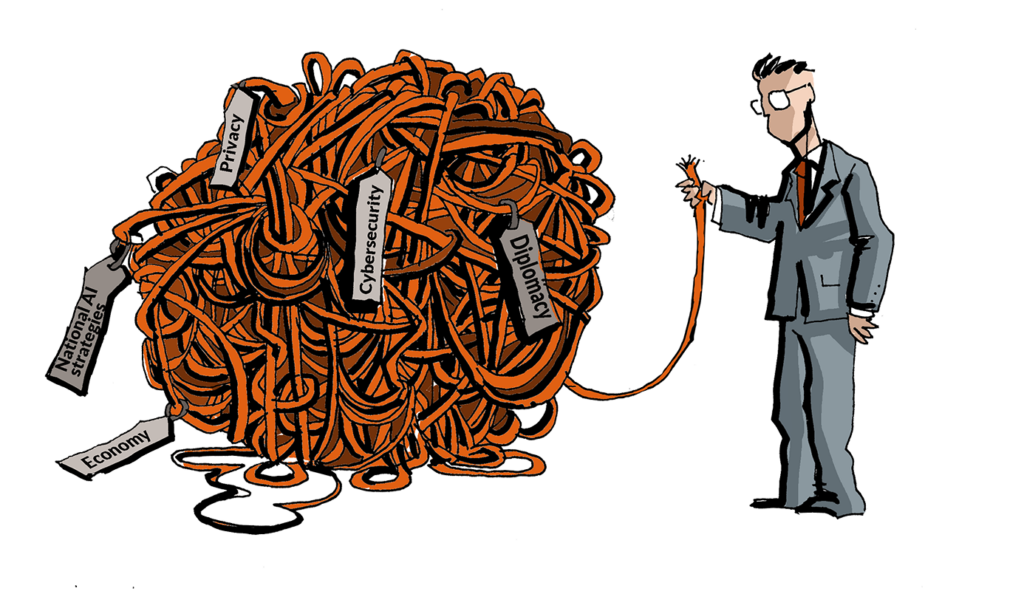
AI governance
The USA. The US government published a new AI Executive Order 14409 on innovation and security, Promoting Advanced Artificial Intelligence Innovation and Security, in the Federal Register on 5 June. The order frames advanced AI as both an innovation priority and a security issue, signalling a governance approach focused on maintaining US leadership while addressing risks linked to powerful AI systems.
Brazil. Brazil’s telecommunications regulator, Anatel, adopted a new AI governance policy on 5 June, setting principles for the ethical, secure, and transparent use of AI in its regulatory and administrative work. Developed by the agency’s IA.lab research group, the framework includes human oversight, transparency, data security, protection of fundamental rights, risk monitoring, and a permanent forum to assessing AI deployment. It also links AI governance with technological sovereignty by encouraging the development of Brazil-built AI solutions, the use of local data, and the development of Portuguese-language applications.
The EU. The EU tech chief Henna Virkkunen defended Europe’s approach of combining AI competitiveness with strong regulation. She said there was no immediate need to revise the EU AI Act for AI agents, while also linking AI policy to Europe’s wider ambitions in semiconductors, quantum, cybersecurity, industrial uptake, and international digital partnerships.
ILO. At the 114th International Labour Conference in Geneva, AI governance was addressed in the Director-General’s report, A moment of choice: Harnessing AI for decent work. The report frames AI as a labour-governance issue, focusing on jobs, skills, rights, social dialogue, inequality, and institutional capacity, rather than treating AI only as a productivity tool.
Ireland. Ireland’s Dáil debated and passed a bill to protect people’s voices, images, likenesses, and digital identities from AI-enabled misuse. The proposal targets deepfakes and other synthetic impersonation harms, including fraud, deception, and unauthorised commercial use of a person’s identity, adding to the wider trend of AI-specific rules for synthetic media.
Germany. Germany announced plans to establish an AI safety institute to assess the performance and risks of advanced AI models. The decision followed a National Security Council discussion on the cybersecurity implications of advanced AI, placing Germany among the growing number of countries building dedicated technical capacity to evaluate AI risks.
The USA. The White House issued a National Security Presidential Memorandum on AI during the week, treating AI as a transformative national security technology. The memorandum links AI adoption to defence, strategic competition, military effectiveness, and the need to manage security risks, showing how AI governance is increasingly being embedded in national security policy.
New York. A New York law requiring advertisements that use AI-generated ‘synthetic performers’ to clearly disclose them took effect in June. The measure is part of a growing state-level approach to AI transparency, especially in advertising, media, and the creative industries, where regulators are addressing synthetic likenesses, consumer awareness, and protection of performers.
China. Reports that China is preparing a large state-backed AI data-centre buildout showed how AI governance is increasingly tied to infrastructure, energy, chips, and strategic autonomy. The development places AI not only in the domain of model regulation, but also in industrial policy, compute capacity, and geopolitical competition over the foundations of the AI economy.
Apple delays Siri AI in Europe amid DMA clash
Apple’s decision to delay the launch of its advanced AI-powered Siri in the EU has become one of the week’s most visible platform-governance disputes. The company blamed the EU’s Digital Markets Act, arguing that interoperability obligations could weaken privacy and security if rival AI assistants are given deeper access to Apple systems. The European Commission rejected the claim that the DMA prevents Apple from launching new services, noting that the company has not yet offered a compliant solution.
The case captures a central tension in digital regulation: how to open gatekeeper ecosystems to competition without undermining user protection. It also shows that AI assistants are becoming part of the next platform-control debate. If Siri, Gemini, ChatGPT, Claude, and other assistants become gateways to search, apps, payments, smart devices, and personal data, then rules on interoperability will shape not only competition policy but also the everyday architecture of AI-mediated services.
The EU publishes final code for labelling AI-generated content
The European Commission published the final Code of Practice on marking and labelling AI-generated content, offering practical guidance ahead of the EU AI Act’s transparency obligations. The code covers machine-readable marking of AI-generated or manipulated text, image, audio, and video, as well as labelling of deepfakes and AI-generated public-interest content.
Why does it matter? The AI Act’s transparency rules are now moving from legal text to operational practice. Labelling standards could shape how platforms, AI developers, media organisations, public institutions, and advertisers handle synthetic content, especially where undisclosed AI use may affect elections, journalism, public debate, scams, or personal reputation. The challenge will be to make labels useful and reliable without creating a false sense of security: bad actors may ignore labelling rules, while legitimate actors carry the compliance burden.
EDPB adopts common data breach notification template
The European Data Protection Board adopted a common template for GDPR data breach notifications, aiming to simplify compliance and improve consistency across the EU. The template is designed to help organisations and data protection authorities structure breach reports under Article 33 of the GDPR, with predefined fields and guidance intended to reduce administrative burdens.
This is a technical change, but a meaningful one. Data breach notification is one of the practical mechanisms through which privacy law becomes operational. Fragmented national practices can make compliance harder, especially for organisations operating across several EU countries. A shared template may support more predictable enforcement, faster reporting, and better incident comparison across jurisdictions.
The EU orders Meta to restore access for AI assistants
The European Commission ordered Meta to restore access to WhatsApp for rival general-purpose AI assistants while an antitrust investigation continues. The interim measures require Meta to reinstate access to the WhatsApp Business Solution under the previous terms, after the Commission found that Meta’s restrictions could harm competition in the emerging market for AI assistants.
Why does it matter? WhatsApp is not only a messaging app. In many markets, it is a default channel for businesses, public services, customer support, and daily communication. If dominant platforms can decide which AI assistants can reach users through such channels, they may shape the AI market before it fully matures. The case links competition policy with AI governance: access to messaging infrastructure could become as important as access to app stores, search engines, or cloud capacity.
LAST WEEK IN GENEVA

The 114th International Labour Conference in Geneva put digital labour governance firmly on the agenda. Running from 1 to 12 June, the conference brought together governments, employers and workers from the ILO’s 187 member states, with platform work among the key items under negotiation. Delegates are considering a draft Convention supplemented by a Recommendation on decent work in the platform economy, marking a possible step towards new international labour standards for app-based and platform-mediated work.
AI also featured prominently through the ILO Director-General’s report, A moment of choice: Harnessing AI for decent work. The report frames AI not only as a productivity tool, but as a governance challenge for jobs, skills, inequality, institutions and social dialogue. Together, the platform economy negotiations and AI report show how Geneva’s labour diplomacy is increasingly engaging with the rules, rights and safeguards needed for a digitalised world of work.
LOOKING AHEAD
The 2026 G7 Leaders’ Summit will take place from 15 to 17 June in Évian-les-Bains, France, bringing together the leaders of Canada, France, Germany, Italy, Japan, the UK, and the USA, as well as the EU representatives. Under the French G7 Presidency, discussions will focus on structural imbalances in the global economy, international cooperation, and dialogue among major economic powers, building on preparatory ministerial and technical meetings across foreign affairs, finance, trade, environment, digital policy, development, and home affairs.
The 62nd regular session of the UN Human Rights Council will convene from 15 June to 16 July 2026 at the Palais des Nations in Geneva, providing a key forum for states and stakeholders to address global human rights issues. Digital governance will feature across several reports, including on the use of digital tools for stakeholder engagement in line with the UN Guiding Principles on Business and Human Rights, state and business responsibilities across the lifecycle of emerging digital technologies, the impact of digital surveillance on assembly and association rights, women’s and girls’ rights in relation to AI and digital technologies, and cyberbullying against older persons.
The Global Conference on AI, Security and Ethics 2026, organised by UNIDIR, will convene on 18–19 June at the Palais des Nations in Geneva and online, bringing together diplomats, policymakers, military representatives, researchers, industry, civil society, and international organisations to examine AI’s implications for international peace and security. The programme will focus on AI and security governance, from algorithmic bias, dual-use technologies, agentic AI, and testing of defence-related AI systems to counter-AI capabilities, infrastructure dependencies, resilience, human-centred operational considerations, public–private cooperation, accountability, and links with wider disarmament and security regimes.
READING CORNER

Article 41 of the VCDR prohibits interference in a state’s internal affairs, yet international law has widened the scope for lawful diplomatic interference. Alan Franklin explores the growing tension between sovereignty and diplomatic practice.

Discover why Asia-Pacific embraces AI as progress while the West views it as a risk. Inside the global AI divide and what it means for future governance.

Four interconnected measures, including two new laws, could fundamentally reshape how Europe invests in, deploys, and governs the semiconductors, cloud infrastructure and software its economy depends on.
DON’T MISS

Follow the road to the 2027 Geneva AI Summit, a global journey shaping AI’s future. Bookmark the page and register for updates to stay informed and involved every step of the way to Geneva 2027.