
Code for America highlights challenges in measuring AI use in public services in the US states
The adoption of AI in the US states grows, but implementation and impact measurement remain limited.
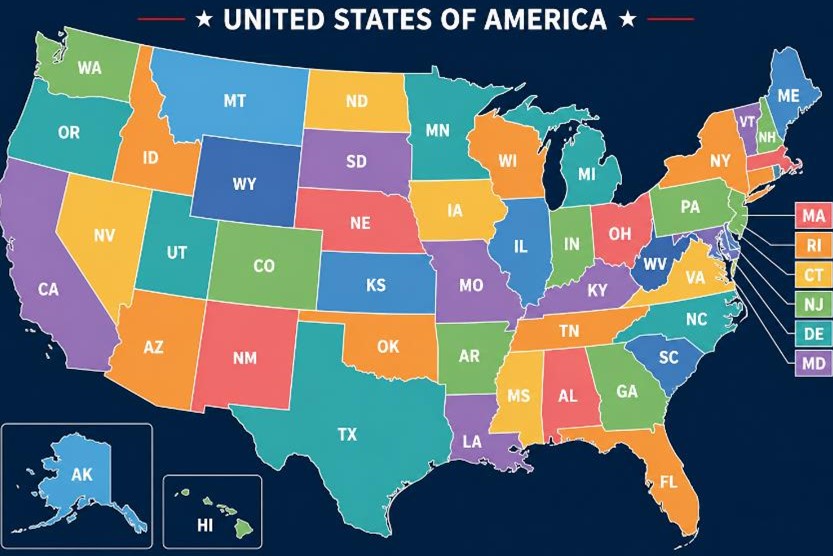
According to Code for America, AI is reshaping how public services are delivered across the United States, yet adoption remains uneven and difficult to measure. They added that state governments are rapidly embracing AI through low-risk pilot programmes while still lacking clear frameworks to evaluate impact.
The report describes AI adoption as following a staged progression beginning with readiness, where leadership structures, workforce skills and infrastructure are developed.
Piloting then introduces experimentation through sandboxes and limited deployments, while implementation embeds AI into operational systems such as fraud detection, document automation, research support and citizen-facing chat assistants.
The report also notes that despite growing experimentation, most US states have not yet transitioned into fully operational and measurable systems.
Leading states, including Utah, New Jersey, Pennsylvania, North Carolina, Maryland, Texas and Vermont, are advancing institutional capabilities required to govern AI as a long-term public asset. Others, such as West Virginia, Wyoming, Nebraska, Alaska, Florida and Kansas, remain at earlier stages of readiness and adoption.
The report identifies measuring outcomes as a key challenge. It states that while AI promises efficiency gains and cost reductions, short-term deployment often increases workload for public employees before benefits materialise.
It adds that evaluation frameworks remain underdeveloped, leaving governments with strong governance structures but limited visibility into real performance improvements.
According to Amanda Renteria, CEO of Code for America, the opportunity extends beyond adoption alone, as governments must shape AI in ways that are human-centred and grounded in measurable public outcomes.
The report suggests that states that succeed in aligning technology with real community impact will move beyond experimentation and define the future of public service in the AI era.
Would you like to learn more about AI, tech and digital diplomacy? If so, ask our Diplo chatbot!