
International consensus emerges on submarine cable governance
As governments move to treat undersea connectivity as a shared policy responsibility rather than a purely technical issue, the Porto summit signalled a turning point in how submarine cables are governed, protected, and sustained worldwide.
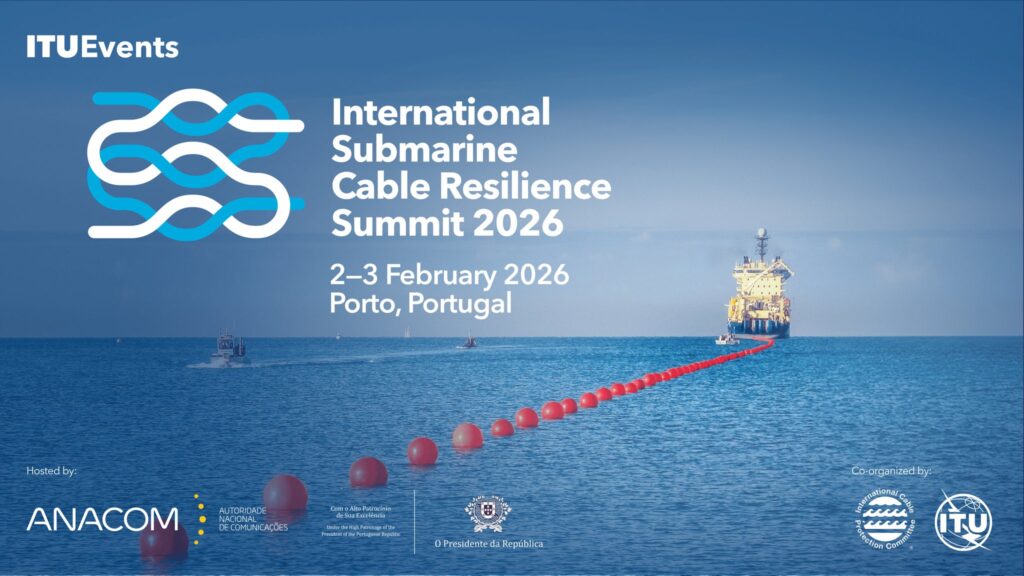
The International Submarine Cable Resilience Summit concluded in Porto with a strong call for proactive action to protect the infrastructure that underpins global digital connectivity. Hosted by Portugal’s regulator Anacom and co-chaired by Professor Sandra Maximiano and Nigerian Minister of Communications Bosun Tijani, the summit brought together more than 350 participants from over 70 countries, spanning governments, industry, and international organisations, including the ITU and the International Cable Protection Committee.
ITU Deputy Secretary-General Thomas Lamanauskas framed the summit as a milestone in a broader global effort, noting that ITU members have designated this period as a ‘year of resilience,’ with submarine cables at its core. He described the Porto meeting as the culmination of two years of work following the first summit in Abuja, marking a shift from reacting to cable failures toward systematically strengthening resilience before disruptions occur.
Concrete progress was reported through three working groups that have been active since the Abuja summit, focusing on repair procedures and permitting, risk mitigation, and connectivity for underserved regions.
John Wrottesley of the ICPC credited the close involvement of governments alongside technical experts for producing recommendations that are both realistic and implementable, saying this collaboration injected new momentum into the process.
A central theme of the closing session was the recognition that resilience starts long before cables are damaged. Lamanauskas stressed that adequate protection depends on planning, routing, monitoring, and marine awareness, rather than relying solely on faster repairs after incidents.
Wrottesley reinforced this point from an industry perspective, arguing that well-designed cables and streamlined administrative processes are just as critical as ships and technology when outages occur.
The speakers also highlighted the importance of continuous coordination between governments and operators, including round-the-clock communication frameworks to enable rapid response. Investment was another key issue, with participants stressing that resilience requires sustained funding not only for new systems, but also for existing cables, repair ships, and coverage gaps that still leave some regions highly exposed.
The session culminated in the formal endorsement of the Porto Declaration on Submarine Cable Resilience by the International Advisory Body. Minister Tijani described the declaration as a forward-looking response to the disruptions experienced in 2024, reflecting the reality that connectivity has become foundational to economic and social life. He acknowledged the contributions of working group leaders from countries and organisations, including the United Kingdom, China, the World Bank, the Caribbean Telecommunications Union, North American Submarine Cable, and South Africa.
The declaration emphasises inclusion, capacity development, and long-term cooperation, particularly for small island states, least developed countries, and landlocked nations.
As the summit closed, Wrottesley underlined that the real test lies in implementation, with working groups set to continue their work through mid-2026. The Porto Declaration was adopted by acclamation, signalling broad agreement that protecting submarine cables requires sustained collaboration to keep global connectivity open, reliable, and resilient.
Would you like to learn more about AI, tech and digital diplomacy? If so, ask our Diplo chatbot!