
Submarine cables keep the global internet running
Hidden beneath the oceans lies a fragile but essential network whose security and resilience are increasingly seen as vital to the stability of the global digital economy.
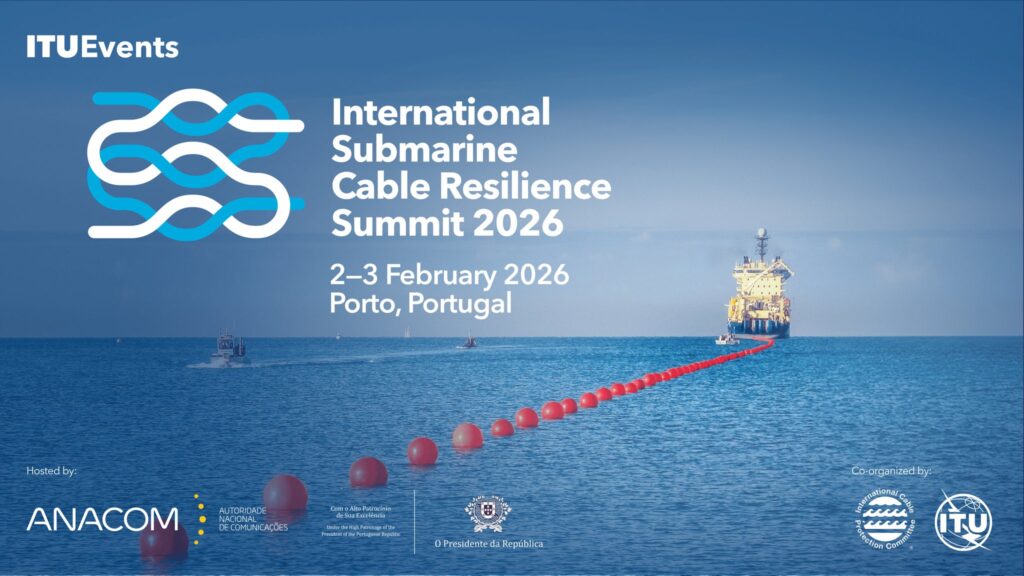
The smooth functioning of the global internet depends on a largely unseen but critical system, the undersea fibre-optic cables that carry nearly all international data traffic. These cables, laid across the ocean floor, support everything from everyday online communication to global financial transactions.
Ahead of the Second International Submarine Cable Resilience Summit in Porto, Portugal, the International Telecommunication Union (ITU) has drawn attention to the growing importance of protecting this infrastructure.
Tomas Lamanauskas, Deputy Secretary-General of ITU, has stressed that submarine cables are the backbone of global connectivity and that their resilience must be strengthened as societies become ever more dependent on digital networks. From their origins as 19th-century telegraph lines, undersea cables have evolved into high-capacity systems capable of transmitting hundreds of terabits of data per second, forming a dense web that connects continents, economies, and communities.
Today, more than 500 commercial submarine cables stretch for roughly 1.7 million kilometres beneath the seas. Although these cables are relatively thin, their installation is complex, requiring detailed seabed surveys, environmental assessments, and specialised cable-laying vessels to ensure safe deployment and protection.
Despite their robust design, undersea cables remain vulnerable. Natural hazards such as earthquakes and underwater landslides pose risks, but around 80% of cable faults are caused by human activities, including ship anchors and fishing trawlers.
When cables are damaged, the effects can be immediate, disrupting internet access, emergency communications, financial services, and digital healthcare and education, particularly in remote or island regions.
Repairing or replacing damaged cables is often slow and costly. While faults can usually be located quickly, repairs may be delayed by complex permitting procedures and coordination across multiple jurisdictions.
With some cables installed during the dot-com boom now approaching the end of their lifespan, ITU is increasingly focused on fostering international cooperation, setting standards, and promoting best practices to ensure that these hidden networks can continue to support global connectivity in the years ahead.
Would you like to learn more about AI, tech, and digital diplomacy? If so, ask our Diplo chatbot!