
‘All is fair in RAM and war’: RAM price crisis in 2025 explained
RAM prices are surging worldwide, and AI demand, tariffs, and supply concentration have reshaped the memory market of today.
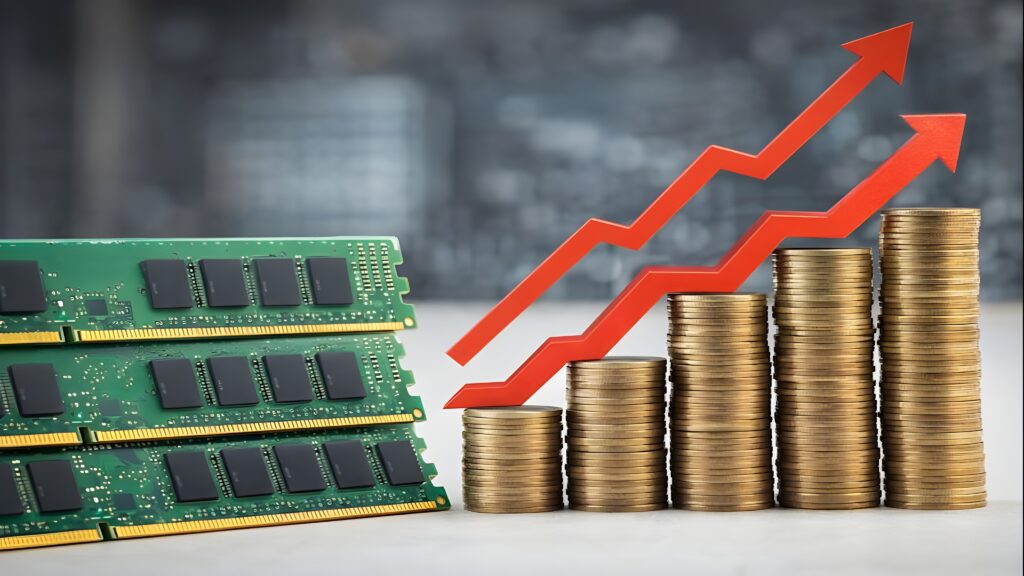
If you are piecing together a new workstation or gaming rig, or just hunting for extra RAM or SSD storage, you have stumbled into the worst possible moment. With GPU prices already sky-high, the recent surge in RAM and storage costs has hit consumers hard, leaving wallets lighter and sparking fresh worries about where the tech market is headed.
On the surface, the culprit behind these soaring prices is a sudden RAM shortage. Prices for 32GB and 64GB sticks have skyrocketed by as much as 600 percent, shelves are emptying fast, and the balance between supply and demand has completely unraveled.
But blaming the sky-high prices on empty shelves only tells part of the story. Why has affordable RAM vanished? How long will this chaos last? And most intriguingly, what role does AI play in this pricing storm?
Tracing the causes of RAM pricing spikes
The US tariffs imposed on China on 1 August 2025, played a substantial role in the increase in DRAM prices. Global imports of various goods have become more costly, investments and workforce onboarding have been halted, and many businesses relying on imports have adopted a ‘wait-and-see’ approach to how they will do business going forward.
However, the worst was yet to come. On 3 December, Micron, one of the world’s leading manufacturers of data storage and computer memory components, announced its withdrawal from the RAM consumer market, citing a ‘surge in demand for memory and storage’ driven by supply shortages of memory and storage for AI data centres.
With Micron out of the picture, we are left with only two global consumer RAM and high-bandwidth memory (HBM) manufacturers: Samsung and SK Hynix. While there are countless RAM brands on the market, with Corsair, Kingston, and Crucial leading the charge, all of them rely on the three aforementioned suppliers for memory chips.
Micron’s exit was likely met with obscured glee by Samsung and SK Hynix of South Korea, who seized the opportunity to take over Crucial’s surrendered territory and set the stage for their DRAM/HBM supply duel. The latter supplier was quick to announce the completion of its M15X semiconductor fabrication plant (fab), but warned that RAM supply constraints are likely to last until 2028 at the earliest.
Amid the ruckus, rumours surfaced that Samsung would be sunsetting its SATA SSD production, which the company quickly extinguished. On the contrary, the Korean giant announced its intention to dethrone SK Hynix as the top global RAM provider, with more than 80 percent of its projected profits coming directly from Samsung Electronics.
Despite their established market shares, both enterprises were caught off guard when their main rival threw in the towel, and their production facilities are unable, at current capacity, to accommodate the resulting market void. It is nigh certain that the manufacturers will use their newly gained market dominance to their advantage, setting prices based on their profit margins and customers’ growing demand for their products. In a nutshell, they have the baton, and we must play to their tune.
AI infrastructure and the reallocation of RAM supply
Micron, deeming commodity RAM a manufacturing inconvenience, made a move that was anything but rash. In October, Samsung and SK Hynix joined forces with OpenAI to supply the AI giant with a monthly batch of 900,000 DRAM wafers. OpenAI’s push to enhance its AI infrastructure and development was presumably seen by Micron as a gauntlet thrown by its competitors, and Crucial’s parent company took no time in allocating its forces to a newly opened front.
Lured by lucrative, long-term, high-volume contracts, all three memory suppliers saw AI as an opportunity to open new income streams that would not dry up for years to come. While fears of the AI bubble bursting are omnipresent and tangible, neither Samsung, SK Hynix, nor Micron are overly concerned about what the future holds for LLMs and AGI, as long as they continue to get their RAM money’s worth (literally).
AI has expanded across multiple industries, and three competitors judged Q4 2025 the opportune time to put all their RAM eggs in one basket. AI as a business model has yet to reach profitability, but corporate investors poured more than USD 250 billion into AI in 2024 alone. Predictions for 2025 have surpassed the USD 500 billion mark, but financiers will inevitably grow more selective as the AI startup herd thins and predicted cash cows fail to deliver future profits.
To justify massive funding rounds, OpenAI, Microsoft, Google, and other major AI players need to keep their LLMs in a perpetual growth cycle by constantly expanding their memory capacity. A hyperscale AI data centre can contain tens of thousands to hundreds of thousands of GPUs, each with up to 180 gigabytes of VRAM. Multiply that by 1,134, the current number of hyperscale data centres, and it is easy to see why Micron was eager to ditch the standard consumer market for more bankable opportunities.
The high demand for RAM has changed the ways manufacturers view risk and opportunity. AI infrastructure brings more volume, predictability, and stable contracts than consumer markets, especially during uncertain times and price swings. Even if some areas of AI do not meet long-term hopes, the need for memory in the near and medium term is built into data centre growth plans. For memory makers, shifting capacity to AI is a practical response to current market incentives, not just a risky bet on a single trend.
The aftermath of the RAM scarcity
The sudden price inflation and undersupply of RAM have affected more than just consumers building high-end gaming PCs and upgrading laptops. Memory components are critical to all types of devices, thereby affecting the prices of smartphones, tablets, TVs, game consoles, and many other IoT devices. To mitigate production costs and maintain profit margins, device manufacturers are tempted to offer their products with less RAM, resulting in substandard performance at the same price.
Businesses that rely on servers, cloud services, or data processing are also expected to get caught in the RAM crossfire. Higher IT costs are predicted to slow down software upgrades, digital services, and cybersecurity improvements. Every SaaS company, small or large, risks having its platforms overloaded or its customers’ data compromised.
Public institutions, such as schools, hospitals, and government agencies, will also have to bend backwards to cover higher hardware costs due to more expensive RAM. Operating on fixed budgets allows only so much wiggle room to purchase the required software and hardware, likely leading to delays in public digital projects and the continued use of outdated electronic equipment.

Rising memory costs also influence innovation and competition. When basic components become more expensive, it is harder for new companies to enter the market or scale up their services. This can favour large, well-funded firms and reduce diversity in the tech ecosystem. Finally, higher RAM prices can indirectly affect digital access and inclusion. More expensive devices and services make it harder for individuals and communities to afford modern technology, widening existing digital divides.
In short, when RAM becomes scarce or expensive, the effects extend far beyond memory pricing, influencing how digital services are accessed, deployed, and maintained across the economy. While continued investment in more capable AI models is a legitimate technological goal, it also raises a practical tension.
Advanced systems deliver limited value if the devices and infrastructure most people rely on lack the memory capacity required to run them efficiently. The challenge of delivering advanced AI models and AI-powered apps to subpar devices is one that AI developers will have to take into account moving forward. After all, what good is a state-of-the-art LLM if a run-of-the-mill PC or smartphone lacks the RAM to handle it?
The road ahead for RAM supply and pricing
As mentioned earlier, some memory component manufacturers predict that the RAM shortage will remain a burr under consumers’ saddles for at least a few years. Pompous predictions of the AI bubble’s imminent bursting have mostly ended up in the ‘I’ll believe it when I see it’ archive section, across the hall from the ‘NFTs are the future of digital ownership’ district.
Should investments continue to fill the budgets of OpenAI, Perplexity, Anthropic, and the rest, they will have the resources to reinforce their R&D departments, acquire the necessary memory components, and further develop their digital infrastructure. In the long run, the technology powering AI models may become more sophisticated to the point where energy demands reach a plateau. In that case, opportunities for expansion would be limitless.
Even though one of the biggest RAM manufacturers has fully shifted to making AI infrastructure components, there is still a gap large enough to be filled by small- and medium-sized producers. Companies such as Nanya Technology from Taiwan or US-based Virtium hold a tenth of the overall market share, but they have been given the opportunity to carry Micron’s torch and maintain competitiveness in their own capacities.
The current RAM price crisis is not caused by a single event, but by the way new technologies are changing the foundations of the digital economy. As AI infrastructure takes up more of the global memory supply, higher prices and limited availability are likely to continue across consumer, business, and public-sector markets. How governments, manufacturers, and buyers respond will shape not only the cost of hardware but also how accessible and resilient digital systems remain.
Would you like to learn more about AI, tech, and digital diplomacy? If so, ask our Diplo chatbot!
About author

Jovan Krstić
Mr Jovan Krstić is a seasoned content creator with a strong background in journalism and analysis. His journey began at the Faculty of Political Science, University of Belgrade, where he developed a keen interest in the intersection of technology and politics.