
Closing Session
3 Feb 2026 15:15h - 16:00h
Closing Session
Session at a glance
Summary
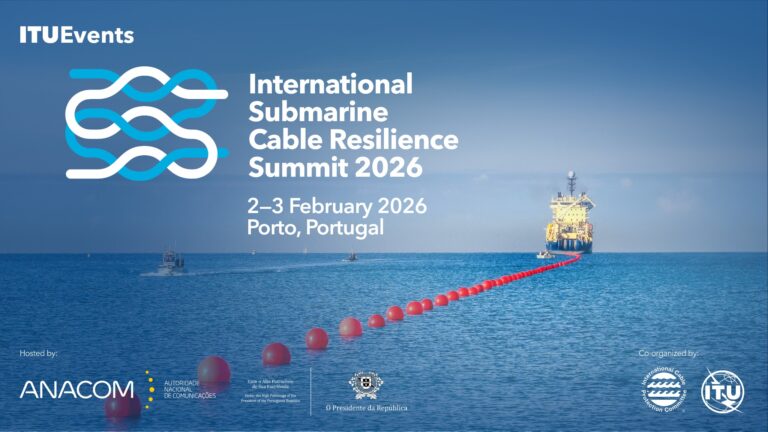
This transcript captures the closing session of the 2026 International Submarine Cable Resilience Summit held in Porto, Portugal, hosted by Anacom and co-chaired by Professor Sandra Maximiano and Nigerian Minister Bosun Tijani. The summit brought together over 350 participants from more than 70 countries, including government officials, industry representatives, and international organizations like the ITU and ICPC, to address the critical issue of submarine cable infrastructure resilience. Thomas Lamanauskas from the ITU emphasized that 2026 was designated as a year of resilience, with the summit serving as a focal point for global discussions on protecting this critical infrastructure that underpins international connectivity.
The summit produced concrete outcomes through three working groups that developed recommendations covering repair procedures, risk mitigation, and bridging connectivity gaps for underserved regions. Key findings highlighted that shortening repair times depends not only on technology and vessels but also on streamlined permitting processes and coordination among authorities. The participants stressed that resilience must be built proactively during the planning and deployment phases rather than reactively after incidents occur. John Wrottesley from the ICPC emphasized the importance of collaboration between industry and governments, noting that the strongest cable protection occurs before installation through proper route planning and design.
The summit culminated in the Porto Declaration on Submarine Cable Resilience, which provides six key areas of guidance including streamlining permitting processes, improving legal frameworks, encouraging geographic diversity, adopting industry best practices, enhancing cable protection, and building capacity through training and innovation. Minister Tijani emphasized that these recommendations represent proactive rather than reactive measures, essential as more economic activity moves online and connectivity becomes foundational rather than peripheral. The declaration represents a significant milestone in international cooperation on submarine cable resilience, establishing a framework for sustained collaboration between public and private sectors to ensure reliable global connectivity for all.
Keypoints
Major Discussion Points:
– Submarine Cable Resilience Framework: The summit focused on developing concrete recommendations through three working groups covering repair procedures, risk mitigation, and bridging connectivity gaps, with emphasis on shortening repair times through improved processes and permitting frameworks.
– International Cooperation and Collaboration: Strong emphasis on the need for sustained partnership between governments, industry, and international organizations, with over 70 countries and 350 participants demonstrating global commitment to addressing submarine cable infrastructure challenges.
– Investment and Infrastructure Development: Discussion of critical investments needed in existing cables, repair capabilities, and ensuring connectivity for underserved regions, particularly small island developing states and least developed countries.
– The Porto Declaration: Introduction and affirmation of a formal declaration establishing six key guidance principles for strengthening submarine cable resilience, including streamlined permitting processes, improved legal frameworks, and enhanced cable protection measures.
– Proactive vs. Reactive Approach: Shift from merely responding to cable cuts and delays experienced in 2024 to implementing proactive measures that build resilience before incidents occur, including better route planning, monitoring, and protection measures.
Overall Purpose:
The discussion served as the closing session of the 2026 International Submarine Cable Resilience Summit, aimed at presenting concrete outcomes from two years of collaborative work between the ITU, ICPC, governments, and industry stakeholders. The primary goal was to establish actionable recommendations and formal commitments through the Porto Declaration to strengthen the resilience of submarine telecommunications cables as critical global infrastructure.
Overall Tone:
The tone throughout the discussion was consistently formal, collaborative, and optimistic. It maintained a celebratory yet professional atmosphere, with speakers expressing gratitude for the collaborative effort while emphasizing the serious responsibility that comes with the outcomes. The tone was forward-looking and action-oriented, with all speakers stressing the importance of moving from discussion to implementation. There was no significant change in tone throughout the conversation – it remained diplomatic, appreciative, and focused on shared commitment to concrete action.
Speakers
– Moderator: Role/Title: Event moderator; Area of expertise: Not mentioned
– Tomas Lamanauskas: Role/Title: Deputy Secretary-General of the ITU; Area of expertise: International telecommunications, submarine cable resilience
– John Wrottesley: Role/Title: Operation Manager at the ICPC; Area of expertise: Submarine cable operations and industry coordination
– Bosun Tijani: Role/Title: His Excellency Minister of Communications, Innovation and Digital Economy from Nigeria; Area of expertise: Government policy, digital economy, communications
– Sandra Maximiano: Role/Title: Professor, Chairwoman of NECOM’s Board of Directors, Co-chair of the International Advisory Body on Submarine Cable Resilience; Area of expertise: Telecommunications regulation, submarine cable policy
Additional speakers:
– Kent Bressie: Role/Title: Co-secretary (mentioned as having to depart early); Area of expertise: Not mentioned
– Doreen: Role/Title: Not mentioned; Area of expertise: ITU operations (referenced in context of ITU’s year of resilience)
Full session report
This transcript captures the closing session of the International Submarine Cable Resilience Summit held in Porto, Portugal, hosted by Anacom and co-chaired by Professor Sandra Maximiano and Nigerian Minister Bosun Tijani. The summit brought together over 350 participants from more than 70 countries, including government officials, industry representatives, and international organisations such as the International Telecommunication Union (ITU) and International Cable Protection Committee (ICPC).
Thomas Lamanauskas, Deputy Secretary-General of the ITU, explained that ITU members had designated this as a year of resilience, with submarine cable resilience as an essential element. The summit served as a focal point for worldwide discussions on protecting critical infrastructure, representing the culmination of two years of collaborative work since the initial concept emerged and building upon momentum established at the previous year’s summit in Abuja.
The summit achieved concrete outcomes through three dedicated working groups that had been working over the last year since Abuja. These groups developed comprehensive recommendations covering repair procedures and deployment permits, risk mitigation strategies, and bridging connectivity gaps for underserved regions. The working groups engaged industry experts and technical specialists alongside meaningful government participation. As John Wrottesley from the ICPC noted, this combination “injected real impetus and energy into the process,” with the international advisory body reaching consensus on recommendations that were both realistic and actionable.
A fundamental shift emerged from the discussions regarding approach to submarine cable resilience. Rather than merely responding to cable cuts and repair delays experienced in 2024, the summit developed proactive measures. Lamanauskas articulated this crucial insight, noting that “resilience is built before incidents occur” through proper route planning, monitoring, nautical charting, and protection measures. This proactive philosophy became a cornerstone of the summit’s recommendations.
The technical findings revealed that shortening repair times depends not solely on technology and vessel availability, but equally on administrative processes, permitting frameworks, and coordination among authorities. Wrottesley reinforced this from an industry perspective, explaining that the strongest form of cable protection occurs before installation through proper design and planning, while efficient permitting processes create the enabling environment necessary for resilient infrastructure delivery.
Collaboration between industry and governments emerged as essential, proving vital during both planning phases and real-time incident coordination. This requires 24-7 contact frameworks to ensure early identification and rapid repair of problems. Multiple speakers emphasized that meaningful implementation requires ongoing commitment from all stakeholders rather than episodic engagement.
Investment considerations featured prominently, with speakers emphasizing that investments in existing cables, universal connectivity, and resilience capabilities are inseparable from achieving overall system resilience. Particular attention was given to continued investment needs in repair cable ship capability and infrastructure to address coverage gaps in some areas.
The summit culminated in the Porto Declaration on Submarine Cable Resilience, formally affirmed by the International Advisory Body. This declaration provides non-binding guidance organized around six key principles: streamlined permitting and repair processes through clear regulatory frameworks; improved legal frameworks reducing barriers in areas like cabotage and customs; encouraging cable geographic diversity and redundancy through partnerships; adopting industry best practices for risk assessment and response; enhanced cable protection through better marine sector planning; and building capacity while supporting innovation through training and resilient technologies.
Minister Tijani provided important context, noting that while the work was initially catalyzed by real challenges experienced in 2024, the outcomes represent proactive rather than reactive measures. He emphasized that as digital transformation accelerates, connectivity has evolved from peripheral to foundational, making proactive leadership essential. Tijani specifically acknowledged working group leads from the United Kingdom, China, the World Bank, the Caribbean Telecommunications Union, North American Submarine Cable, and South Africa.
The declaration emphasizes inclusive connectivity, giving special attention to small island developing states, least developed countries, and landlocked developing countries. These regions face particular challenges in achieving resilient connectivity, requiring varied routes, redundant landing points, and partnerships that can mobilize necessary resources and expertise.
Capacity building emerged as a critical long-term consideration, with speakers acknowledging the need for developing human capital and preparing the next generation for the submarine cable industry. The declaration’s emphasis on training and innovation reflects recognition that technological solutions must be accompanied by human capacity development.
Implementation now becomes the key focus, requiring sustained commitment from all participants. Wrottesley emphasized that collaboration must remain “active, practical, and sustained over the longer term,” with the ICPC committed to continuing this work through upcoming meetings, including the next plenary in Athens in April.
The working groups will continue discussions until June to finalize full form reports that will provide detailed guidance for global cable resilience efforts. These reports are expected to offer practical guidance adaptable to different regional and national contexts while maintaining the collaborative framework established through the summit process.
The Porto Declaration represents a shared commitment to cooperation ensuring submarine cables serve as a resilient foundation for open, reliable, and interoperable global connectivity for all. The declaration was acknowledged by acclamation from summit participants, demonstrating broad support for its principles and collaborative approach.
Looking forward, governments are invited to consider reflecting the declaration’s guidance when developing relevant policies and regulatory frameworks. Industry is encouraged to strengthen existing initiatives supporting cable protection and resilience. Success will depend on maintaining the collaborative spirit demonstrated throughout the summit, ensuring the Porto Declaration becomes a living document guiding practical improvements in submarine cable resilience worldwide.
The moderator concluded the session with remarks in Portuguese, acknowledging the local context, and invited participants for coffee downstairs, emphasizing the continued networking and collaboration that characterizes this international effort. A formal photograph was taken to commemorate the occasion, marking the conclusion of this collaborative milestone in international cooperation on critical digital infrastructure.
Session transcript
Good afternoon of debate and reflection. And now we move directly to our closing session. I would like to invite to the stage our speakers to join me.
Please welcome Mr. Thomas Lamanauskas, Deputy Secretary -General of the ITU, Professor Sandra Maximiano, Chairwoman of NECOM’s Board of Directors, His Excellency Minister Bosun Tijani, Minister of Communications, Innovation and Digital Economy from Nigeria, and Mr.
John Wrottesley, Operation Manager at the ICPC. Thank you very much. And the Minister.
And before we continue, they will take a photograph. And Max, can you help us here, please, with a photograph? Just a moment.
Big smiles Thank you very much Please everyone take your seats And we’ll begin with Thomas
Thank you, thank you very much And thank you very much moderator And thank you very much everyone So we’re coming to a close It feels like really in a very quick way We just started yesterday And it feels like just a few minutes ago And here we go, we are at the end of it So indeed, first of all Big thanks to Anacom and Sandra For hosting us here in Porto It’s amazing hospitality Amazing food for thought Both intellectual and actual And also, I think we really felt well taken care of.
And of course, big thanks to our Minister Tijani, to Continuous Leadership, and John and ICPC here for our partners at ITU. So maybe again, a round of applause, no? So indeed, I think what we started the summit, you know, indeed with highlighting the context that we are in, you know, and I think Doreen clearly said that for ITU, this is a year of resilience, you know, and this is a year where we are actually members who decided that ITU will, the whole year, will focus on resilience.
And some of the resilience is an essential element of that. And we’ve been working a lot now, let’s say, over the last year since Abuja, to really come up with very tangible suggestions for the world to implement. But already, actually for the two years since the first idea came up, it’s really come to this place where we bring the world together.
And this indeed, we’re bringing the world and that we have. Over 70 countries, you know, with us for the summit, around 350 participants. And indeed, over these two days, and indeed for us, there’s a clear sign that we’re becoming this focal point of really the world discussing resilience of this critical infrastructure.
So there is quite a few milestones here, you know. So last year, we set up working groups to focus on some of the critical areas of summit cable resilience. This year, we actually now have very concrete results, which yesterday, international advisory body meeting, endorsing recommendations of all those three working groups, covering important areas of repairs and deployment permits, of risk mitigation, but importantly, also building, bridging the gaps and making sure that everyone is served with submarine cables.
And of course, we developed and affirmed. And I think that’s the declaration that I think Professor Maximiliano, Sandra will raise. that we’ll later on introduce to all of us as well as an outcome of the summit.
Some of the very key takeaways here is indeed that, first of all, that shortening repair times is not just depends on technology issues, not just depends on vessels on the sea, even though we discussed that vessels do matter and some of the areas are still not fully covered, but it also depends on processes, on permission, on permitting processes, on coordination among authorities and single window frameworks if possible because a lot of that delay or reduced time could depend on how well we work on these paperwork aspects in which sometimes we don’t feel it’s important.
Second is indeed important that resilience is built before incidents occur and the importance of route planning and monitoring, nautical charting, different protection measures is really important. So we… We can’t just think about resilience when…
occur but in building the planning process and in build of how we operate it. Of course this collaboration between industry and governments as well is essential and we’ve seen that here both in planning and discussing what are the best ways to take measures but also in real time including when incidents happen in 24 -7 contacts coordination to make sure that incidents are clearly early identified but also quickly repaired.
And finally, I think this one of the key themes of this summit was also investments which are inseparable from resilience. Investments in the existing cables, investments in ensuring that everyone is connected but also investments in resilience capabilities. Again we discussed especially this morning about the still importance of investments and repair cable, repair cable ship capability and others to make sure that actually we will solve.
And we also observed in this regard. So indeed very clear takeaways. clear recommendations.
The work is not finished yet. We’ll be still discussing until June to finalize the full form reports of the working groups that will definitely provide a lot of material for everyone around the world on cable resilience. But this is an important milestone where we’re leaving Porto with very clear recommendations and a very clear call for the world.
So with that now, I’ll just ask my, first of all, John, you know, from my CPC to give his reflections. And after that, we’ll move on to the Minister and Sandra. Thank you very much.
Thank you, Thomas. So firstly, I’d like to say the ICPC has been really honored to be part of the outstanding collaboration between the ITU and the ICPC and everybody involved in the advisory body, guided throughout by our committed and generous co -chairs.
So Kent Bressie sends his apologies, he unfortunately had to depart for an earlier flight, so I’ll be sharing some of the key takeaways from ICPC. So this process has brought together industry experts and technical expertise alongside meaningful engagement from governments and I think that combination has injected some real impetus and energy into the process and into the topic which is not just timely but critically important to connectivity and resilience.
So over the past two days the international advisory body reached a consensus view on the recommendations which then culminated in the declaration and I think this is a really significant and commendable outcome and it clearly highlights the priority areas where cooperation is both necessary and achievable.
And I think the fact that the advisory body consists of governments and industry experts show that these are true. Truly realistic and actionable. so the recommendations themselves are highly important but are also necessarily quite broad and i think we’ve heard consistently across all of the panels that careful consideration is needed to reflect the nuances of what implementation might mean in practice and so several of the less obvious but essential challenges have been brought up across all of the panels including the need to for people skills and training and capacity building to prepare the next generation to work in the subsea cable industry so as as was highlighted in panel number two the submarine cable industry is laser focused on building resilience and protection into cable systems at the design and planning stages so while whilst fast repair capabilities are absolutely vital the strongest form of cable protection is the actually achieved before the cable is installed and i think ensuring in streamlined effective and predictable permitting processes for cable installation creates that enabling environment which allows the industry to concentrate on delivering resilient secure and geographically diverse submarine cable infrastructure so from the perspective of the ICPC and the wider submarine cable industry this marks a clear transition towards implementation of the recommendations which is now becomes the key focus and that work requires commitment from all of us which is underpinned by the essential principle of collaboration so just to finish I think now more than ever it’s important that this collaboration remains a cheap active practical and sustained over the longer term and the ICPC remains committed to this and we would welcome you all to the next plenary meeting in Athens in April so I think the momentum generated here has to continue and we collective work collectively work to translate these recommendations into mean meaningful and lasting outcomes.
So thank you very much and with that I will hand back to His Excellency Minister Tijani. Thank you.
Thank you so much for that. Yes, I think you wanted to… We should, yes, absolutely. Thank you so much.
Distinguished colleagues, as we come to the close of the summit, I want to particularly say how grateful I am for the opportunity to gather again and spend time over the last few days with such a committed and thoughtful community.
I think we’re a community now, extension of ICPC, a part of ITU as well. I sincerely appreciate the members of the working groups for the depth, the rigor and practicality of the outcomes that we now have before us. I believe that the work that we are doing is very important for the future of the community.
I believe and I’m sure we all believe that these are not abstract conclusions. concrete results and with them comes a shared responsibility for all of us to act. While this work was initially catalyzed by very real challenges, for those who know the delays and fault repair and the cable cuts that we experienced in 2024, what has emerged here is far more proactive than reactive.
I don’t think we’re just responding to those issues, I think we have proactive measures and initiatives that we’ve been able to create. Around the world, governments and businesses are investing heavily to move more people, more services, and more economic activity online. Data transformation is also accelerating, where connectivity is no longer peripheral, it is foundational.
So proactive leadership in my mind therefore demands that we come together ahead of crisis. So, we need to move forward. To ensure our collection of data is readiness to support the resilience and reliability of submarine cables that underpin the global digital economy.
As more of our lives, our economies, our public services now depend on these networks, improving their resilience is not optional. I think you agree it’s essential. Before we close, let me express deep appreciation of course to the government and people of Portugal for being such gracious hosts.
I’d also like to thank my co -chair, Professor Sandra Massimiliano. We’ve been partners in progress, I think, in the last two years. And your team at Anacom for the warm hospitality, the excellent organization, and I think most importantly the wonderful food and wine as well.
We’ve had so much of it. My sincere appreciation to you. And my deep appreciation also to the IT Secretary General for the continued and inspiring leadership.
And to our DSG Thomas and Kent Bresley, the co -secretaries, and your wider secretariat as well. I think you’ve been extremely dedicated and professional about this work and we appreciate that. I also want to recognize our working group leads from the United Kingdom, China, the World Bank, the Caribbean Telecommunications Union, and the North American Submarine Cable, and South Africa.
And of course all the members of the working groups from across diverse countries for the seriousness, expertise, and collaborative spirit that you all brought to this work. Your efforts and wisdom inspiring all of us as we walk towards an open, reliable, and resilient digital future. Thank you all so much and I wish you safe travels back home.
Thank you. Thank you.
And we are coming to an end. Excellencies, distinguished members of the International Advisory Body, ladies and gentlemen, what an incredible event this was. In my capacity as the host and also co -chair of the International Advisory Body on Submarine Cable Resilience, I’m very honored to introduce the Portal Declaration on Submarine Cable Resilience, affirmed yesterday by the Advisory Body.
The Declaration captures a common message that has been echoed throughout this summit, that resilience must be grounded in objective data, strengthened through partnership, and advanced through sustained international coordination.
Building on a momentum since Abuja, the Portal Declaration sets out clear guidance to support cooperation on repair readiness and procedures, risk mitigation, and cable protection, and investment in route diversity and redundancy, especially for underserved regions.
I will now introduce the Declaration. The Porto Declaration on Submarine Cable Resilience, affirmed by the International Advisory Body on Submarine Cable Resilience on 3 February 2026, Porto, Portugal. We, the members of the International Advisory Body on Submarine Cable Resilience, reaffirmed the vital role that submarine telecommunications cables have for global connectivity, economic development, social inclusion and digital transformation.
Following the adoption of the Abuja Declaration in February 2025, which affirmed principles and priorities for submarine telecommunication cables as critical infrastructure, the International Advisory Body asked convened working groups to engage on those priorities.
Building on this progress, non -binding recommendations are expected to further inform international cooperation and resilience -building efforts. These recommendations are meant to provide overreach guidance on how states and regions may harmonize and create enabling policy and regulatory environments that support and enable development, operation and resilience of submarine cable systems, including by addressing barriers that may delay deployment or restoration of those systems.
These recommendations should also underscore the importance of coordination. We need coordination and cooperation among relevant authorities, the submarine cable industry and marine stakeholders to support the protection of existing infrastructure and the development of future networks alongside continued efforts to build institutional capacity and expertise.
We further recognize the value of the work of this international advisory body on submarine cable resilience in its 2024 -2026 mandate that have brought together specific industry, governments, academia and other stakeholders.
Through this collaboration, we have established constructive lines of communication, advanced awareness of the strategic importance of submarine cables and developed practical suggestions to inform policy, operational practice and investment decisions.
We welcome the recommendations that have been produced through constructive work in the international advisory body and encourage participants to take them forward as relevant and effective. Thank you. On the basis of this shared understanding, we affirm the following guidance to strengthen international cooperation and resilience.
First, streamline submarine cable permitting, maintenance and repair process through clear, transparent and predictable regulatory frameworks, and designate a single government contact point to facilitate timely cable deployment and repair.
Second, improve legal framework and regulatory procedures while reducing legal and regulatory barriers, including in areas such as cabotage, costumes and marine special planning and management. Third, encourage cable geographic diversity and redundancy by supporting investment through partnerships, including public -private partnerships supporting varied routes, redundant landing points, and resilient infrastructure special for small island developing states, least developed countries, landlocked developing countries, and underserved regions.
Fourth, encourage the adoption of industry best practices for assessing, mitigating, and responding to risks to submarine cable infrastructure. Fifth, encourage enhanced cable protection through better planning and across relevant marine sectors. And final, sixth, build cable capacity and support innovation through training and the use of technologies that enhance monitoring, route design, redundancy, and climate resilient infrastructure.
We invite governments to consider reflecting this guidance as appropriate when developing or reviewing relevant policies, regulatory approaches, and operation frameworks, and we encourage the adoption of new technologies.
We encourage industry. to strengthen and expand existing initiatives that support cable protection and resilience. Through this portal declaration, we reaffirm our shared commitment to cooperation to help ensure that submarine cables serve as a resilient foundation of open, reliable and interoperable global connectivity for all.
I would now like to invite Summit participants to acknowledge this declaration by acclamation as an expression of our shared commitment to strengthening international cooperation and the resilience of submarine cable infrastructure.
So, ladies and gentlemen, still some more words. Over these two days, we have convened an exceptional community. with more than 350 participants, representing over 70 countries, bringing together governments and regulators, industry and operators, development partners and academia.
This strong turnout reflects both the growing importance of submarine cables and the shared understanding that resilience depends on cooperation across borders and across sectors. The panels, discussions and exchanges have clearly underscored the importance of sustained international cooperation and effective collaboration between the public and private sectors. Building faster response capabilities, improving regulatory frameworks, promoting technological innovation and increasing investment are all essential steps to ensure more resilient and inclusive networks.
Particularly in regions and markets. In markets where connectivity gaps persist. as host of the International Summer in Cable Resilience Summit 2026.
It is my great pleasure to thank each of you for being here in Porto. Let me also warmly recognize and thank our partners ITU and ICPC for their strong cooperation in convening this summit and advancing our shared work on cable resilience and of course my partner co -chair Minister Bo Santigiani for all the support and inspiration.
I would also like to express my special thanks to the members of the International Advisory Body for their constructive engagement and spirit of compromise which enable us to reach key decisions in support of the advancement of this body’s mandate.
While this summit comes to a close our work continues. I leave Porto encouraged by the shared commitment of all participants to follow up on the recommendations identified and to turn these discussions into tangible outcomes, strengthening the resilience of the digital infrastructures that connect us.
Thank you once again for your collaboration, your constructive spirit, and the forward -looking vision you have brought to this meeting. I count on all of you to help turn these shared objectives into concrete action. I now declare this summit closed.
I wish you all safe travels back home. Thank you. Thank you.
Thank you all. Ladies and gentlemen, we have reached the conclusion of the 2026 International Submarine Cable Resilience. Thank you to all speakers, participants, partner organizations, and teams behind the scenes for the dedication and contributions that made this summit a true forum for all of us.
international dialogue and cooperation. Over these next two days we advance discussion on faster repairs, risk mitigation, legal and regulatory tools and the needs of the underserved region. And don’t forget the work continues behind this room.
And also it is time to relax and network and coffee will be served downstairs. Now in Portuguese, muito obrigada por ter
Tomas Lamanauskas
Speech speed
158 words per minute
Speech length
809 words
Speech time
305 seconds
ITU focused on resilience this year with tangible suggestions for global implementation
Explanation
Lamanauskas emphasized that 2026 is designated as a year of resilience for ITU, with members deciding to focus the entire year on this theme. The organization has been working since the Abuja summit to develop concrete, actionable recommendations for global implementation of submarine cable resilience measures.
Evidence
ITU has been working over the last year since Abuja to come up with very tangible suggestions for the world to implement, building on two years since the first idea came up
Major discussion point
Summit Achievements and Outcomes
Topics
Building confidence and security in the use of ICTs | The enabling environment for digital development
Summit brought together over 70 countries and 350 participants as a focal point for discussing critical infrastructure resilience
Explanation
The summit achieved significant international participation, demonstrating its role as a central forum for global discussions on submarine cable resilience. This broad participation indicates the growing recognition of submarine cables as critical infrastructure requiring international cooperation.
Evidence
Over 70 countries with around 350 participants attended the summit, showing it’s becoming the focal point for the world discussing resilience of critical infrastructure
Major discussion point
Summit Achievements and Outcomes
Topics
Building confidence and security in the use of ICTs | Information and communication technologies for development
International advisory body endorsed recommendations from three working groups covering repairs, deployment permits, and risk mitigation
Explanation
The summit produced concrete outcomes through working groups that focused on critical areas of submarine cable resilience. These recommendations were formally endorsed by the international advisory body, representing a significant milestone in developing actionable guidance for the global community.
Evidence
Working groups were set up last year and this year produced concrete results endorsed by the international advisory body, covering repairs and deployment permits, risk mitigation, and bridging gaps to ensure everyone is served with submarine cables
Major discussion point
Summit Achievements and Outcomes
Topics
Building confidence and security in the use of ICTs | The enabling environment for digital development
Agreed with
– John Wrottesley
– Bosun Tijani
Agreed on
Summit produced concrete, actionable outcomes requiring implementation
Shortening repair times depends on processes, permissions, and coordination among authorities, not just technology and vessels
Explanation
Lamanauskas highlighted that while technical aspects like repair vessels are important, administrative and procedural elements play a crucial role in repair efficiency. He emphasized the need for streamlined permitting processes and better coordination among different authorities to reduce repair delays.
Evidence
Repair times depend on processes, permission, permitting processes, coordination among authorities and single window frameworks, noting that delays could depend on paperwork aspects that sometimes aren’t felt to be important
Major discussion point
Key Technical and Operational Recommendations
Topics
The enabling environment for digital development | Building confidence and security in the use of ICTs
Agreed with
– John Wrottesley
– Sandra Maximiano
Agreed on
Critical importance of streamlined permitting processes for submarine cable operations
Resilience must be built before incidents occur through route planning, monitoring, and protection measures
Explanation
This argument emphasizes a proactive rather than reactive approach to submarine cable resilience. Lamanauskas stressed that resilience planning should be integrated into the initial design and operational phases, including careful route planning, continuous monitoring, and implementing protection measures before problems arise.
Evidence
Importance of route planning and monitoring, nautical charting, different protection measures, noting that resilience can’t just be thought about when incidents occur but must be built into the planning process and operations
Major discussion point
Key Technical and Operational Recommendations
Topics
Building confidence and security in the use of ICTs | The enabling environment for digital development
Agreed with
– John Wrottesley
Agreed on
Proactive approach to submarine cable resilience through planning and design
Collaboration between industry and governments is essential in planning and real-time incident coordination
Explanation
Lamanauskas emphasized that effective submarine cable resilience requires ongoing partnership between private sector operators and government authorities. This collaboration should span from initial planning stages through to real-time incident response, including 24/7 coordination mechanisms for rapid incident identification and repair.
Evidence
Collaboration is essential both in planning and discussing best measures, and in real-time including when incidents happen, with 24-7 contact coordination to ensure incidents are clearly identified early and quickly repaired
Major discussion point
Collaboration and Partnership Framework
Topics
Financial mechanisms | The enabling environment for digital development
Agreed with
– John Wrottesley
– Bosun Tijani
Agreed on
Essential role of collaboration between industry and government stakeholders
Investments in existing cables, universal connectivity, and resilience capabilities are inseparable from resilience
Explanation
This argument connects financial investment directly to resilience outcomes, emphasizing that adequate funding is required across multiple areas. Lamanauskas highlighted that resilience cannot be achieved without sustained investment in infrastructure maintenance, expansion to underserved areas, and building response capabilities.
Evidence
Investments discussed especially in the morning session about the importance of investments in repair cable, repair cable ship capability and others to ensure solutions
Major discussion point
Investment and Infrastructure Development
Topics
Financial mechanisms | Closing all digital divides
Agreed with
– Sandra Maximiano
Agreed on
Investment as fundamental requirement for submarine cable resilience
Investment in repair cable ship capability and other infrastructure is crucial for solving resilience challenges
Explanation
Lamanauskas specifically highlighted the need for investment in repair vessel capabilities and related infrastructure as essential components of submarine cable resilience. This represents a critical gap that requires attention to ensure adequate response capacity for cable incidents globally.
Evidence
Specific discussion about the importance of investments in repair cable ship capability and others to make sure that solutions will be implemented
Major discussion point
Investment and Infrastructure Development
Topics
Financial mechanisms | Building confidence and security in the use of ICTs
John Wrottesley
Speech speed
145 words per minute
Speech length
501 words
Speech time
206 seconds
Advisory body reached consensus on recommendations that are realistic and actionable due to government and industry expert collaboration
Explanation
Wrottesley emphasized that the unique combination of industry technical expertise with meaningful government engagement created recommendations that are both practical and implementable. This collaboration between different stakeholder groups ensured that the outcomes reflect real-world constraints and possibilities.
Evidence
The process brought together industry experts and technical expertise alongside meaningful engagement from governments, and the advisory body consists of governments and industry experts showing these are truly realistic and actionable
Major discussion point
Summit Achievements and Outcomes
Topics
The enabling environment for digital development | Financial mechanisms
Agreed with
– Tomas Lamanauskas
– Bosun Tijani
Agreed on
Summit produced concrete, actionable outcomes requiring implementation
Submarine cable industry focuses on building resilience and protection into cable systems at design and planning stages
Explanation
Wrottesley highlighted the industry’s proactive approach to resilience, emphasizing that the strongest protection measures are implemented before cable installation rather than after incidents occur. This represents a shift toward prevention-focused strategies in submarine cable infrastructure development.
Evidence
As highlighted in panel number two, the submarine cable industry is laser focused on building resilience and protection into cable systems at the design and planning stages, with the strongest form of cable protection achieved before cable installation
Major discussion point
Key Technical and Operational Recommendations
Topics
Building confidence and security in the use of ICTs | The enabling environment for digital development
Agreed with
– Tomas Lamanauskas
Agreed on
Proactive approach to submarine cable resilience through planning and design
Streamlined permitting processes create enabling environment for industry to deliver resilient infrastructure
Explanation
Wrottesley argued that efficient, predictable permitting processes are essential for allowing the submarine cable industry to focus on delivering resilient and geographically diverse infrastructure. Regulatory efficiency directly impacts the industry’s ability to implement best practices in cable system design and deployment.
Evidence
Streamlined effective and predictable permitting processes for cable installation creates enabling environment which allows industry to concentrate on delivering resilient secure and geographically diverse submarine cable infrastructure
Major discussion point
Key Technical and Operational Recommendations
Topics
The enabling environment for digital development | Building confidence and security in the use of ICTs
Agreed with
– Tomas Lamanauskas
– Sandra Maximiano
Agreed on
Critical importance of streamlined permitting processes for submarine cable operations
Sustained collaboration between all stakeholders is required for meaningful implementation of recommendations
Explanation
Wrottesley emphasized that the momentum generated at the summit must continue beyond the event itself, requiring long-term commitment from all participants. He stressed that translating recommendations into meaningful outcomes requires active, practical, and sustained collaboration over time.
Evidence
The momentum generated must continue and collective work is needed to translate recommendations into meaningful and lasting outcomes, with ICPC remaining committed and welcoming all to the next plenary meeting in Athens in April
Major discussion point
Collaboration and Partnership Framework
Topics
The enabling environment for digital development | Financial mechanisms
Agreed with
– Tomas Lamanauskas
– Bosun Tijani
Agreed on
Essential role of collaboration between industry and government stakeholders
Bosun Tijani
Speech speed
137 words per minute
Speech length
536 words
Speech time
233 seconds
Working groups produced recommendations with depth, rigor and practicality that represent concrete results requiring shared responsibility to act
Explanation
Minister Tijani emphasized that the working group outcomes are not abstract conclusions but concrete, actionable results that create obligations for all participants. He stressed that these practical recommendations come with shared responsibility for implementation across the international community.
Evidence
Appreciation for working group members for the depth, rigor and practicality of outcomes, stating these are not abstract conclusions but concrete results with shared responsibility for all to act
Major discussion point
Summit Achievements and Outcomes
Topics
The enabling environment for digital development | Financial mechanisms
Agreed with
– Tomas Lamanauskas
– John Wrottesley
Agreed on
Summit produced concrete, actionable outcomes requiring implementation
Proactive leadership demands coming together ahead of crisis to ensure readiness for supporting submarine cable resilience
Explanation
Tijani argued that effective leadership in submarine cable resilience requires anticipatory action rather than reactive responses to incidents. He emphasized that as digital transformation accelerates and connectivity becomes foundational to economies, proactive measures are essential rather than optional.
Evidence
Work was initially catalyzed by real challenges like delays and fault repair and cable cuts experienced in 2024, but what emerged is far more proactive than reactive, with governments and businesses investing heavily to move more people and services online
Major discussion point
Collaboration and Partnership Framework
Topics
Building confidence and security in the use of ICTs | Social and economic development
Agreed with
– Tomas Lamanauskas
– John Wrottesley
Agreed on
Essential role of collaboration between industry and government stakeholders
Sandra Maximiano
Speech speed
110 words per minute
Speech length
1039 words
Speech time
563 seconds
Porto Declaration provides guidance on repair readiness, risk mitigation, and investment in route diversity especially for underserved regions
Explanation
Maximiano introduced the Porto Declaration as a comprehensive framework that addresses multiple aspects of submarine cable resilience with particular attention to underserved regions. The declaration builds on previous work from Abuja and provides clear guidance for international cooperation on critical resilience areas.
Evidence
Declaration builds on momentum since Abuja and sets out clear guidance to support cooperation on repair readiness and procedures, risk mitigation, and cable protection, and investment in route diversity and redundancy, especially for underserved regions
Major discussion point
Porto Declaration and Regulatory Framework
Topics
Closing all digital divides | The enabling environment for digital development
Declaration calls for streamlined permitting processes, improved legal frameworks, and enhanced cable protection through better planning
Explanation
The Porto Declaration establishes specific recommendations for regulatory and legal improvements to support submarine cable resilience. Maximiano outlined how the declaration addresses bureaucratic barriers and calls for better coordination among authorities and marine stakeholders.
Evidence
Declaration calls for streamlined submarine cable permitting through clear, transparent and predictable regulatory frameworks, improved legal framework and regulatory procedures while reducing barriers including cabotage, customs and marine spatial planning
Major discussion point
Porto Declaration and Regulatory Framework
Topics
The enabling environment for digital development | Building confidence and security in the use of ICTs
Agreed with
– Tomas Lamanauskas
– John Wrottesley
Agreed on
Critical importance of streamlined permitting processes for submarine cable operations
Declaration encourages cable geographic diversity, industry best practices adoption, and capacity building through training and innovation
Explanation
Maximiano highlighted how the Porto Declaration promotes multiple strategies for enhancing submarine cable resilience, including geographic diversification of routes, adoption of industry standards, and investment in human capacity development. The declaration also emphasizes the role of technological innovation in improving monitoring and design capabilities.
Evidence
Declaration encourages cable geographic diversity and redundancy through partnerships including public-private partnerships, adoption of industry best practices for risk assessment and response, and building cable capacity through training and use of technologies that enhance monitoring, route design, and climate resilient infrastructure
Major discussion point
Porto Declaration and Regulatory Framework
Topics
Capacity development | Financial mechanisms | Building confidence and security in the use of ICTs
Agreed with
– Tomas Lamanauskas
Agreed on
Investment as fundamental requirement for submarine cable resilience
Moderator
Speech speed
99 words per minute
Speech length
223 words
Speech time
135 seconds
Summit served as a forum for international dialogue and cooperation on submarine cable resilience
Explanation
The moderator emphasized that the 2026 International Submarine Cable Resilience Summit successfully functioned as a platform for global collaboration. The event brought together diverse stakeholders to advance discussions on critical aspects of submarine cable infrastructure resilience.
Evidence
Summit was described as a true forum for international dialogue and cooperation, with discussions advancing over two days on faster repairs, risk mitigation, legal and regulatory tools and the needs of underserved regions
Major discussion point
Summit Achievements and Outcomes
Topics
The enabling environment for digital development | Building confidence and security in the use of ICTs
Continued work and networking beyond the formal summit sessions is essential for maintaining momentum
Explanation
The moderator highlighted that the summit’s impact extends beyond the formal presentations and sessions. Informal networking opportunities and continued collaboration are crucial for translating the summit’s outcomes into concrete actions and maintaining the collaborative relationships established during the event.
Evidence
Emphasized that the work continues behind the room and encouraged participants to relax, network, and continue discussions over coffee served downstairs
Major discussion point
Collaboration and Partnership Framework
Topics
The enabling environment for digital development | Financial mechanisms
Agreements
Agreement points
Proactive approach to submarine cable resilience through planning and design
Speakers
– Tomas Lamanauskas
– John Wrottesley
Arguments
Resilience must be built before incidents occur through route planning, monitoring, and protection measures
Submarine cable industry focuses on building resilience and protection into cable systems at design and planning stages
Summary
Both speakers emphasized that effective resilience requires proactive measures integrated into initial planning and design phases rather than reactive responses to incidents
Topics
Building confidence and security in the use of ICTs | The enabling environment for digital development
Critical importance of streamlined permitting processes for submarine cable operations
Speakers
– Tomas Lamanauskas
– John Wrottesley
– Sandra Maximiano
Arguments
Shortening repair times depends on processes, permissions, and coordination among authorities, not just technology and vessels
Streamlined permitting processes create enabling environment for industry to deliver resilient infrastructure
Declaration calls for streamlined permitting processes, improved legal frameworks, and enhanced cable protection through better planning
Summary
All three speakers agreed that bureaucratic and regulatory efficiency is essential for submarine cable resilience, with streamlined permitting being crucial for both deployment and repair operations
Topics
The enabling environment for digital development | Building confidence and security in the use of ICTs
Essential role of collaboration between industry and government stakeholders
Speakers
– Tomas Lamanauskas
– John Wrottesley
– Bosun Tijani
Arguments
Collaboration between industry and governments is essential in planning and real-time incident coordination
Sustained collaboration between all stakeholders is required for meaningful implementation of recommendations
Proactive leadership demands coming together ahead of crisis to ensure readiness for supporting submarine cable resilience
Summary
All speakers emphasized that effective submarine cable resilience requires ongoing partnership and coordination between public and private sectors, from planning through implementation
Topics
The enabling environment for digital development | Financial mechanisms
Summit produced concrete, actionable outcomes requiring implementation
Speakers
– Tomas Lamanauskas
– John Wrottesley
– Bosun Tijani
Arguments
International advisory body endorsed recommendations from three working groups covering repairs, deployment permits, and risk mitigation
Advisory body reached consensus on recommendations that are realistic and actionable due to government and industry expert collaboration
Working groups produced recommendations with depth, rigor and practicality that represent concrete results requiring shared responsibility to act
Summary
All speakers agreed that the summit achieved significant concrete outcomes through working group recommendations that are both practical and implementable, requiring collective action for success
Topics
The enabling environment for digital development | Financial mechanisms
Investment as fundamental requirement for submarine cable resilience
Speakers
– Tomas Lamanauskas
– Sandra Maximiano
Arguments
Investments in existing cables, universal connectivity, and resilience capabilities are inseparable from resilience
Declaration encourages cable geographic diversity, industry best practices adoption, and capacity building through training and innovation
Summary
Both speakers recognized that adequate financial investment across multiple areas – infrastructure, capacity building, and geographic diversity – is essential for achieving submarine cable resilience
Topics
Financial mechanisms | Closing all digital divides
Similar viewpoints
Both emphasized the shift from reactive to proactive approaches in submarine cable resilience, with focus on anticipatory measures and global coordination
Speakers
– Tomas Lamanauskas
– Bosun Tijani
Arguments
ITU focused on resilience this year with tangible suggestions for global implementation
Proactive leadership demands coming together ahead of crisis to ensure readiness for supporting submarine cable resilience
Topics
Building confidence and security in the use of ICTs | The enabling environment for digital development
Both highlighted the importance of multi-stakeholder collaboration in producing practical regulatory and operational frameworks for submarine cable resilience
Speakers
– John Wrottesley
– Sandra Maximiano
Arguments
Advisory body reached consensus on recommendations that are realistic and actionable due to government and industry expert collaboration
Declaration calls for streamlined permitting processes, improved legal frameworks, and enhanced cable protection through better planning
Topics
The enabling environment for digital development | Building confidence and security in the use of ICTs
Both emphasized the need for comprehensive investment strategies covering infrastructure, technology, and human capacity development for submarine cable resilience
Speakers
– Tomas Lamanauskas
– Sandra Maximiano
Arguments
Investment in repair cable ship capability and other infrastructure is crucial for solving resilience challenges
Declaration encourages cable geographic diversity, industry best practices adoption, and capacity building through training and innovation
Topics
Financial mechanisms | Capacity development
Unexpected consensus
Administrative processes as critical as technical capabilities for submarine cable resilience
Speakers
– Tomas Lamanauskas
– John Wrottesley
– Sandra Maximiano
Arguments
Shortening repair times depends on processes, permissions, and coordination among authorities, not just technology and vessels
Streamlined permitting processes create enabling environment for industry to deliver resilient infrastructure
Declaration calls for streamlined permitting processes, improved legal frameworks, and enhanced cable protection through better planning
Explanation
The strong consensus on bureaucratic and regulatory efficiency being as important as technical solutions was unexpected, as infrastructure discussions typically focus on technical and engineering aspects rather than administrative processes
Topics
The enabling environment for digital development | Building confidence and security in the use of ICTs
Shared responsibility model across all stakeholders for implementation
Speakers
– Tomas Lamanauskas
– John Wrottesley
– Bosun Tijani
– Sandra Maximiano
Arguments
Collaboration between industry and governments is essential in planning and real-time incident coordination
Sustained collaboration between all stakeholders is required for meaningful implementation of recommendations
Working groups produced recommendations with depth, rigor and practicality that represent concrete results requiring shared responsibility to act
Declaration provides guidance on repair readiness, risk mitigation, and investment in route diversity especially for underserved regions
Explanation
The unanimous agreement on shared responsibility across all stakeholder groups was unexpected, as international forums often see stakeholders emphasizing their own roles rather than collective accountability
Topics
The enabling environment for digital development | Financial mechanisms
Overall assessment
Summary
The speakers demonstrated remarkable consensus across all major aspects of submarine cable resilience, including proactive planning approaches, regulatory streamlining, multi-stakeholder collaboration, concrete implementation requirements, and investment needs. There was universal agreement on the summit’s success in producing actionable outcomes and the need for sustained cooperation.
Consensus level
Very high level of consensus with no apparent disagreements or conflicting viewpoints. This strong alignment suggests effective pre-summit coordination and shared understanding of challenges, creating favorable conditions for successful implementation of the Porto Declaration recommendations and continued international cooperation on submarine cable resilience.
Differences
Different viewpoints
Unexpected differences
Overall assessment
Summary
The transcript reveals remarkable consensus among all speakers on submarine cable resilience priorities, with no explicit disagreements identified. All speakers aligned on key issues including the need for proactive resilience planning, streamlined regulatory processes, enhanced international cooperation, and increased investment in infrastructure and capabilities.
Disagreement level
Very low disagreement level – this appears to be a collaborative summit where participants had already reached consensus through working group processes prior to the closing session. The lack of disagreement suggests successful pre-summit coordination and shared understanding of priorities, which bodes well for implementation of the Porto Declaration recommendations.
Partial agreements
Partial agreements
Both speakers agree that streamlined permitting processes are crucial for submarine cable resilience, but they emphasize different aspects – Lamanauskas focuses on the administrative coordination and paperwork aspects that cause delays, while Wrottesley emphasizes how efficient permitting enables industry to focus on technical resilience measures
Speakers
– Tomas Lamanauskas
– John Wrottesley
Arguments
Shortening repair times depends on processes, permissions, and coordination among authorities, not just technology and vessels
Streamlined permitting processes create enabling environment for industry to deliver resilient infrastructure
Topics
The enabling environment for digital development | Building confidence and security in the use of ICTs
Both speakers agree on the importance of proactive resilience planning, but approach it from different perspectives – Lamanauskas emphasizes the operational and monitoring aspects during planning, while Wrottesley focuses specifically on the industry’s technical design and installation practices
Speakers
– Tomas Lamanauskas
– John Wrottesley
Arguments
Resilience must be built before incidents occur through route planning, monitoring, and protection measures
Submarine cable industry focuses on building resilience and protection into cable systems at design and planning stages
Topics
Building confidence and security in the use of ICTs | The enabling environment for digital development
Similar viewpoints
Both emphasized the shift from reactive to proactive approaches in submarine cable resilience, with focus on anticipatory measures and global coordination
Speakers
– Tomas Lamanauskas
– Bosun Tijani
Arguments
ITU focused on resilience this year with tangible suggestions for global implementation
Proactive leadership demands coming together ahead of crisis to ensure readiness for supporting submarine cable resilience
Topics
Building confidence and security in the use of ICTs | The enabling environment for digital development
Both highlighted the importance of multi-stakeholder collaboration in producing practical regulatory and operational frameworks for submarine cable resilience
Speakers
– John Wrottesley
– Sandra Maximiano
Arguments
Advisory body reached consensus on recommendations that are realistic and actionable due to government and industry expert collaboration
Declaration calls for streamlined permitting processes, improved legal frameworks, and enhanced cable protection through better planning
Topics
The enabling environment for digital development | Building confidence and security in the use of ICTs
Both emphasized the need for comprehensive investment strategies covering infrastructure, technology, and human capacity development for submarine cable resilience
Speakers
– Tomas Lamanauskas
– Sandra Maximiano
Arguments
Investment in repair cable ship capability and other infrastructure is crucial for solving resilience challenges
Declaration encourages cable geographic diversity, industry best practices adoption, and capacity building through training and innovation
Topics
Financial mechanisms | Capacity development
Takeaways
Key takeaways
The 2026 International Submarine Cable Resilience Summit successfully brought together over 70 countries and 350 participants, establishing itself as a global focal point for discussing critical infrastructure resilience
Three working groups produced concrete, actionable recommendations covering repairs and deployment permits, risk mitigation, and bridging connectivity gaps for underserved regions
Submarine cable resilience requires proactive planning rather than reactive responses – resilience must be built into systems at the design and planning stages before incidents occur
Shortening repair times depends equally on administrative processes, permitting frameworks, and coordination among authorities as it does on technology and vessel availability
The Porto Declaration was affirmed, providing non-binding guidance for international cooperation on streamlined permitting, improved legal frameworks, geographic diversity, industry best practices, enhanced protection, and capacity building
Sustained collaboration between governments, industry, and other stakeholders is essential for translating recommendations into meaningful outcomes
Investment in existing cables, repair capabilities, and resilience infrastructure is inseparable from achieving overall system resilience
Resolutions and action items
Porto Declaration affirmed by the International Advisory Body with six key guidance areas for strengthening international cooperation
Working groups to continue discussions until June 2026 to finalize full form reports that will provide detailed material on cable resilience for global use
Participants encouraged to take forward the recommendations as relevant and effective in their respective jurisdictions
Governments invited to consider reflecting the declaration’s guidance when developing or reviewing policies, regulatory approaches, and operational frameworks
Industry encouraged to strengthen and expand existing initiatives that support cable protection and resilience
Next ICPC plenary meeting scheduled for Athens in April to maintain momentum and continue collaborative work
Unresolved issues
Some areas still not fully covered by repair vessels, indicating ongoing gaps in global repair capability coverage
Specific implementation details for the broad recommendations require careful consideration of local nuances and practical constraints
Need for people skills, training, and capacity building to prepare the next generation of submarine cable industry workers remains an ongoing challenge
Connectivity gaps persist in underserved regions and markets, requiring continued attention and investment
Suggested compromises
Development of single window frameworks and single government contact points to balance regulatory oversight with operational efficiency
Public-private partnerships recommended to support varied routes and redundant infrastructure, particularly for developing nations
Non-binding nature of recommendations allows flexibility for states and regions to adapt guidance to their specific circumstances while maintaining international cooperation framework
Thought provoking comments
Resilience is built before incidents occur and the importance of route planning and monitoring, nautical charting, different protection measures is really important. So we can’t just think about resilience when [incidents] occur but in building the planning process and in build of how we operate it.
Speaker
Thomas Lamanauskas
Reason
This comment is insightful because it fundamentally reframes the approach to submarine cable resilience from reactive to proactive. It challenges the traditional mindset of addressing problems after they occur and emphasizes prevention through systematic planning and operational excellence.
Impact
This comment established a key philosophical foundation for the entire discussion, shifting the focus from crisis response to preventive measures. It influenced subsequent speakers to emphasize proactive elements in their remarks and helped frame the declaration’s emphasis on planning and preparation.
The strongest form of cable protection is actually achieved before the cable is installed… ensuring streamlined effective and predictable permitting processes for cable installation creates that enabling environment which allows the industry to concentrate on delivering resilient secure and geographically diverse submarine cable infrastructure.
Speaker
John Wrottesley
Reason
This comment provides a crucial industry perspective that connects regulatory efficiency with technical resilience. It’s thought-provoking because it reveals how administrative processes directly impact infrastructure security, bridging the gap between policy and technical implementation.
Impact
This insight reinforced the proactive theme while introducing the critical role of regulatory frameworks. It helped justify why the declaration includes specific guidance on streamlining permitting processes and influenced the emphasis on reducing regulatory barriers as a resilience measure.
What has emerged here is far more proactive than reactive. I don’t think we’re just responding to those issues, I think we have proactive measures and initiatives that we’ve been able to create… proactive leadership in my mind therefore demands that we come together ahead of crisis.
Speaker
Bosun Tijani
Reason
This comment is insightful because it explicitly articulates the evolution of their approach and positions proactive collaboration as a leadership imperative. It transforms the discussion from technical problem-solving to strategic leadership philosophy.
Impact
Minister Tijani’s comment solidified the proactive framework as the summit’s core achievement and elevated the discussion to a strategic level. It helped frame the work as forward-looking leadership rather than crisis management, influencing the declaration’s emphasis on sustained international cooperation.
Resilience must be grounded in objective data, strengthened through partnership, and advanced through sustained international coordination.
Speaker
Sandra Maximiano
Reason
This comment is thought-provoking because it identifies three essential pillars for effective resilience strategy, moving beyond technical solutions to emphasize evidence-based decision-making and collaborative governance structures.
Impact
This framework provided the conceptual structure for the Porto Declaration, organizing the various recommendations around these three principles. It helped synthesize the complex discussions into a coherent strategic approach that participants could rally around.
Overall assessment
These key comments collectively transformed what could have been a technical discussion about cable repairs into a strategic dialogue about proactive resilience leadership. The progression from Lamanauskas’s foundational insight about proactive resilience, through Wrottesley’s industry perspective on pre-installation protection, to Tijani’s leadership framing, and finally Maximiano’s synthesizing framework, created a coherent narrative arc. This evolution elevated the discussion from reactive problem-solving to strategic planning, ultimately shaping the Porto Declaration as a forward-looking document emphasizing prevention, partnership, and sustained cooperation rather than just crisis response mechanisms.
Follow-up questions
How to finalize the full form reports of the working groups by June deadline
Speaker
Tomas Lamanauskas
Explanation
The work is not finished yet and they need to continue discussing until June to finalize comprehensive reports that will provide material for global cable resilience efforts
How to implement recommendations in practice considering local nuances
Speaker
John Wrottesley
Explanation
The recommendations are broad and need careful consideration to reflect the nuances of what implementation might mean in different practical contexts
How to address the need for people skills, training and capacity building for the next generation
Speaker
John Wrottesley
Explanation
This was identified as one of the less obvious but essential challenges that emerged from panel discussions for preparing future workers in the subsea cable industry
How to translate recommendations into meaningful and lasting outcomes through sustained collaboration
Speaker
John Wrottesley
Explanation
There’s a need to maintain momentum and work collectively to ensure the recommendations lead to concrete results rather than remaining abstract conclusions
How to turn shared objectives into concrete action and tangible outcomes
Speaker
Sandra Maximiano
Explanation
She emphasized the need to follow up on identified recommendations and transform discussions into practical implementation that strengthens digital infrastructure resilience
Disclaimer: This is not an official session record. DiploAI generates these resources from audiovisual recordings, and they are presented as-is, including potential errors. Due to logistical challenges, such as discrepancies in audio/video or transcripts, names may be misspelled. We strive for accuracy to the best of our ability.
Related event
International Submarine Cable Resilience Summit 2026
2 Feb 2026 13:00h - 3 Feb 2026 16:00h
Porto, Portugal