
Women and AI: Reflecting bias or reinforcing inequality?
When AI learns from humanity, it inherits more than knowledge. It also absorbs the biases, assumptions, and inequalities embedded in society.
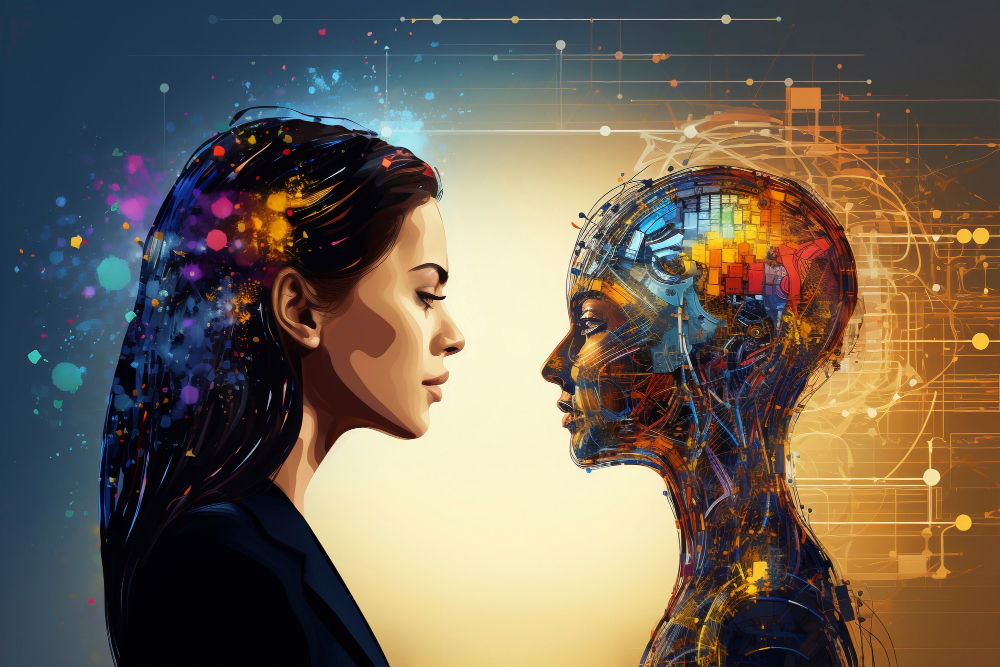
Ask an image-generation model to create a CEO, a software engineer, or a successful entrepreneur, and chances are the result will be male. Ask for a nurse, a personal assistant, or a caregiver, and a woman is far more likely to appear.
Such outputs have fuelled growing concerns about gender bias in AI and the broader relationship between women and synthetic intelligence. Yet a more complicated question lies beneath the surface: are AI systems creating these stereotypes, or are they simply learning them from society?
AI learns patterns, not values
AI is not neutral; it learns from historical and social data. From books and news archives to websites, social media posts, and workplace statistics, modern AI systems are trained on enormous quantities of human-generated content. If society has historically associated men with leadership and women with caregiving, AI is likely to learn those associations as statistical patterns. The real challenge emerges when these patterns are reproduced millions of times every day, shaping perceptions of what is normal, expected, or achievable.
The debate surrounding gender bias in AI is therefore not only about technology. It is also about how existing inequalities are translated into digital systems and whether AI ultimately reinforces or challenges them.
How AI systems learn and reproduce gender bias
AI has often been portrayed as objective, rational, and free from human prejudice. Reality is more complicated. Machine learning models do not distinguish between desirable and undesirable social patterns. Their purpose is to identify relationships within data and use them to make predictions or generate outputs.
A landmark 2017 study published in Science demonstrated that AI language models learned many of the same implicit biases found among humans. Researchers discovered that word associations frequently linked men with careers, science, and leadership, while women were more closely associated with family and domestic roles. Importantly, the systems were not instructed to adopt these views. They simply learned them from the data available to them.
From a machine-learning perspective, stereotypes are not recognised as stereotypes. They are recognised as recurring patterns.
That distinction matters. AI does not understand concepts such as fairness, equality, or discrimination. It understands probabilities. If particular associations dominate books, websites, news reports, and online discussions, AI systems are likely to absorb those associations and reproduce them in their outputs.
Much of the discussion about women and AI begins here. Gender bias in AI is often less a product of malicious design and more a reflection of the social realities embedded in training data.
How AI amplifies gender stereotypes and inequality
Many experts argue that AI acts as a mirror of society. In some respects, that assessment is correct. If men currently occupy a majority of senior corporate leadership positions, the AI model that frequently depicts CEOs as male may simply be reflecting existing labour-market realities.
However, reflection is only part of the story.
Historically, stereotypes have spread through institutions, media, education systems, and interpersonal interactions. AI introduces a new dynamic because it operates at a scale no individual human can match. Search engines, recommendation systems, chatbots, virtual assistants, and generative AI platforms interact with millions of users simultaneously.
The concern, therefore, is not that AI can be biassed. Humans have always been biassed. The concern is that AI can replicate and distribute those biases with unprecedented speed, consistency, and reach.
A stereotype expressed by one individual has limited influence. A stereotype repeated by an algorithm millions of times can gradually shape expectations about who belongs in positions of authority, innovation, or expertise.
Questions surrounding AI and gender equality extend beyond technical accuracy. Even if an AI system reflects current realities, repeated exposure to those realities may reinforce the perception that they are natural, inevitable, or desirable.
How AI systems portray women and gender roles
Evidence of gender stereotypes in AI has appeared across a wide range of technologies.
Image-generation systems have repeatedly associated women with caregiving and support roles while portraying men as executives, scientists, engineers, entrepreneurs, and political leaders. Similar patterns have emerged in language models, search algorithms, and recommendation systems.
Such outputs raise concerns because representation influences perception. When leadership, technical expertise, and innovation are consistently presented through a male lens, AI may unintentionally reinforce assumptions about gender and professional capability.
Researchers often describe this phenomenon as representational harm. Unlike direct discrimination, representational harm does not necessarily involve financial loss or exclusion from opportunities. Instead, it affects how groups are perceived in society and how individuals understand their own potential.
For younger generations growing up alongside AI-powered technologies, these representations may become part of the digital environment through which social norms are learned. AI increasingly shapes the way people search for information, discover role models, and imagine future careers. As a result, the way women are portrayed by AI systems has implications that extend far beyond the technology sector itself.
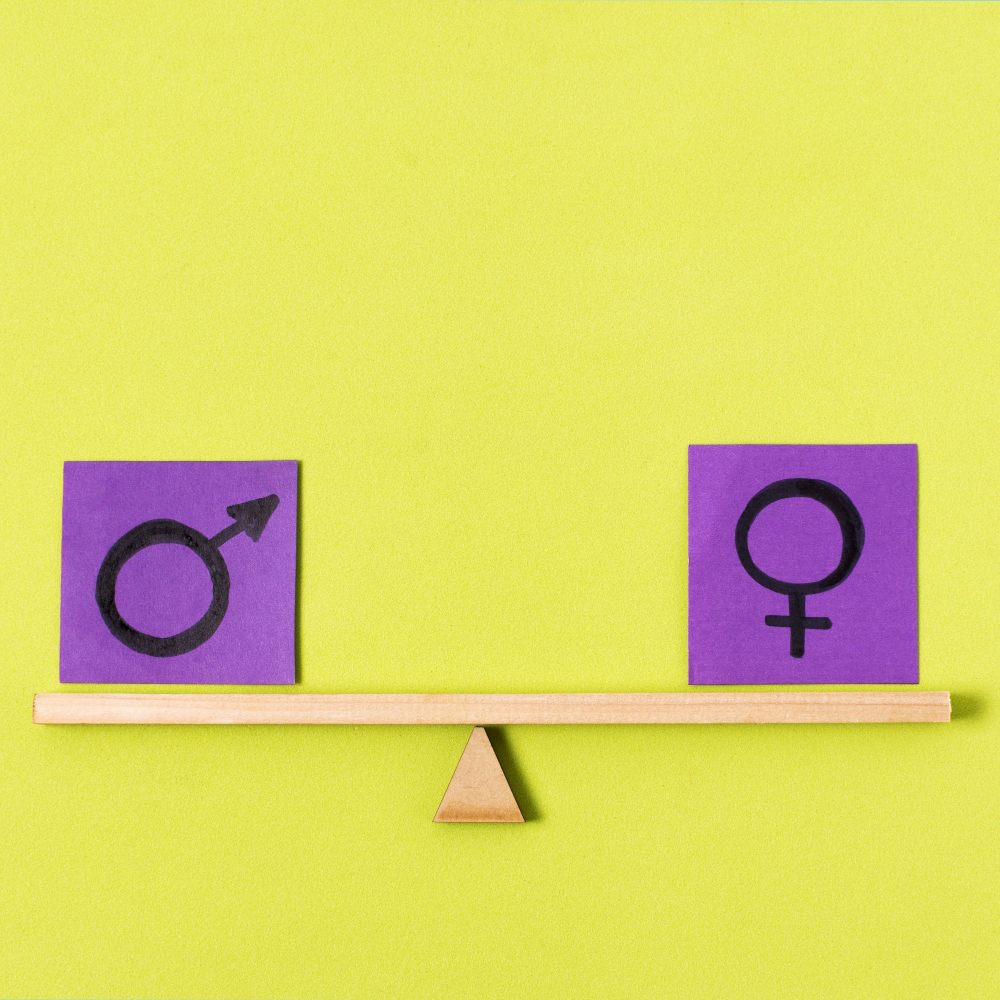
The gender bias feedback loop in AI
One of the most important concepts in discussions about gender bias in AI is the feedback loop.
Society creates patterns and inequalities.
These patterns are recorded in digital data.
AI learns from that data.
AI systems reproduce these patterns in their outputs.
People consume these outputs and may internalise them.
New data is generated that reflects the same assumptions.
The cycle then repeats itself.
Viewed through this lens, AI becomes part of a system through which existing inequalities can be continuously reproduced and normalised.
Understanding this feedback loop shifts the debate away from the simple question of whether AI is biassed. A more important question emerges: what happens when social inequalities become embedded in technologies that many people perceive as objective and trustworthy?
That question sits at the heart of contemporary debates surrounding AI ethics, responsible AI development, and digital governance.
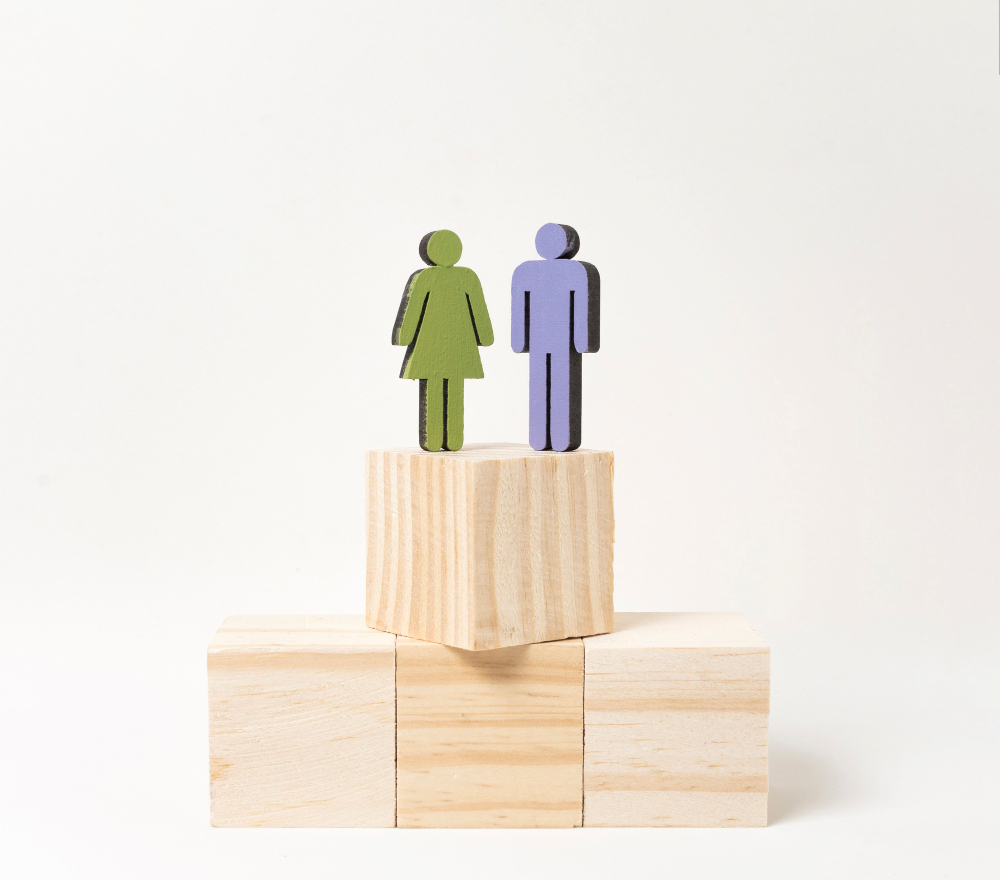
Why women in AI governance and development still matter
Discussions about gender bias in AI often focus on the underrepresentation of women in AI and the broader technology sector. While diversity remains an important issue, it should not be viewed as a simple explanation for biassed outputs.
Increasing the number of women working in AI would not automatically eliminate stereotypes from the training data. Models trained on historical information would still learn many of the same social patterns.
However, representation becomes significant at the level of governance.
Decisions about whether biassed outputs should be corrected, contextualised, or left unchanged are ultimately human decisions. Diverse teams may be better positioned to identify harms that homogeneous groups overlook and to challenge assumptions that might otherwise remain embedded in AI systems.
The importance of women in AI, therefore, extends beyond mere representation. It relates to participation in the governance structures that determine how AI is developed, evaluated, and deployed.
The questions about fairness, accountability, and responsible AI are not purely technical. They are social and political questions that require a broad range of perspectives.
The future of gender equality in AI
AI is frequently described as a transformative technology, yet its most disruptive impact may not be what it creates, but what it reveals. For centuries, societies have debated equality through laws, institutions, and cultural norms. AI introduces a different form of scrutiny. By converting human behaviour into data and data into predictions, it exposes patterns that often remain invisible until they are reflected back at scale.
In that sense, debates about women and AI are not merely debates about technology. They are discussions about who gets represented in the collective knowledge, whose experiences become part of the historical record, and which assumptions are treated as facts simply because they have been repeated often enough. As societies increasingly rely on algorithms to organise information and inform decisions, the line between what is statistically common and what is socially acceptable may become one of the defining questions of the digital age.
AI may never tell society what is right. Yet by revealing the patterns embedded in human history, it is forcing a deeper question: when machines learn from us, what exactly are we teaching them?
Would you like to learn more about AI, tech, and digital diplomacy? If so, ask our chatbot!
About author

Nikoleta Selena
Ms Nikoleta Selena is a law, economics, and marketing graduate and specialised writer focused on emerging technologies, especially fintech (blockchain and cryptocurrency) and AI, as well as the legal sector. She combines deep industry knowledge with legal and economic expertise to analyse and explain complex topics with clarity and precision.