
Summit Opening Session
2 Feb 2026 13:00h - 14:05h
Summit Opening Session
Session at a glance
Summary
This transcript captures the opening ceremony of the Second International Submarine Cable Resilience Summit held in Porto, Portugal, featuring key speakers including Professor Sandra Maximiano (co-chair of the International Advisory Body for Submarine Cable Resilience), ITU Secretary-General Doreen Bogdan-Martin, Portuguese Ambassador João Mira Gomes, and European Commission representative Henna Virkkunen. The summit focuses on strengthening international cooperation to protect submarine telecommunications cables, which carry the vast majority of global internet traffic and form the backbone of the digital economy.
Professor Maximiano emphasized Portugal's strategic geographical position for submarine cable landings, highlighting the country's extensive exclusive economic zone and its role in connecting Europe, the Americas, Africa, and Asia. She discussed Portugal's flagship Atlantic CAM project, which will connect mainland Portugal to the Madeira and Azores archipelagos using smart cable technology that incorporates oceanographic and seismic sensors. The summit introduced the Porto Declaration on Submarine Cable Resilience, developed through consultation with over 150 experts worldwide, which provides practical guidance for streamlining permitting processes, strengthening repair readiness, and improving international coordination.
Secretary-General Bogdan-Martin stressed the growing urgency of cable resilience as digital dependency increases, particularly with the expansion of artificial intelligence infrastructure. She announced that the ITU has designated 2026 as the year of resilience, emphasizing that protecting digital infrastructure requires end-to-end cooperation rather than isolated efforts. The speakers collectively emphasized that submarine cable resilience represents a "positive sum game" where international collaboration benefits all nations, and no single country can address these challenges alone.
Keypoints
Major Discussion Points:
- Portugal's Strategic Role in Submarine Cable Infrastructure: Portugal's unique geographical position as a hub for submarine cables connecting Europe, Americas, Africa, and Asia, including hosting major cable systems like Alalink, 2Africa, and future projects like Atlantic CAM with smart cable technology
- The Porto Declaration on Submarine Cable Resilience: Introduction of practical guidance developed by over 150 experts to strengthen international cooperation, including streamlining permitting processes, improving repair readiness, enhancing information sharing, and promoting geographic diversity in cable infrastructure
- Historical Context and International Cooperation: Drawing parallels between the founding of the International Telecommunication Union in 1865 and today's challenges, emphasizing that submarine cable resilience requires collaborative, multilateral approaches rather than individual nation efforts
- Digital Resilience as Critical Infrastructure: Recognition that submarine cables carry the vast majority of international data traffic and form the foundation of the digital economy, with growing importance due to AI infrastructure, cloud services, and increased digital dependence
- Bridging the Digital Divide and Investment Needs: Addressing the need for diverse cable infrastructure investment, particularly in underserved regions, small island developing states, and least developed countries, with planned discussions on financing mechanisms involving governments and development institutions
Overall Purpose:
The discussion serves as the opening ceremony for the Second International Submarine Cable Resilience Summit in Porto, Portugal. The goal is to advance international cooperation on protecting and strengthening submarine cable infrastructure through policy coordination, operational preparedness, and investment strategies, building on work initiated at the previous year's summit in Abuja.
Overall Tone:
The tone throughout is consistently formal, diplomatic, and collaborative. Speakers maintain an optimistic and forward-looking perspective, emphasizing partnership and shared responsibility. The discussion is marked by ceremonial courtesy typical of international summits, with multiple acknowledgments of dignitaries and host country hospitality. There is an underlying sense of urgency about the critical importance of submarine cable resilience, but this is balanced with confidence in the collaborative approach being taken.
Speakers
Speakers from the provided list:
- Professor Sandra Maximiano
- Role: Co-Chair of International Advisory Body for Submarine Cable Resilience
- Title: Professor
- Area of expertise: Submarine cable resilience, international telecommunications policy
- Doreen Bogdan-Martin
- Role: ITU Secretary General
- Title: Secretary General
- Area of expertise: International telecommunications, digital resilience, global connectivity
- João Mira Gome
- Role: Portuguese Ambassador to the United Nations in Geneva
- Title: Ambassador
- Area of expertise: Diplomacy, international relations
- Henna Virkkunen
- Role: Representative of the European Commission
- Title: [Not specified]
- Area of expertise: EU digital policy, submarine cable security, European telecommunications regulation
Additional speakers:
- Minister Bosun Tijani
- Role: Minister of Communications, Innovation and Digital Economy of the Federal Republic of Nigeria; Co-Chair of International Advisory Body for Submarine Cable Resilience
- Title: Minister, Your Excellency
- Area of expertise: Communications, innovation, digital economy, submarine cable resilience
- Thomas Lamanauskas
- Role: Executive Secretary of the Advisory Body
- Title: Executive Secretary
- Area of expertise: Submarine cable resilience advisory services
- Kent Bressie
- Role: Executive Secretary of the Advisory Body
- Title: Executive Secretary
- Area of expertise: Submarine cable resilience advisory services
Full session report
This transcript captures the opening ceremony of the Second International Submarine Cable Resilience Summit held in Porto, Portugal, representing a significant milestone in global efforts to strengthen the infrastructure that underpins the modern digital economy. The summit brought together high-level representatives from international organisations, national governments, and industry stakeholders to address the critical challenges facing submarine telecommunications cables, which carry the vast majority of international data traffic and form the backbone of global connectivity.
Opening Context and Portuguese Leadership
Ambassador João Mira Gomes opened the summit by explaining that Portugal's Infrastructure Minister could not attend due to ongoing recovery efforts from a severe storm that had affected central Portugal, demonstrating the country's commitment to addressing immediate infrastructure challenges while hosting this important international gathering. He provided historical context about Portugal's long-standing role in global connectivity, noting that the first submarine cable between Portugal and the UK was established to facilitate the port wine trade, illustrating how commerce and communication infrastructure have been interlinked for centuries.
Portugal's selection as summit host reflects both its strategic geographical position and its active commitment to submarine cable infrastructure development. The event was held in Porto's historic Alfândega building, which served as a customs house from 1869 and represented a hub for global trade connecting Porto to Lisbon, Brazil, Africa, and the rest of the world.
Historical Context and International Cooperation Framework
Professor Sandra Maximiano, co-chair of the International Advisory Body for Submarine Cable Resilience, established the summit's foundation by drawing historical parallels to the founding of international telecommunications cooperation. She noted that the International Telecommunication Union, established in 1865 as the International Telegraph Union, was created as the world's first global organisation specifically to manage international communications infrastructure, particularly submarine cables. This historical precedent demonstrates that international cooperation on telecommunications infrastructure has been essential for over 160 years, with the founding nations recognising that "cooperation strengthened every nation involved" in what she characterised as a "positive sum game."
Portugal's Strategic Position and Infrastructure Development
Portugal's geographical advantages include the fifth-largest exclusive economic zone in Europe, the third-largest within the European Union, and the twentieth-largest globally. The country's coastline offers highly favourable conditions for cable landings that facilitate electronic communications between Europe, the Americas, Africa, and Asia.
Portugal's commitment extends beyond geography to active infrastructure projects. The flagship Atlantic CAM project represents a significant advancement in cable technology, designed to connect mainland Portugal to the Madeira and Azores archipelagos through a resilient ring topology. This system will incorporate "smart cable technology" - Science, monitoring and reliable telecommunications - integrating sensors capable of collecting oceanographic and seismic data. This dual-purpose approach demonstrates how modern submarine cables can serve both telecommunications resilience and scientific research objectives.
The country also hosts several major international cable systems, including Alalink (connecting directly to Brazil), 2Africa, the future Nuvem cable linking Europe, the United States and Africa, and SOL, which will connect the United States and Europe. As Professor Maximiano emphasised, these systems "are not merely pipes for data" but rather "enablers for strategic autonomy, innovation and scientific cooperation."
Portugal plans to create an international submarine cable landing platform to attract new cable systems while encouraging the establishment of digital platforms, data storage, and computing centres. The country has also conducted one of the first national-level submarine cable resilience exercises within the European Union, involving national authorities, telecommunications operators, cable operators, and energy operators to improve stakeholder coordination and response mechanisms.
The Porto Declaration on Submarine Cable Resilience
A key outcome of the summit was the introduction of the Porto Declaration on Submarine Cable Resilience, developed through an inclusive consultation process within the Advisory Body involving over 150 experts from all regions of the world. The declaration, agreed upon on the morning of the summit, provides practical guidance for strengthening international cooperation across several critical areas:
- Streamlining permitting and repair processes
- Strengthening legal and regulatory procedures
- Encouraging geographic diversity and redundancy in cable routes
- Promoting best practices for risk mitigation and response
- Enhancing cable protection through improved marine spatial planning
- Building capacity and innovation through training and technology development
The declaration specifically addresses the needs of small island developing states, least developed countries, and landlocked developing countries, recognising that submarine cable resilience must be inclusive to be effective.
Growing Digital Dependence and Emerging Challenges
ITU Secretary-General Doreen Bogdan-Martin provided crucial context about the evolving nature of digital dependence and its implications for submarine cable resilience. She announced that the ITU has designated 2026 as the "year of resilience," reflecting the growing recognition that protecting digital infrastructure has become a critical priority for societies and economies worldwide.
Bogdan-Martin identified a fundamental shift in the submarine cable landscape: "What is changing is the scale. It's the scale of our digital dependence and the cost of delay when things go wrong." She connected this increased dependence to the massive investment and adoption of artificial intelligence infrastructure, cloud services, and autonomous systems, noting that "even small disruptions in undersea cable infrastructure could trigger widespread impacts across entire digital ecosystems."
This analysis represents a significant evolution in thinking about submarine cable resilience, moving beyond traditional concerns about cable cuts to consider the cascading effects of disruptions in an increasingly interconnected and AI-dependent global economy. The Secretary-General emphasised that resilience is now "shaped not only by how cables are designed and deployed, but by how quickly we can coordinate across borders and how effectively we can implement policy and how prepared we are to respond together when incidents occur."
European Union Coordination and Policy Development
Henna Virkkunen, representing the European Commission, outlined the EU's comprehensive approach to submarine cable security and resilience. She announced the imminent publication of a cable security toolbox that addresses risk scenarios identified in the EU's October risk assessment of submarine cable infrastructures. This toolbox includes a compilation of cable projects of European interest, highlighting priority areas for public funding through the Connecting Europe Facility (CEF) Digital programme and other EU funding mechanisms.
The EU's approach demonstrates the importance of regional coordination in addressing submarine cable challenges, with member states working together through a cables expert group to develop common approaches to security risks and mitigation measures. Virkkunen expressed gratitude for Portugal's active participation in this expert group and its role in strengthening links between EU initiatives and the ITU advisory body.
Investment and Development Cooperation
The summit addressed the critical challenge of financing submarine cable infrastructure, particularly in regions where commercial investment alone may be insufficient. Bogdan-Martin announced plans for an infrastructure investment breakfast meeting designed to bring together governments, development finance institutions, industry representatives, and investors to explore concrete pathways for financing diverse cable infrastructure.
Ambassador Gomes highlighted Portugal's broader development cooperation efforts, including the 2030 Development Cooperation Strategy, which prioritises digital transformation for inclusive and sustainable development. He announced that the third edition of the UN Portugal Digital Fellowships programme for high-level officials from developing countries is scheduled for April 13-17, demonstrating Portugal's commitment to capacity building in digital infrastructure.
Bridging the Digital Divide and Promoting Peace
Ambassador Gomes provided perspective on the broader implications of submarine cable infrastructure, connecting technical resilience to social development and peace-building objectives. He emphasised that "the digital divide brings inequality and it has a negative impact on social and economic development, but also on stability and security," while advocating for consideration of "the role of technology to promote peace."
This perspective broadens the submarine cable discussion beyond technical and economic considerations to include social justice and international stability, reflecting Portugal's approach to digital infrastructure as a tool for global development and cooperation.
Future Directions and Collaborative Imperatives
The summit established clear momentum for continued international cooperation on submarine cable resilience, building on the foundation laid by the 2023 summit in Abuja, Nigeria. The speakers consistently emphasised that submarine cable resilience cannot be treated as a purely technical matter or left to any single actor to address independently.
The collaborative approach outlined in the Porto Declaration and supported by all speakers reflects a mature understanding that submarine cable infrastructure operates as a global system requiring coordinated governance, investment, and response mechanisms. As Professor Maximiano concluded, this represents "a positive sum game in which no nation wins by standing alone" and "in which each participant gains when all choose to cooperate."
The summit's emphasis on practical guidance, from streamlining permitting processes to strengthening repair readiness, demonstrates a shift from high-level policy discussions to actionable implementation strategies. The designation of 2026 as the ITU's year of resilience provides a clear timeline for implementing the recommendations and initiatives discussed at the summit, while the ongoing work of the International Advisory Body for Submarine Cable Resilience ensures continued momentum between annual summits.
The success of this collaborative approach will ultimately be measured not in declarations and frameworks, but in the enhanced resilience of the submarine cable infrastructure upon which the global digital economy increasingly depends.
Session transcript
Thank you and good afternoon and I'm really pleased to have you all here. Your Excellency Minister Bosun Tijani, Minister of Communications, Innovation and Digital Economy of the Federal Republic of Nigeria and Co -Chair of International Advisory Body for Submarine Cable Resilience.
ITU Secretary General Doreen Bogdan -Martin, esteemed members of the International Advisory Body for Submarine Cable Resilience. Dear Executive Secretaries of the Advisory Body, Thomas Lamanauskas and Kent Bressie, esteemed participants of the International Submarine Cable Resilience Summit. Excellencies, Bem -vindos a Portugal.
Bem -vindos à 2ª Cimeira Internacional sobre Resiliência de Cabos Submarinos, um evento que decorre com o alto patrocínio de Sua Excelência, o Presidente da República Portuguesa. É uma grande honra receber -vos no Porto. Depois da experiência memorável que tivemos o ano passado, In Abuja, I hope you also feel at home in the magnificent city of Porto.
Talking about Porto is talking about a city that has always lived facing out, towards the river, towards the sea and towards the world. An open city, proud of its history and confident in its future. Porto's Alphandega is a living and symbolic example of this opening.
In 1869, this building, where we are today, became the new home of the Alphandega services. The visionaries who conceived and built this space did not imagine it as a simple warehouse. They conceived it as a real hub, a point of convergence of goods, people, capital and information.
A hub where local production found Atlantic trade. A hub that connected Porto to Lisbon, to Brazil, to Africa and to the rest of the world. And now in English.
And as it is today, so it was then, the world was experiencing a period of remarkable technological transformation. These were the days during which the first transatlantic submarine telegraph cables were laid, including the cable that first landed in Portugal in 1870, connecting our country to the United Kingdom. These were the days when the International Communication Union was founded.
These were the days marked by vision and by hope. because collaboration and connectivity are in themselves expressions of hope and confidence in the future. In 1865, just four years before the inauguration of this building, representatives of 20 states, including Portugal, gathered in Paris at the International Telegraph Conference.
Their goal was to overcome barriers and make international communications more efficient and more reliable. The creation of the International Telecommunication Union, then the International Telegraph Union, was a direct institutional response to the governance challenges posed by emerging international telegraph networks, particularly submarine cables.
In this way, the ITU became the first global organization established to manage a global communications infrastructure. Those 20 founding nations joined forces, because they understood that the ITU was the only organization in the world that could manage the international communications infrastructure. They understood the fundamental truth.
Cooperation strengthened every nation involved. They were engaged in a positive sum game. 160 years have passed since then.
Today, it is our turn to carry that same spirit forward. And I can't think of no more fitting place than Portugal, a country shaped by connectivity, exchange, and openness to the world. To reflect on and advance this positive same approach to global cooperation.
On the connectivity front, Portugal benefits from a uniquely strategic geographical position for the landing of submarine cables. Our coastline offers highly favorable conditions for cable landings that facilitate the flow of electronic communications between Europe, the Americas, Africa, and Asia. Portugal has the fifth largest...
...exclusive economic zone in Europe, the third largest within the European Union, and the 20th largest in the world. Our long -standing tradition in hosting submarine cable landings places Portugal in a privileged position in this sector. Portugal has two autonomous regions, Madeira and the Azores, which depend almost entirely on submarine cables for their communications.
In this context, one flagship project is the Atlantic Cam, a cable system that will connect mainland Portugal to both archipelagos through a resilient ring topology. This project enhances resilience not only for strategic connectivity, but also for territorial cohesion and social inclusion. These cables will incorporate smart cable technology.
Smart. Science, monitoring and reliable telecommunications. Integrating sensors capable of collecting oceanographic and seismic data, thereby contributing to both telecommunications resilience and scientific knowledge.
Portugal is also proud to host several key transatlantic and global cable systems, including Alalink, which connects directly to Brazil, 2Africa, the future Nuvem cable linking Europe, the United States and Africa, and Sol, which will connect the United States and Europe with the projected landing in the source.
These systems are not merely pipes for data. They are enablers for strategic autonomy, innovation and scientific cooperation. We aim to build on this position through the creation of an international submarine cable landing platform.
We believe that such an initiative can attract new cable systems while also encouraging the establishment in Portugal of digital platforms and data storage and computing centers, at a time when data is scarce.
The integrated processing has become a fundamental pillar of the digital economy. On the preparedness front, Portugal conducted one of the first national -level submarine cable resilience exercises within the European Union, involving national authorities, other agencies, telecommunications, cable and energy operators.
This exercise helped identify ways to improve coordination among stakeholders and to accelerate response mechanisms in the event of cable disruption. And we are honored to see that the industry increasingly recognizes Portugal as a reliable, relevant and forward -looking partner and as a global leader in this field. Beyond hosting these cable systems, we have strengthened collaboration with industry and academia to raise awareness and build capacity in this critical domain.
The industry is also choosing Portugal as a venue for key interventions. We are also organizing international events in this sector. At the policy level, Portugal is actively engaged at both the European and global levels.
Within Europe, we contribute actively to relevant forums, including during our presidency of the Council of the European Union, when the Ministerial Declaration on European Data Gateways as key element of the EU's digital decade was adopted.
ANACOM is deeply involved and in several areas leading the work of BEREC, the body of European regulators for electronic communications, particularly on international connectivity and submarine cables.
We also work closely with the European Commission and play an active role with ANISA, the European Union Agency for Cyber Security. At the global level, Portugal is engaged on multiple fronts. Most notably, through the International Advisory Body for Submarine Cable Resilience, which I have the honour to co -chair.
This body provides a unique global platform for cooperation. I am deeply impressed by the work carried out by the advisory body and its working groups. We will have the opportunity to discuss this further, but I can already say that helping to guide this distinguished group of public and private sector leaders, representing all regions of the world, has been a truly remarkable experience.
Excellencies, as we open this summit, it is worth recalling why our work matters so deeply. Submarine telecommunication cables carry the vast majority of international data traffic, forming the essential and often unseen foundation of today's digital economy and global connectivity. It is in this spirit that I am pleased to introduce the Porto Declaration on Submarine Cable Resilience.
The declaration was developed through an inclusive consultation process within the International Advisory Body on Submarine Cable Resilience and was agreed this morning ahead of this summit. For participants' convenience, the declaration has already been posted on the summit website. It sets out practical guidance to strengthen international cooperation and resilience, including by streamlining, permitting and repair, strengthening legal and regulatory procedures, encouraging geographic diversity and redundancy, promoting best practices for risk mitigation and response, enhancing cable protection through better marine planning and building capacity and innovation through training and technology.
In summary, Portugal brings together geography. Experience and expertise. that position us to play an active role in strengthening international cooperation on subbunding cable resilience.
Above all, we are guided by a firm conviction. Collaboration and connectivity are, by their very nature, a positive sum game. A game in which no nation wins by standing alone.
A game in which each participant gains when all choose to cooperate. A game in which shared solutions create value for everyone. Thanks very much for your attention, and I wish you Doreen Bogdan-Martin: Excellencies, ladies and gentlemen, boa tarde.
Let me start by thanking our host, Portugal, for the warm welcome and for the encouragement. Thank you. Portugal has long understood the strategic importance of subsea cable infrastructure.
And I want to thank you in particular, Professor Maximiano, our co -chair of this advisory body for your leadership and also for bringing us together today here in Portugal. I also want to recognize His Excellency, our ambassador, Ambassador Gomez, the Portuguese ambassador in Geneva to the United Nations. Thank you also, Ambassador, for being here with us today.
And, of course, I have to recognize our fellow co -chair, His Excellency, Minister Tajani. I always say he's fearless, ladies and gentlemen. He's our fearless leader here.
And I thank him also for his continued collaboration. I have to recognize our partners. We couldn't have done this without you, ICPC, Kent, and also John.
Thank you for that strong collaboration. Ladies and gentlemen, this summit is especially timely. as the issue of digital resilience is at the top of agendas across the world, including at the ITU.
We have designated 2026 as the year of resilience. Our focus throughout 2026 will be on the growing importance of protecting digital infrastructure, the infrastructure for which our societies and our economies depend, whether it's terrestrial networks, satellite systems, or subsea cables.
When we met for our first physical meeting, which was about one year ago in Abuja, it was agreed through the Abuja Declaration that resilience could not be treated as a purely technical matter, nor could it be left to any single actor to address on their own.
Resilience must be... be treated as an end -to -end imperative. Today, Porto takes us forward by setting a practical agenda for action.
Over the past year, the work undertaken by the International Advisory Body on Submarine Cable Resilience has shown what is possible, ladies and gentlemen, when we work together. Guided by a shared purpose, or as Minister Tajani said this morning, a clarity of purpose. Just this morning, the advisory body, as we've just heard, met to take stock of this extensive work that has been ongoing.
And it agreed to a set of important recommendations developed by more than 150 experts, stakeholders from across all regions. These recommendations focus on practical guidance. We want to be practical.
Practical guidance from streamlining permitting. to strengthening repair readiness and shared response capacity, to improving information sharing, strengthening cable protection across marine sectors, and catalyzing investment in root diversity, redundancy, and resilient infrastructure.
They have also been developed with the needs of small island developing states, least developed countries, and landlocked developing countries and underserved regions in mind. You're going to hear more about this very shortly when our two co -chairs take the stage. The advisory body discussions have reaffirmed our commitment to cooperation, sending a strong message of continued urgency that submarine cables are critical infrastructure and resilient infrastructure.
This has to be treated as a shared responsibility, especially amid the massive investment and adoption of artificial intelligence across different countries around the world. With the growth of artificial intelligence infrastructure, cloud services, and autonomous systems, organizations will increasingly rely on robust data connections. And this heightened dependency means that even small disruptions in undersea cable infrastructure, small disruptions could trigger widespread impacts across entire digital ecosystems.
Ladies and gentlemen, the challenges that we are discussing are not new. What is changing? And this came up in almost every conversation at the World Economic Forum.
In Davos, the week before last, what is changing is the scale. It's the scale of our digital dependence and the cost of delay when things go wrong. Today.
resilience is shaped not only by how cables are designed and deployed, but by how quickly we can coordinate across borders and how effectively we can implement policy and how prepared we are to respond together when incidents occur.
That's why the summit matters. And over the next two days, our focus will be on what works, what slows us down, and where cooperation can make a real difference in policy exchanges, in coherence, in operational readiness, and in your investment decisions.
And the investment piece will actually be taken up in detail tomorrow morning. At a breakfast discussion, we'll be having an infrastructure investment breakfast meeting. We'll be bringing together governments, development finance institutions, industry and investors, and we will be exploring concrete pathways.
to finance diverse cable infrastructure, including in regions where commercial investment alone may not suffice. So, ladies and gentlemen, this summit is not about prescribing, nor are you expected to agree on every single aspect of resilience. In fact, the diversity of perspectives in this very room is the foundation of this summit's strength.
And it is the exchanges of these views that allow for movement that goes beyond dialogue and actually takes us towards progress. And that's why over the next two days, I would encourage you to continue an open, constructive, and candid exchange because the world is watching. They are awaiting insight.
that can help inform national decisions, support regional cooperation, and ensure submarine cable infrastructure remains resilient now and for generations to come. I thank you very much for your attention. Muito obrigado.
Muito boa tarde. Good afternoon to everybody. Mr.
Minister of Communications, Innovation and Digital Economy of Nigeria, Mr. Secretary -General of the International Union of Telecommunications, Mr. President of the Council of Administrators of ANACOM, esteemed members of the Consultative Committee for the Security of Submarine Cables, ladies and gentlemen, welcome to Porto.
welcome to Oporto. Unfortunately, the Minister for Infrastructure cannot be with us this afternoon because, as you might know, we are recovering from a terrible storm which destroyed a significant part of villages and cities at the centre of the country.
So the entire government is working day and night to recover infrastructures, to bring people to their normal lives, and so the Minister has a perfectly good reason for not being with us today. And my thoughts now, they are with the victims and the families who suffered from this terrible storm. As we meet here for the second International Cable Resilience Summit, I'd like to start by acknowledging last year's Abuja Summit, wonderfully led by Minister Tijani, and we are very honoured to have you here with us today.
And in fact, what a journey from Abuja to Oporto. Like Professor Sandro Maximiano said, Portugal stands in a privileged geographic position for the mooring of submarine cables. But if you look back five centuries ago, we started to build a kind of a global network, not by laying cables, but by establishing contacts, relations, cooperation with countries and people in different parts of the world.
actually five centuries ago we started what people refer to as the first globalization and we did so in a very peculiar manner because we agreed with Spain to split the world in two by the treaty of Tordesillas with the blessing of the Pope I have to say so we were taking care of one half and Spain taking care of the other half the world no longer works like this so we need to bring everybody on board and there is not a single nation that can address alone the challenges that we are facing and the challenges that we need to address Professor Massignan also said that the first submarine cable was established between Portugal and the UK back in 1870 and I might have an explanation for that because the British they were already here in Oporto trading in port wine and they needed to have a very fast and good connection with the UK to trade on wine wine moves mountains as you know so that's why probably we are the first submarine cable laid between the UK and Portugal but actually I would like also to acknowledge and to thank all the work of Professor Sandro Maximiano as one of the co -chairs of this international advisory body and I think this is a very clear demonstration that you can count on Portugal to continue to push forward this debate a debate that comes from the fact that we are all connected that it comes from the fact that we are all connected that we are all connected that we are all connected that we are all connected that we are all connected that we are all connected that we need to cooperate.
That comes from the fact that only if we are connected and if we cooperate, the world will work much better. But we need also to bridge the digital divide. And that digital divide has an impact on countries, on societies.
The digital divide brings inequality and it has a negative impact on social and economic development, but also on stability and security. And as we advocate for greater attention to this nexus between technology and security, I think we need also to address... and to think in another dimension, which is the role of technology.
to promote peace. We wanted to connect and to communicate. We want to foster economic development, but we want also to bring our countries closer, working in the benefit of peace.
This is why Portugal, as part of our 2030 Development Cooperation Strategy, which prioritizes digital transformation for inclusive and sustainable development, we proudly host the UN, United Nations Portugal Digital Fellowships.
This initiative, directed at high -level officials from developing countries, aims at contributing to capacity -building efforts to harness digital innovation for inclusive growth. And the third edition will take place now between the 13th and the 17th, of April. Dear guests, excellencies, We work here, your work here in the next two days will be a fundamental contribution to bring best practices, to share best practices, best standards and best policies.
And your work is essential, not only because we want to remain connected, but also because we want to promote peace and because there is only one
The European Commission welcomes its happy to contribute to the work of the International Advisory Body for Submarine Cable Resilience, established by ITU. In a few days, we will publish a cable security toolbox, which outlines strategies to address the risk scenarios identified last October in the EU risk assessment on submarine cable infrastructures. Among these strategies is a compilation of cable projects of European interest, highlighting key areas for prioritizing public funding in the coming years, especially in upcoming proposals under CEF Digital, as well as other EU funding opportunities that are yet to be finalized.
We did all this work together with representatives of our member states through a cables expert group. On the occasion of your meeting in Porto, and the event jointly organized by the National Communications Agency, let me stress that I am very grateful to Portugal for participating so actively in the expert group and for strengthening the links with the ITU advisory party.
Now we have a common approach agreed with member states for security risks faced by submarine cable infrastructures, measures to mitigate those risks, and also areas requiring reinforcement as a priority.
I believe that this approach fits well with the work of the ITU international advisory body. I am looking forward to our continued collaboration. Dear ministers, ladies and gentlemen, I wish you a very successful summit.
Thank you and good afternoon.
And I am really pleased to be here. I am pleased to have you all here. Your Excellency Minister Bosun Tijani, Minister of Communications, Innovation and Digital Economy of the Federal Republic of Nigeria and Co -Chair of International Advisory Body for Submarine Cable Resilience.
ITU Secretary General Doreen Bogd -Martin, esteemed members of the International Advisory Body for Submarine Cable Resilience. Dear Executive Secretaries of the Advisory Body, Thomas Lamanowski and Kent Pressey, esteemed participants of the International Submarine Cable Resilience Summit. Excellencies, Bem -vindos a Portugal.
Bem -vindos à 2ª Cimeira Internacional sobre Resiliência de Cabos Submarinos, um evento que decorre com o alto patrocínio de Sua Excelência, o Presidente da República Portuguesa. É uma grande honra receber -vos no Porto. Depois das...
experiência memorável que tivemos o ano passado em Abuja, espero que também se sintam em casa na magnífica cidade do Porto. Speaking of Porto is to speak of a city that has always lived facing outwards, towards the river, towards the sea and towards the world. An open city, proud of its history and confident in its future.
Porto's alfândega is a living and symbolic example of this opening. In 1869, this building, where we are meeting today, became the new home of the alfândegários services. The visionaries who conceived and built this space did not imagine it as a simple warehouse.
They conceived it as a real hub, a point of convergence of goods, people, capital and information. A hub where local production found Atlantic trade. A hub that linked Porto, Lisbon, Brazil, Africa and the rest of the world.
Through this hub, they passed world -famous, Porto's wine, os textos, os metais, as peciarias, e com eles passaram contratos, tecnologias e ideias. And now in English. The alfândega symbolizes Porto not merely as a port, but as a node in global networks long before the term globalization was ever coined.
And as it is today, so it was then, the world was experiencing a period of remarkable technological transformation, these were the days during which the first transatlantic submarine telegraph cables were laid, including the cable that first landed in Portugal in 1870, connecting our country to the United Kingdom.
These were the days when the International Communication Union was founded. These were the days marked by vision and by hope, because collaboration and connectivity are in themselves expressions of hope and confidence. We are all in this together.
We are all in this together. We are all in this together. We are all in this together.
We are all in this together. We are all in this together. We are all in this together.
We are all in this together. In 1865, just four years before the inauguration of this building, representatives of 20 states, including Portugal, gathered in Paris at the International Telegraph Conference. Their goal was to overcome barriers and make international communications more efficient and more reliable.
The creation of the International Telecommunication Union, then the International Telegraph Union, was a direct institutional response to the governance challenges posed by merging international telegraph networks, particularly submarine cables.
In this way, the ITU became the first global organization established to manage a global communications infrastructure. Those 20 founding nations joined forces. Because they understood that the ITU was the only organization in the world that could manage a global communications infrastructure, they joined forces.
Because they understood the fundamental truth, cooperation strengthened every nation involved. They were engaged in a positive sum game. 160 years have passed since then today it is our turn to carry that same spirit forward and I can't think of no more fitting place than Portugal a country shaped by connectivity, exchange and openness to the world to reflect on and advance this positive same approach to global cooperation on the connectivity front Portugal benefits from a uniquely strategic geographical position for the landing of submarine cables our coastline offers highly favorable conditions for cable landings that facilitate the flow of electronic communications between Europe, the Americas, Africa and Asia Portugal has the 5th largest exclusive economic zone in Europe the 3rd largest within the European Union and the 20th largest in the world Portugal is the world's largest shipping port with a total capacity of about 4 ,000 people with a total capacity of about 1 ,000 people Our long -standing tradition in hosting submarine cable landings places Portugal in a privileged position in this sector.
Portugal has two autonomous regions, Madeira and the Azores, which depend almost entirely on submarine cables for their communications. In this context, one flagship project is the Atlantic CAM, a cable system that will connect mainland Portugal to both archipelagos, through a resilient ring topology. This project enhances resilience not only for strategic connectivity, but also for territorial cohesion and social inclusion.
These cables will incorporate smart cable technology, science monitoring and reliable telecommunications, integrating sensors capable of collecting oceanographic and seismic data, thereby contributing to...
both telecommunications resilience and scientific knowledge. Portugal is also proud to host several key transatlantic and global cable systems, including Alalink, which connects directly to Brazil, 2Africa, the future Nuvem cable linking Europe, the United States and Africa, and SOL, which will connect the United States and Europe with the projected landing in the source.
These systems are not merely pipes for data. They are enablers for strategic autonomy, innovation and scientific cooperation. We aim to build on this position through the creation of an international submarine cable landing platform.
We believe that such an initiative can attract new cable systems while also encouraging the establishment in Portugal of digital platforms and data storage and computing centers. At a time when data is not available, we are ready to take advantage of the opportunity to create a new digital economy. The automated processing has become a fundamental pillar of the digital economy.
On the preparedness front, Portugal conducted one of the first national -level submarine cable resilience exercises within the European Union, involving national authorities, other agencies, telecommunications, cable and energy operators.
This exercise helped identify ways to improve coordination among stakeholders and to accelerate response mechanisms in the event of cable disruption. And we are honored to see that the industry increasingly recognizes Portugal as a reliable, relevant and forward -looking partner and as a global leader in this field. Beyond hosting these cable systems, we have strengthened collaboration with the industry and academia to raise awareness and build capacity in this critical domain.
The industry is also choosing Portugal as a venue for key interventions. We are also organizing international events in this sector. At the policy level, Portugal is actively engaged at both the European and global levels.
Within Europe, we contribute actively to relevant forums, including during our presidency of the Council of the European Union, when the Ministerial Declaration on European Data Gateways as key element of the EU's digital decade was adopted.
ANACOM is deeply involved and in several areas leading the work of BEREC, the body of European regulators for electronic communications, particularly on international connectivity and submarine cables.
We also work closely with the European Commission and play an active role with ANISA, the European Union Agency for Cyber Security. At the global level, Portugal is engaged on multiple fronts. Most notably, through the International Advisory Body for Submarine Cable Resilience, which I have the honour to co -chair.
This body provides a unique global platform for cooperation. I am deeply impressed by the work carried out by the advisory body and its working groups. We will have the opportunity to discuss this further, but I can already say that helping to guide this distinguished group of public and private sector leaders representing all regions of the world has been a truly remarkable experience.
Excellencies, as we open this summit, it is worth recalling why our work matters so deeply. Submarine telecommunication cables carry the vast majority of international data traffic, forming the essential and often unseen foundation of today's digital economy and global connectivity. It is in this spirit that I am pleased to introduce the Porto Declaration on Submarine Cable Resilience.
The declaration was developed through an inclusive consultation process within the International Advisory Body on Submarine Cable Resilience and was agreed this morning ahead of this summit. For participants' convenience, the declaration has already been posted on the summit website. It sets out practical guidance to strengthen international cooperation and resilience, including by streamlining, permitting and repair, strengthening legal and regulatory procedures, encouraging geographic diversity and redundancy, promoting best practices for risk mitigation and response, enhancing cable protection through better marine planning and building capacity and innovation through training and technology.
In summary, Portugal brings together geography. Experience and expertise. That position has to play an active role in strengthening international cooperation on subbunding cable resilience.
Above all, we are guided by a firm conviction. Collaboration and connectivity are, by their very nature, a positive sum game. A game in which no nation wins by standing alone.
A game in which each participant gains when all choose to cooperate. A game in which shared solutions create value for everyone. Thanks very much for your attention,
Professor Sandra Maximiano
Speech speed
126 words per minute
Speech length
2936 words
Speech time
1398 seconds
Portugal's Strategic Position and Infrastructure for Submarine Cables
Explanation
Portugal has a uniquely strategic geographical position with favorable coastline conditions for cable landings between Europe, Americas, Africa, and Asia. The country leverages its geographic advantages to serve as a critical hub for international submarine cable infrastructure.
Evidence
Portugal has the fifth largest exclusive economic zone in Europe, third largest within the EU, and 20th largest in the world. Portugal hosts key transatlantic cable systems including Alalink (connecting to Brazil), 2Africa, future Nuvem cable linking Europe, US and Africa, and SOL connecting US and Europe.
Major discussion point
Geographic positioning and infrastructure capabilities for submarine cables
Topics
Information and communication technologies for development | The enabling environment for digital development
International Cooperation and Governance Framework
Explanation
The ITU was founded as the first global organization to manage international communications infrastructure, demonstrating that cooperation strengthens every nation in a positive sum game. This historical precedent shows the importance of multilateral cooperation in managing global communications networks.
Evidence
In 1865, representatives of 20 states including Portugal gathered in Paris at the International Telegraph Conference to create the International Telegraph Union (later ITU). The first submarine cable landed in Portugal in 1870 connecting to the UK.
Major discussion point
Historical foundations and importance of international cooperation in telecommunications
Topics
The enabling environment for digital development | Internet governance
Agreed with
- Doreen Bogdan-Martin
- Henna Virkkunen
Agreed on
International cooperation is essential for submarine cable resilience
Resilience and Preparedness Measures
Explanation
Portugal conducted one of the first national-level submarine cable resilience exercises in the EU, involving multiple stakeholders to improve coordination and response mechanisms. The Porto Declaration provides practical guidance for strengthening international cooperation on submarine cable resilience.
Evidence
Portugal conducted resilience exercises involving national authorities, agencies, telecommunications, cable and energy operators. The Porto Declaration was developed through inclusive consultation with the International Advisory Body and sets out guidance for streamlining permitting, enhancing protection, and building capacity.
Major discussion point
Practical measures for improving submarine cable resilience and preparedness
Topics
Building confidence and security in the use of ICTs | The enabling environment for digital development
Agreed with
- Doreen Bogdan-Martin
Agreed on
Submarine cables are critical infrastructure requiring comprehensive resilience measures
Economic Development and Digital Divide
Explanation
Submarine cables are enablers for strategic autonomy, innovation, and scientific cooperation, not merely data pipes. Portugal aims to leverage its cable infrastructure to support broader digital economic development and territorial cohesion.
Evidence
The Atlantic CAM project will connect mainland Portugal to Madeira and Azores through resilient ring topology, incorporating smart cable technology with sensors for oceanographic and seismic data collection.
Major discussion point
Broader economic and social benefits of submarine cable infrastructure
Topics
The digital economy | Social and economic development | Closing all digital divides
Agreed with
- João Mira Gome
Agreed on
Digital connectivity serves broader development and peace objectives
Investment and Funding Initiatives
Explanation
Portugal aims to create an international submarine cable landing platform to attract new systems and encourage establishment of digital platforms and data centers. This initiative seeks to position Portugal as a regional hub for digital infrastructure investment.
Evidence
Portugal is developing plans for an international submarine cable landing platform and seeking to attract digital platforms, data storage and computing centers as data processing becomes fundamental to the digital economy.
Major discussion point
Strategic investment in digital infrastructure to attract further development
Topics
Financial mechanisms | The digital economy | The enabling environment for digital development
Agreed with
- Doreen Bogdan-Martin
- Henna Virkkunen
Agreed on
Investment and funding mechanisms are crucial for submarine cable infrastructure development
Doreen Bogdan-Martin
Speech speed
111 words per minute
Speech length
881 words
Speech time
473 seconds
International Cooperation and Governance Framework
Explanation
The International Advisory Body for Submarine Cable Resilience provides a unique global platform for cooperation with over 150 experts from all regions developing practical recommendations. This collaborative approach demonstrates what is possible when stakeholders work together with shared purpose.
Evidence
More than 150 experts and stakeholders from across all regions have developed practical recommendations focusing on streamlining permitting, strengthening repair readiness, improving information sharing, and catalyzing investment in route diversity.
Major discussion point
Global collaborative framework for submarine cable resilience
Topics
The enabling environment for digital development | Building confidence and security in the use of ICTs
Agreed with
- Professor Sandra Maximiano
- Henna Virkkunen
Agreed on
International cooperation is essential for submarine cable resilience
Resilience and Preparedness Measures
Explanation
Digital resilience is at the top of global agendas with ITU designating 2026 as the year of resilience, focusing on protecting critical digital infrastructure. Resilience must be treated as an end-to-end imperative requiring coordinated response across borders.
Evidence
ITU has designated 2026 as the year of resilience. The Abuja Declaration established that resilience cannot be treated as purely technical matter or left to single actors to address alone.
Major discussion point
Comprehensive approach to digital infrastructure resilience
Topics
Building confidence and security in the use of ICTs | The enabling environment for digital development
Agreed with
- Professor Sandra Maximiano
Agreed on
Submarine cables are critical infrastructure requiring comprehensive resilience measures
Economic Development and Digital Divide
Explanation
With AI growth and increased digital dependence, even small disruptions in undersea cable infrastructure could trigger widespread impacts across digital ecosystems. The scale of digital dependence and cost of delays when things go wrong is changing dramatically.
Evidence
Growth of AI infrastructure, cloud services, and autonomous systems increases reliance on robust data connections. This issue came up in almost every conversation at the World Economic Forum in Davos.
Major discussion point
Increasing criticality of submarine cables due to AI and digital transformation
Topics
Artificial intelligence | Building confidence and security in the use of ICTs | The digital economy
Agreed with
- Professor Sandra Maximiano
- João Mira Gome
Agreed on
Digital connectivity serves broader development and peace objectives
Investment and Funding Initiatives
Explanation
Infrastructure investment discussions will explore concrete pathways to finance diverse cable infrastructure, especially in regions where commercial investment alone may not suffice. This includes bringing together governments, development finance institutions, industry and investors.
Evidence
An infrastructure investment breakfast meeting will bring together governments, development finance institutions, industry and investors to explore financing pathways, with particular focus on regions where commercial investment alone may not suffice.
Major discussion point
Financing mechanisms for submarine cable infrastructure in underserved regions
Topics
Financial mechanisms | Closing all digital divides | The enabling environment for digital development
Agreed with
- Professor Sandra Maximiano
- Henna Virkkunen
Agreed on
Investment and funding mechanisms are crucial for submarine cable infrastructure development
Henna Virkkunen
Speech speed
125 words per minute
Speech length
232 words
Speech time
111 seconds
International Cooperation and Governance Framework
Explanation
The EU has developed a cable security toolbox and risk assessment approach in collaboration with member states to address submarine cable infrastructure risks. This represents a coordinated European approach to submarine cable security and resilience.
Evidence
The EU will publish a cable security toolbox outlining strategies to address risk scenarios identified in October's EU risk assessment on submarine cable infrastructures. This work was done with member states through a cables expert group.
Major discussion point
European Union coordinated approach to submarine cable security
Topics
Building confidence and security in the use of ICTs | The enabling environment for digital development
Agreed with
- Professor Sandra Maximiano
- Doreen Bogdan-Martin
Agreed on
International cooperation is essential for submarine cable resilience
Investment and Funding Initiatives
Explanation
The EU is compiling cable projects of European interest and prioritizing public funding through CEF Digital and other funding opportunities. This strategic approach identifies key areas for public investment in submarine cable infrastructure.
Evidence
The EU has compiled cable projects of European interest highlighting key areas for prioritizing public funding in upcoming proposals under CEF Digital and other EU funding opportunities.
Major discussion point
European public funding priorities for submarine cable projects
Topics
Financial mechanisms | The enabling environment for digital development
Agreed with
- Professor Sandra Maximiano
- Doreen Bogdan-Martin
Agreed on
Investment and funding mechanisms are crucial for submarine cable infrastructure development
João Mira Gome
Speech speed
109 words per minute
Speech length
796 words
Speech time
436 seconds
Portugal's Strategic Position and Infrastructure for Submarine Cables
Explanation
Portugal's historical connection to global networks dates back five centuries to the first globalization, with the first submarine cable landing in 1870 connecting to the UK. This historical perspective shows Portugal's long-standing role as a connector between continents.
Evidence
Five centuries ago Portugal started the first globalization by establishing contacts and relations with countries worldwide. The Treaty of Tordesillas divided the world between Portugal and Spain. The first submarine cable between Portugal and UK was established in 1870, possibly because British traders in Porto needed fast connections for port wine trade.
Major discussion point
Historical context of Portugal's role in global connectivity
Topics
Information and communication technologies for development | Social and economic development
Economic Development and Digital Divide
Explanation
The digital divide has negative impacts on social and economic development, stability and security, requiring technology to promote peace and inclusive growth. Portugal's development cooperation strategy prioritizes digital transformation for inclusive and sustainable development.
Evidence
Portugal's 2030 Development Cooperation Strategy prioritizes digital transformation for inclusive and sustainable development. Portugal hosts UN Portugal Digital Fellowships for high-level officials from developing countries, with the third edition taking place April 13-17.
Major discussion point
Using technology and connectivity to promote peace and bridge digital divides
Topics
Closing all digital divides | Social and economic development | Capacity development
Agreed with
- Professor Sandra Maximiano
Agreed on
Digital connectivity serves broader development and peace objectives
Agreements
Agreement points
International cooperation is essential for submarine cable resilience
Speakers
- Professor Sandra Maximiano
- Doreen Bogdan-Martin
- Henna Virkkunen
Arguments
International Cooperation and Governance Framework
International Cooperation and Governance Framework
International Cooperation and Governance Framework
Summary
All speakers emphasized that submarine cable resilience cannot be achieved by individual nations alone and requires coordinated international cooperation through frameworks like the ITU Advisory Body and EU collaborative approaches
Topics
The enabling environment for digital development | Building confidence and security in the use of ICTs
Submarine cables are critical infrastructure requiring comprehensive resilience measures
Speakers
- Professor Sandra Maximiano
- Doreen Bogdan-Martin
Arguments
Resilience and Preparedness Measures
Resilience and Preparedness Measures
Summary
Both speakers agreed that submarine cables form the essential foundation of the digital economy and require end-to-end resilience approaches, with Portugal conducting pioneering exercises and ITU designating 2026 as the year of resilience
Topics
Building confidence and security in the use of ICTs | The enabling environment for digital development
Investment and funding mechanisms are crucial for submarine cable infrastructure development
Speakers
- Professor Sandra Maximiano
- Doreen Bogdan-Martin
- Henna Virkkunen
Arguments
Investment and Funding Initiatives
Investment and Funding Initiatives
Investment and Funding Initiatives
Summary
All three speakers highlighted the need for strategic investment approaches, with Portugal developing landing platforms, ITU organizing investment discussions, and EU prioritizing public funding for cable projects
Topics
Financial mechanisms | The enabling environment for digital development
Digital connectivity serves broader development and peace objectives
Speakers
- Professor Sandra Maximiano
- João Mira Gome
Arguments
Economic Development and Digital Divide
Economic Development and Digital Divide
Summary
Both Portuguese representatives emphasized that submarine cables enable strategic autonomy, innovation, and territorial cohesion, while also promoting peace and bridging digital divides through inclusive development
Topics
Social and economic development | Closing all digital divides
Similar viewpoints
Both speakers emphasized Portugal's unique historical and geographical position as a global connectivity hub, from the first globalization centuries ago to modern submarine cable infrastructure
Speakers
- Professor Sandra Maximiano
- João Mira Gome
Arguments
Portugal's Strategic Position and Infrastructure for Submarine Cables
Portugal's Strategic Position and Infrastructure for Submarine Cables
Topics
Information and communication technologies for development | The enabling environment for digital development
Both speakers referenced the historical precedent of the ITU's founding in 1865 and emphasized that cooperation creates positive-sum outcomes where all participants benefit from working together
Speakers
- Professor Sandra Maximiano
- Doreen Bogdan-Martin
Arguments
International Cooperation and Governance Framework
International Cooperation and Governance Framework
Topics
The enabling environment for digital development | Internet governance
Both speakers highlighted the importance of addressing digital divides and ensuring inclusive development, with particular attention to developing countries and underserved regions
Speakers
- Doreen Bogdan-Martin
- João Mira Gome
Arguments
Economic Development and Digital Divide
Economic Development and Digital Divide
Topics
Closing all digital divides | Social and economic development
Unexpected consensus
AI and digital transformation increasing submarine cable criticality
Speakers
- Doreen Bogdan-Martin
Arguments
Economic Development and Digital Divide
Explanation
The explicit connection between AI growth and submarine cable resilience represents an emerging consensus that traditional infrastructure discussions must now account for rapidly evolving digital technologies and their exponentially increasing bandwidth requirements
Topics
Artificial intelligence | Building confidence and security in the use of ICTs | The digital economy
Technology as a tool for promoting peace
Speakers
- João Mira Gome
Arguments
Economic Development and Digital Divide
Explanation
The framing of submarine cable connectivity as a peace-building tool rather than purely economic infrastructure represents an unexpected broader perspective on the geopolitical implications of digital connectivity
Topics
Social and economic development | Information and communication technologies for development
Overall assessment
Summary
Strong consensus exists among all speakers on the critical importance of international cooperation for submarine cable resilience, the need for comprehensive investment strategies, and the recognition that these cables serve broader development objectives beyond mere data transmission
Consensus level
High level of consensus with complementary perspectives rather than conflicting views. The speakers represent different organizational viewpoints (national, international, regional) but share fundamental agreement on core principles of cooperation, resilience, and inclusive development. This strong alignment suggests favorable conditions for implementing coordinated policies and initiatives in submarine cable governance and investment.
Differences
Different viewpoints
Unexpected differences
Overall assessment
Summary
No significant areas of disagreement were identified among the speakers. All participants expressed aligned views on submarine cable resilience, international cooperation, and Portugal's strategic role.
Disagreement level
Minimal to no disagreement. This represents a highly consensual discussion where all speakers reinforced each other's points rather than challenging them. The implications are positive for submarine cable resilience cooperation, as it demonstrates strong international alignment on priorities and approaches. However, the lack of debate may also suggest that more challenging implementation details and potential conflicts of interest were not addressed in this opening session format.
Partial agreements
Partial agreements
Similar viewpoints
Both speakers emphasized Portugal's unique historical and geographical position as a global connectivity hub, from the first globalization centuries ago to modern submarine cable infrastructure
Speakers
- Professor Sandra Maximiano
- João Mira Gome
Arguments
Portugal's Strategic Position and Infrastructure for Submarine Cables
Portugal's Strategic Position and Infrastructure for Submarine Cables
Topics
Information and communication technologies for development | The enabling environment for digital development
Both speakers referenced the historical precedent of the ITU's founding in 1865 and emphasized that cooperation creates positive-sum outcomes where all participants benefit from working together
Speakers
- Professor Sandra Maximiano
- Doreen Bogdan-Martin
Arguments
International Cooperation and Governance Framework
International Cooperation and Governance Framework
Topics
The enabling environment for digital development | Internet governance
Both speakers highlighted the importance of addressing digital divides and ensuring inclusive development, with particular attention to developing countries and underserved regions
Speakers
- Doreen Bogdan-Martin
- João Mira Gome
Arguments
Economic Development and Digital Divide
Economic Development and Digital Divide
Topics
Closing all digital divides | Social and economic development
Takeaways
Key takeaways
Submarine cables carry the vast majority of international data traffic and form the essential foundation of today's digital economy and global connectivity
International cooperation is fundamental - no single nation can address submarine cable resilience challenges alone, requiring a positive-sum collaborative approach
The Porto Declaration on Submarine Cable Resilience was agreed upon, providing practical guidance for strengthening international cooperation including streamlining permitting, enhancing protection, and building capacity
Portugal's strategic geographical position and extensive exclusive economic zone make it a critical hub for submarine cable infrastructure connecting Europe, Americas, Africa, and Asia
Digital resilience has become a top global priority, with ITU designating 2026 as the year of resilience due to increasing digital dependence and AI growth
The scale of digital dependence is changing dramatically - even small disruptions in cable infrastructure could trigger widespread impacts across entire digital ecosystems
Smart cable technology incorporating sensors for oceanographic and seismic data collection can contribute to both telecommunications resilience and scientific knowledge
Resolutions and action items
The Porto Declaration on Submarine Cable Resilience was formally agreed upon by the International Advisory Body, setting out practical guidance for international cooperation
Over 150 experts developed practical recommendations focusing on streamlining permitting, strengthening repair readiness, improving information sharing, and catalyzing investment in route diversity
An infrastructure investment breakfast meeting is scheduled to bring together governments, development finance institutions, industry and investors to explore concrete financing pathways
The EU will publish a cable security toolbox outlining strategies to address risk scenarios and compile cable projects of European interest for prioritizing public funding
Portugal will continue developing the Atlantic CAM cable system connecting mainland Portugal to Madeira and Azores through resilient ring topology
Portugal aims to create an international submarine cable landing platform to attract new cable systems and encourage digital infrastructure development
Unresolved issues
How to effectively bridge the digital divide that impacts countries and societies with inequality and negative effects on development, stability and security
Specific mechanisms for financing diverse cable infrastructure in regions where commercial investment alone may not suffice
Detailed coordination procedures across borders for rapid response when cable incidents occur
Implementation timelines and specific responsibilities for the recommendations outlined in the Porto Declaration
How to balance the role of technology in promoting peace while ensuring security and connectivity objectives are met
Suggested compromises
None identified
Thought provoking comments
Cooperation strengthened every nation involved. They were engaged in a positive sum game... A game in which no nation wins by standing alone. A game in which each participant gains when all choose to cooperate.
Speaker
Professor Sandra Maximiano
Reason
This comment reframes submarine cable infrastructure from a competitive national security issue to a collaborative opportunity. By invoking the historical precedent of the ITU's founding and applying game theory concepts, it challenges zero-sum thinking that often dominates infrastructure discussions.
Impact
This framing established the philosophical foundation for the entire summit, shifting the conversation from national interests to shared global benefits. It influenced subsequent speakers to emphasize cooperation over competition and set the tone for practical collaboration discussions.
What is changing is the scale. It's the scale of our digital dependence and the cost of delay when things go wrong... resilience is shaped not only by how cables are designed and deployed, but by how quickly we can coordinate across borders.
Speaker
Doreen Bogdan-Martin
Reason
This insight identifies the fundamental shift in submarine cable importance - from technical infrastructure to critical dependency. It connects the growing AI and digital economy to cable resilience, making the abstract concept tangible and urgent.
Impact
This comment elevated the discussion from technical cable management to strategic economic and social resilience. It provided the rationale for why traditional approaches are insufficient and why new forms of international coordination are essential, directly leading to discussions about practical cooperation mechanisms.
We started what people refer to as the first globalization... the world no longer works like this so we need to bring everybody on board and there is not a single nation that can address alone the challenges that we are facing.
Speaker
João Mira Gome
Reason
This historical analogy brilliantly connects Portugal's colonial past with modern digital infrastructure challenges. By acknowledging that the old model of dividing the world between powers is obsolete, it makes a compelling case for inclusive multilateralism.
Impact
This comment provided historical context that legitimized the need for inclusive global cooperation. It moved the conversation beyond technical considerations to address the fundamental governance challenge of managing global infrastructure in a multipolar world.
The digital divide brings inequality and it has a negative impact on social and economic development, but also on stability and security... we want also to think in another dimension, which is the role of technology to promote peace.
Speaker
João Mira Gome
Reason
This comment expands the submarine cable discussion beyond technical and economic considerations to include social justice and peace-building. It introduces the concept that digital infrastructure can be a tool for reducing global inequality and promoting stability.
Impact
This broadened the scope of the discussion to include development and peace considerations, connecting submarine cable resilience to broader UN Sustainable Development Goals and international stability. It influenced the conversation to consider underserved regions and developing countries as central to cable resilience planning.
These systems are not merely pipes for data. They are enablers for strategic autonomy, innovation and scientific cooperation.
Speaker
Professor Sandra Maximiano
Reason
This metaphor challenges the common perception of cables as passive infrastructure, reframing them as active enablers of national sovereignty and scientific advancement. It connects technical infrastructure to broader strategic and intellectual capabilities.
Impact
This reframing influenced how participants conceptualized the value proposition of submarine cables, moving beyond connectivity metrics to consider sovereignty, innovation capacity, and scientific collaboration as key benefits of resilient cable infrastructure.
Overall assessment
These key comments fundamentally shaped the discussion by establishing three critical frameworks: (1) cooperation as a positive-sum game rather than zero-sum competition, (2) the urgency created by unprecedented digital dependence and AI growth, and (3) the connection between technical infrastructure and broader social, economic, and peace-building objectives. The speakers successfully elevated the conversation from technical cable management to strategic global governance, creating intellectual space for the practical cooperation mechanisms discussed in the Porto Declaration. The historical analogies and philosophical frameworks provided by the Portuguese hosts created a compelling narrative that submarine cable resilience is both a continuation of historical cooperation patterns and an urgent response to unprecedented digital transformation.
Follow-up questions
How to improve coordination among stakeholders and accelerate response mechanisms in the event of cable disruption
Speaker
Professor Sandra Maximiano
Explanation
Portugal conducted resilience exercises that helped identify ways to improve coordination, but the specific improvements and mechanisms need further development and research
How to effectively implement policy and prepare for coordinated response when incidents occur
Speaker
Doreen Bogdan-Martin
Explanation
She emphasized that resilience is shaped not only by cable design but by cross-border coordination and policy implementation, indicating need for further research on effective mechanisms
What works, what slows us down, and where cooperation can make a real difference in policy exchanges, operational readiness, and investment decisions
Speaker
Doreen Bogdan-Martin
Explanation
These are key focus areas for the summit that require ongoing analysis and research to identify best practices and barriers
How to explore concrete pathways to finance diverse cable infrastructure, including in regions where commercial investment alone may not suffice
Speaker
Doreen Bogdan-Martin
Explanation
She mentioned an infrastructure investment breakfast meeting to explore financing solutions, indicating this as an area requiring further research and development
How to bridge the digital divide and address its impact on countries and societies
Speaker
João Mira Gome
Explanation
He identified the digital divide as bringing inequality and negative impacts on social and economic development, requiring further research on solutions
How to harness digital innovation for inclusive growth in developing countries
Speaker
João Mira Gome
Explanation
He mentioned the UN Portugal Digital Fellowships program aimed at capacity-building, suggesting ongoing research needs in this area
How to prioritize public funding for cable projects of European interest in the coming years
Speaker
Henna Virkkunen
Explanation
She mentioned upcoming proposals under CEF Digital and other EU funding opportunities that need to be finalized, indicating areas requiring further policy research and development
Disclaimer: This is not an official session record. DiploAI generates these resources from audiovisual recordings, and they are presented as-is, including potential errors. Due to logistical challenges, such as discrepancies in audio/video or transcripts, names may be misspelled. We strive for accuracy to the best of our ability.
Related event
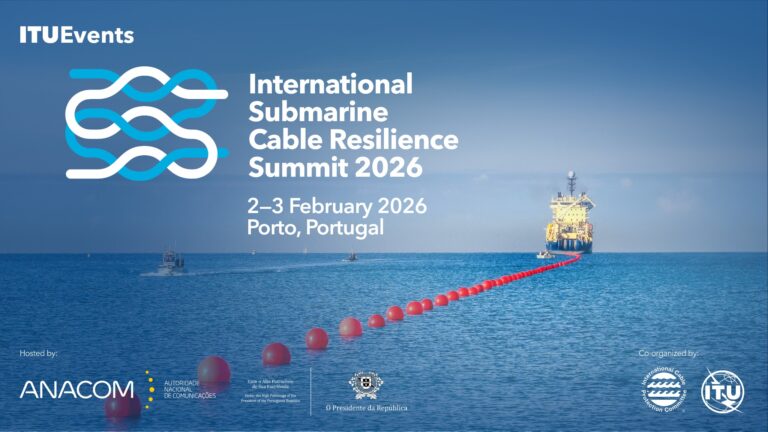
International Submarine Cable Resilience Summit 2026
2 Feb 2026 13:00h - 3 Feb 2026 16:00h
Porto, Portugal