
Amnesty International calls for Syria cybercrime law reform
Human rights concerns lead Amnesty International to challenge Syria’s cybercrime law enforcement.
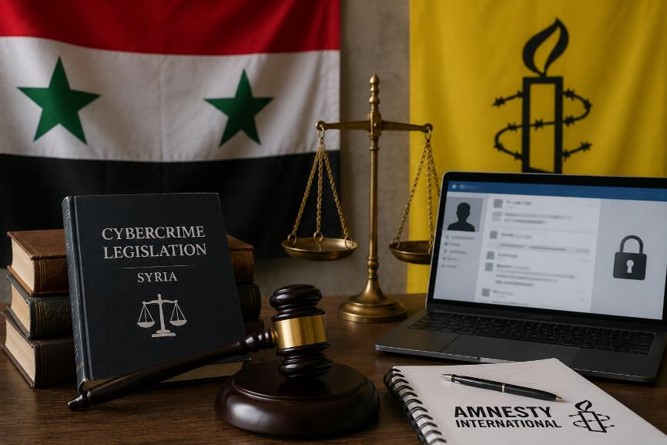
Amnesty International has urged Syria’s transitional authorities to suspend Law No. 20 of 2022 on Combating Cybercrime until it is amended to comply with international human rights law.
Syria’s Ministry of Justice announced in June that legal and technical committees would review the cybercrime law and other legislation raising constitutional or human rights concerns. However, the law remains in force pending amendment or repeal.
A subsequent ministerial circular introduced procedural safeguards, including requiring written judicial authorisation before certain specialised cybercrime investigations and treating pretrial detention as an exceptional measure. It also restricted the use of wanted notices and searches.
Amnesty said the changes did not address substantive provisions that criminalise protected expression, allow extensive restrictions on websites and impose prison sentences for vaguely defined offences.
The organisation documented five cases involving journalists and activists who were detained for between 24 hours and 7 days from January to June 2026. The alleged offences included ‘undermining the prestige of the state’, ‘undermining confidence in the national currency or financial system’ and ‘electronic defamation’.
All five were subsequently released. Amnesty said proceedings remained pending against two activists, while a journalist continued to face the risk of prosecution.
After reviewing the online content involved, Amnesty said it found no indication that the statements incited violence or hatred. It is therefore considered a protected expression under international human rights law and calls for all related charges to be dropped.
The organisation also cited the 21 July arrest of activist Mazen Arja, who responded to a summons from the Cybercrime Branch in Damascus. Amnesty argued that his detention was inconsistent with the procedural safeguards introduced in June.
Amnesty called on the authorities to halt arrests and prosecutions arising solely from peaceful online expression. It also urged Syria’s newly convened People’s Assembly to remove vague speech-related offences, replace criminal defamation with proportionate civil remedies and bring the law into line with the International Covenant on Civil and Political Rights.
Why does it matter?
Continued use of an Assad-era law against peaceful online criticism tests whether Syria’s political transition will include substantive legal protections for freedom of expression.
Procedural safeguards may reduce arbitrary detention, but they cannot remove broadly worded offences or censorship powers from legislation. Reform by the new People’s Assembly would therefore provide a clearer measure of whether transitional institutions are prepared to dismantle repressive legal structures inherited from the former government.
Would you like to learn more about AI, tech and digital diplomacy? If so, ask our Diplo chatbot!